
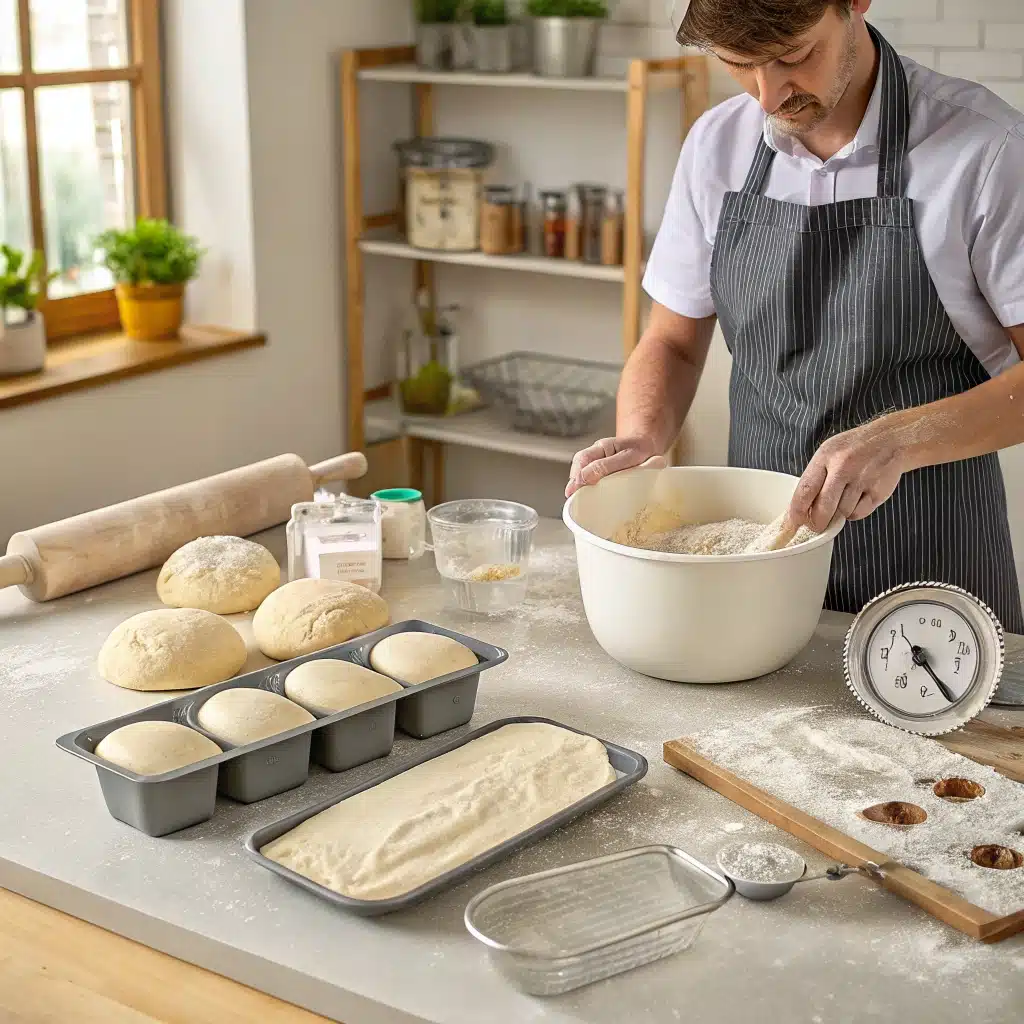
Bread Baking for Beginners: Essential Techniques You Must Know
Baking bread at home is one of the most rewarding culinary pursuits, transforming simple ingredients—flour, water, salt, and yeast—into a complex, delicious staple. However, many beginners struggle to move past dense, disappointing loaves. The secret to achieving professional-quality bread isn’t a magic recipe; it’s mastering the fundamental techniques that govern how dough behaves.
This guide delves into the essential principles of bread baking, focusing on the ‘why’ behind the ‘how.’ By understanding these core concepts—hydration, gluten development, and fermentation control—you will gain the confidence to troubleshoot recipes and consistently produce beautiful, airy, and flavorful bread.
Understanding the Core Concepts of Bread Structure
To bake successfully, you must view your dough not just as a mix of ingredients, but as a living structure that requires careful development. There are three interconnected pillars that determine the final quality of your loaf:
Hydration: The Water-to-Flour Ratio
Hydration refers to the percentage of water relative to the flour by weight. This is the single most important factor determining the texture and handling of your dough. If a recipe calls for 500g of flour and 350g of water, the hydration is 70% (350/500 * 100). Higher hydration (75%+) yields a more open, airy crumb but results in stickier dough that is harder for beginners to handle. Lower hydration (60%–65%) produces a tighter crumb structure and is easier to manage. Mastering hydration starts with precision.
Gluten Development: Building the Network
Gluten is the protein network formed when water interacts with the proteins in flour (glutenin and gliadin) and is then mechanically developed through kneading. This network acts like elastic scaffolding, trapping the gases produced by the yeast. Proper gluten development is essential for structure, volume, and chewiness. If the gluten network is weak, the dough will collapse upon baking, resulting in a dense loaf.
Fermentation: Time, Temperature, and Flavor
Fermentation is the process where yeast consumes the sugars in the flour and produces carbon dioxide (which causes the dough to rise) and alcohol (which contributes flavor). This process is split into two phases: the bulk fermentation (the first rise) and the proofing (the final rise before baking). Controlling the time and temperature of fermentation is crucial for developing complex flavors and ensuring the dough has the necessary strength to hold its shape in the oven.
Image Prompt 1: A close-up, top-down realistic photo of a large bowl of bread dough during the bulk fermentation stage, showing visible air bubbles just beneath the surface, set on a wooden kitchen counter with natural morning light.
Key Factors and Principles Affecting Dough Quality

Several environmental and ingredient factors directly influence the success of the essential techniques above. Ignoring these factors is a common reason for inconsistent results.
The Critical Role of Temperature
Yeast is highly sensitive to temperature. The ideal temperature range for rapid yeast activity is between 75°F and 85°F (24°C and 29°C).
* **Too Cold:** If your kitchen or water is too cold, the yeast will be sluggish, requiring significantly longer fermentation times and potentially resulting in underdeveloped flavor.
* **Too Hot:** Water above 105°F (40°C) can kill or severely damage the yeast, preventing the dough from rising entirely. High dough temperatures also accelerate fermentation too quickly, often leading to a loaf that proofs beautifully but collapses in the oven due to structural weakness.
Flour Type and Protein Content
The type of flour dictates how much water it can absorb and how strong the resulting gluten network will be.
* **Bread Flour:** Contains a higher protein percentage (typically 12%–14%) than all-purpose flour. This higher protein content means it can absorb more water and form a stronger, more elastic gluten structure, ideal for high-hydration artisanal loaves.
* **All-Purpose Flour:** Has a medium protein content (10%–12%). It works well for soft sandwich loaves but may not provide enough structure for very chewy, open-crumb breads.
Scaling and Precision (The Baker’s Scale)
In baking, volume measurements (cups) are highly unreliable because flour density varies based on how it’s packed. A kitchen scale is non-negotiable for serious bread baking. Scaling ensures you achieve the precise hydration ratio required, which is paramount for managing stickiness and ensuring repeatable results. Always measure flour, water, and yeast in grams.
Practical Methods and Techniques for Dough Management
Transitioning from a sloppy mixture to a cohesive, elastic dough requires specific hands-on techniques.
The Autolyse Method
The autolyse (pronounced *auto-lees*) is a technique developed by Professor Raymond Calvel that significantly improves dough quality, especially for beginners.
**Method:** Mix only the flour and water together until just combined. Let the mixture rest, covered, for 20 to 45 minutes before adding the salt and yeast.
**Why it Works:** This rest period allows the flour to fully hydrate without the interference of salt (which tightens the gluten) or yeast. Enzymes in the flour begin to break down starch into simple sugars, making them more readily available to the yeast later. Crucially, the gluten proteins start aligning themselves naturally, reducing the overall kneading time required later.
Kneading and the Windowpane Test
Kneading is the mechanical process of stretching and folding the dough, forcing the gluten proteins to link up and form strong sheets.
**Techniques:** Beginners often find the traditional hand-kneading method easiest for medium-hydration doughs (65%–70%). For wetter doughs, use the slap-and-fold method or a series of stretch-and-folds during the bulk fermentation.
**The Windowpane Test:** To determine if your dough is adequately kneaded, gently stretch a small piece of dough between your fingers. If you can stretch it thin enough to see light through it without tearing—like a thin membrane or windowpane—the gluten network is fully developed and ready for fermentation. If it tears quickly, continue kneading.
Image Prompt 2: A close-up, instructional realistic photo showing a baker’s hands gently stretching a small piece of bread dough to perform the “windowpane test.” The dough is thin and translucent, allowing light to pass through.
Monitoring Fermentation with the Poke Test
Knowing when the bulk fermentation or the final proof is complete is vital. Over-proofed dough collapses; under-proofed dough results in small, dense loaves.
**The Poke Test:** Gently poke the side of the dough with a floured finger:
1. **Fully Proofed (Ready to Bake):** The indentation slowly springs back halfway, leaving a slight dent. This indicates the dough is properly aerated and has just enough structure left to handle the oven spring.
2. **Under-Proofed (Needs More Time):** The indentation springs back immediately and completely. The dough needs more time to relax and build gas.
3. **Over-Proofed (Too Late):** The indentation remains fully depressed and does not spring back. The gluten structure has been stretched past its limit and is likely to deflate upon baking.
Common Mistakes and How to Avoid Them
Even with the right knowledge, beginners often fall into predictable traps that hinder success.
Mistake 1: Not Using a Scale
**The Problem:** Using cups leads to inconsistent hydration, resulting in dough that is either too dry (dense loaf) or too wet (sticky and unmanageable).
**The Fix:** Invest in a digital kitchen scale and use grams for all measurements, especially flour and water.
Mistake 2: Cutting Bulk Fermentation Short
**The Problem:** Many beginners focus only on the dough doubling in size. However, bulk fermentation is primarily about developing flavor and strength through time. Rushing this stage leads to bland bread.
**The Fix:** Do not rely solely on visual cues. Focus on the texture (the dough should feel aerated and jiggly) and the poke test. If time allows, slowing down the bulk fermentation (perhaps by using cooler water or placing the dough in a slightly cooler room) enhances flavor complexity significantly.
Mistake 3: Adding Too Much Flour During Kneading
**The Problem:** When sticky dough adheres to the counter, the natural instinct is to dust heavily with extra flour. This changes the intended hydration ratio, making the final dough too stiff and dry.
**The Fix:** Instead of adding flour, lightly mist your hands and the counter with water, or use a bench scraper to manage the stickiness while you perform the kneading or stretch-and-fold technique. Embrace the stickiness; it is a sign of high hydration and good potential crumb structure.
Tips, Best Practices, and Variations

Once the basics are mastered, you can elevate your bread using proven techniques.
Harnessing the Power of Cold Fermentation
Moving the shaped dough (after the final shaping but before baking) into the refrigerator (38°F to 40°F / 3°C to 4°C) for 12 to 24 hours is called cold proofing. The cold temperature slows the yeast activity dramatically while allowing the flavor-producing bacteria (lactic and acetic acids) to thrive. This results in a deeply complex, nuanced flavor profile often associated with sourdough, even when using commercial yeast.
Creating Steam for the Perfect Crust
Professional ovens inject steam during the first 10 to 15 minutes of baking. Steam keeps the surface of the dough moist, preventing the crust from setting prematurely. This allows the dough to expand maximally (oven spring) before the crust hardens, resulting in a thin, crisp, crackly crust and maximum loaf volume.
**Home Method:** Bake the loaf inside a preheated Dutch oven with the lid on for the first 20 minutes, or place a pan of boiling water on the bottom rack of your oven when the loaf goes in.
Image Prompt 3: A realistic photo of a freshly baked artisan loaf of sourdough bread with a deeply golden-brown, blistered crust, displaying a complex open crumb structure when sliced. Steam is faintly rising from the sliced bread.
FAQ: Troubleshooting Common Bread Issues
Q: Why is my bread always dense and heavy?
A: Density is usually caused by insufficient gluten development (under-kneading) or under-proofing. Ensure you are kneading until the dough passes the windowpane test and allow adequate time for the bulk fermentation stage to build strength and gas.
Q: My dough is too sticky to handle. What should I do?
A: Sticky dough is often a sign of high hydration. First, verify you measured ingredients by weight. If the measurements are correct, use less flour on the counter and rely on the stretch-and-fold method (where you handle the dough briefly every 30 minutes during the bulk rise) rather than continuous kneading.
Q: Can I substitute instant yeast for active dry yeast?
A: Yes, generally they are interchangeable. Instant yeast can typically be mixed directly into the dry ingredients, while active dry yeast usually needs to be proofed (dissolved) in a small amount of warm water first. Use a 1:1 ratio by weight.
Conclusion
The journey into bread baking is one of continuous learning, but the foundation rests on three pillars: precise hydration, robust gluten development, and controlled fermentation. By utilizing a kitchen scale, practicing the autolyse technique, and learning to read your dough through the poke test and windowpane test, you move beyond following recipes blindly and begin to truly understand the living process of bread making. Embrace the process, pay close attention to temperature, and soon you will be rewarded with loaves that are not only beautiful but truly delicious.