
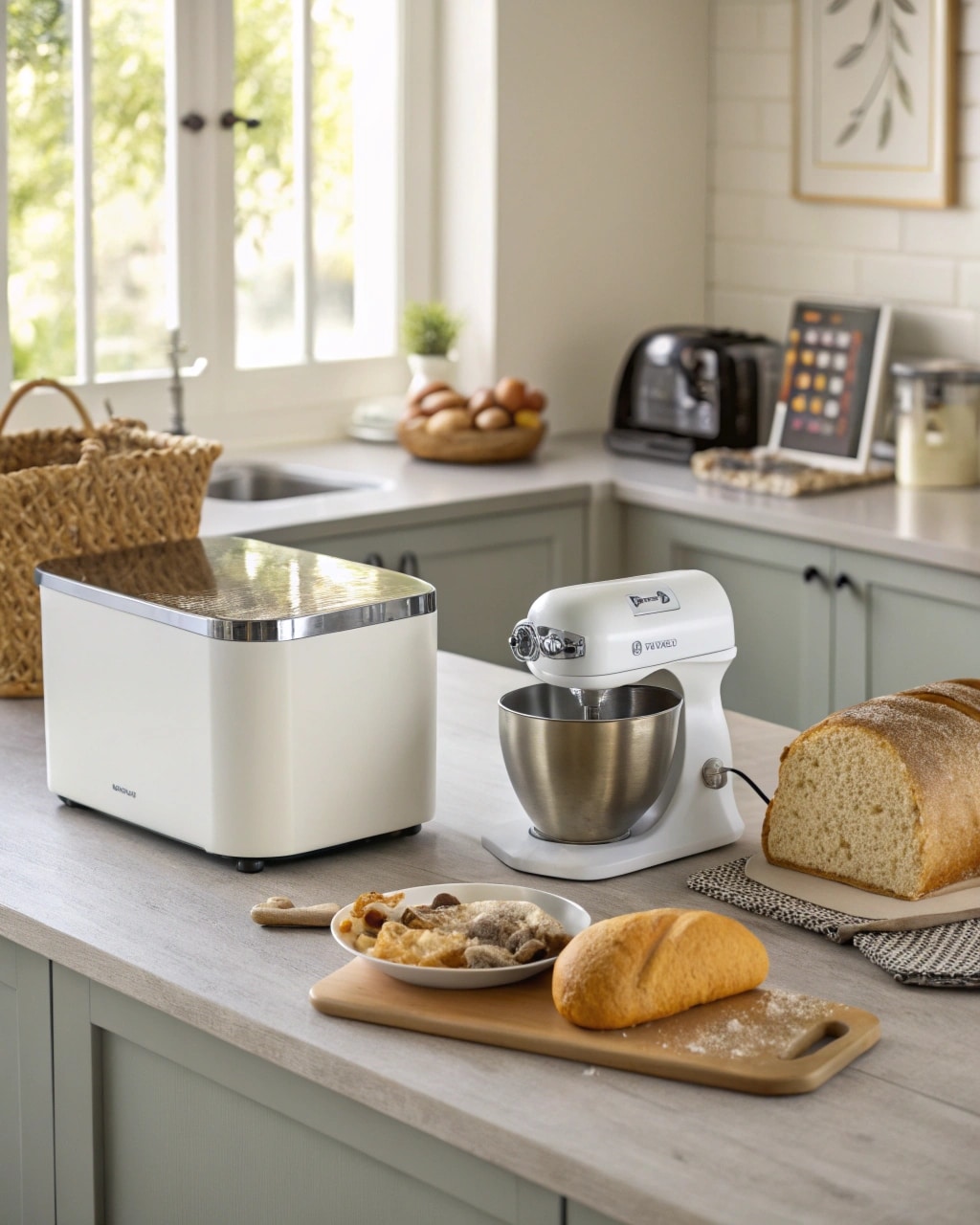
When it comes to baking homemade bread, many home bakers wonder whether they should invest in a bread machine or a stand mixer. Both tools can simplify the bread-making process, but they serve very different purposes and suit different baking styles.
In this guide, we’ll break down the key differences, pros and cons, and help you decide which one is best for your kitchen, skill level, and baking goals.
What Is a Bread Machine?
A bread machine is an all-in-one appliance designed to:
- Mix
- Knead
- Proof
- Bake bread automatically
You simply add the ingredients, select a program, and the machine does the rest.
Best For
- Beginners
- Busy home bakers
- Hands-off bread making
- Consistent everyday loaves
What Is a Stand Mixer?
A stand mixer is a versatile kitchen appliance primarily used for mixing and kneading dough. While it doesn’t bake bread, it:
- Develops gluten efficiently
- Handles high-hydration doughs
- Works for many baking tasks beyond bread
Best For
- Bakers who enjoy hands-on baking
- Artisan bread lovers
- Multi-purpose kitchen use
- Advanced or creative recipes
Bread Machine: Pros and Cons
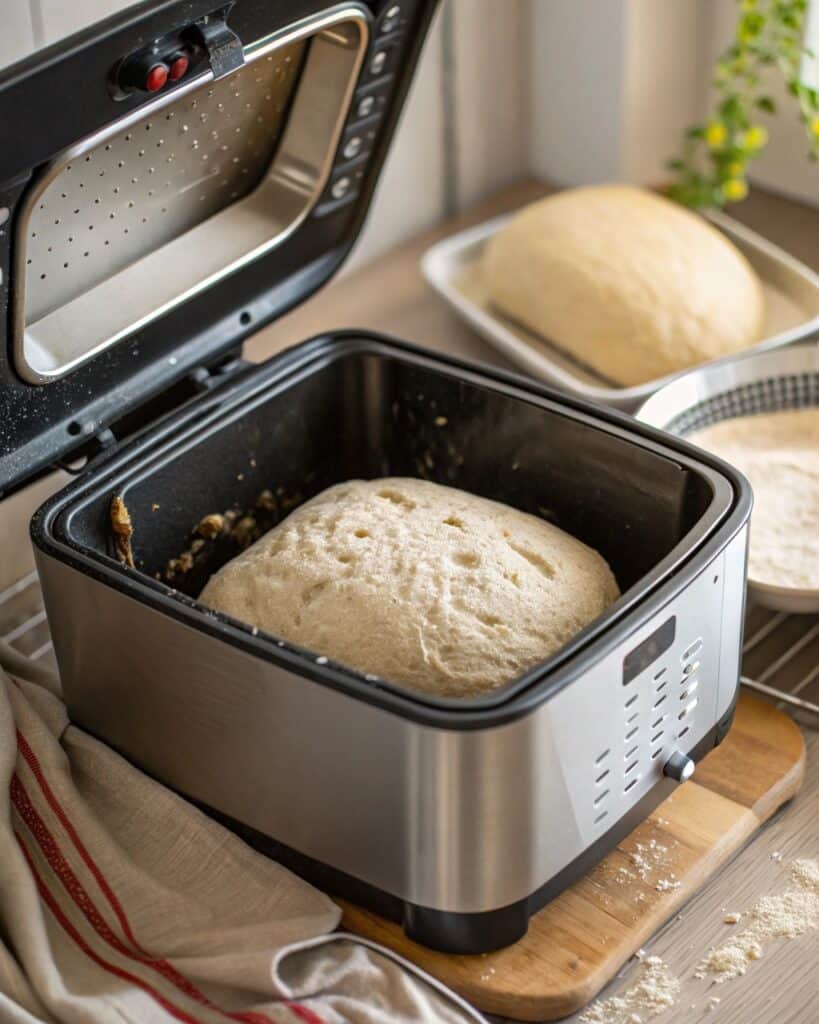
✅ Pros
- Fully automated (mix, knead, bake)
- Minimal effort and supervision
- Consistent results
- Ideal for beginners
- Compact and easy to use
❌ Cons
- Limited loaf shapes
- Less crust control
- Dense crumb in some models
- Not ideal for artisan or sourdough bread
- Takes up counter space for one main purpose
Stand Mixer: Pros and Cons
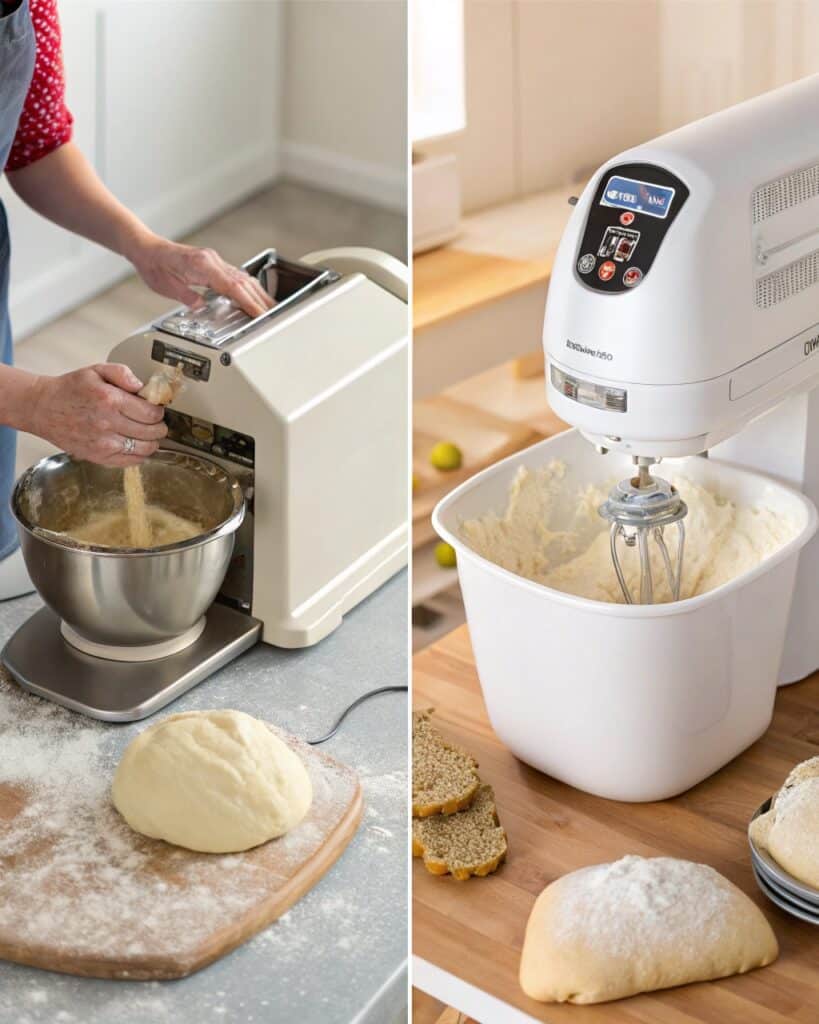
✅ Pros
- Excellent dough development
- Handles stiff and wet doughs
- Perfect for artisan bread
- Multi-purpose (cakes, cookies, pasta, etc.)
- More control over shaping and baking
❌ Cons
- Requires more skill and involvement
- Higher upfront cost
- Still requires an oven
- Learning curve for beginners
Comparison Table: Bread Machine vs. Stand Mixer
| Feature | Bread Machine | Stand Mixer |
|---|---|---|
| Automation | Fully automatic | Manual |
| Dough Kneading | Yes | Yes (more control) |
| Baking | Yes | No |
| Skill Level | Beginner-friendly | Beginner to advanced |
| Versatility | Limited | High |
| Artisan Bread | ❌ | ✅ |
| Time Involvement | Minimal | Moderate |
| Customization | Low | High |
Which One Is Better for Beginners?
If you are completely new to bread baking, a bread machine is often the best starting point. It removes guesswork and delivers consistent results with minimal effort.
However, beginners who want to learn proper bread-making skills may benefit more from a stand mixer combined with hands-on practice.
Learning Curve: Which Tool Helps You Learn Better?
While bread machines offer convenience, they don’t necessarily teach you why bread behaves the way it does. The machine controls mixing time, proofing temperature, and baking cycles automatically, which can limit your understanding of dough development.
A stand mixer, on the other hand, encourages active learning. You’ll start to recognize:
- Proper dough consistency
- Signs of gluten development
- When dough needs more kneading or rest
- How hydration affects texture
If your goal is to develop real bread-making skills, a stand mixer provides a more educational and rewarding experience over time.
Which One Is Better for Artisan Bread?
A stand mixer wins clearly here. Artisan breads require:
- Controlled fermentation
- Custom shaping
- Steam baking
- Crust development
These elements are difficult or impossible to achieve with a bread machine.
How Each Tool Handles Different Dough Types
Not all doughs behave the same, and performance varies significantly depending on the tool used.
Bread Machines Perform Best With:
- Low to medium hydration doughs
- Enriched breads (milk, butter, sugar)
- Simple white or whole wheat loaves
Stand Mixers Perform Best With:
- High-hydration doughs
- Sourdough and long-fermentation dough
- Brioche, challah, and specialty breads
- Large batches of dough
For bakers who enjoy experimenting with dough texture and hydration, the stand mixer offers far greater flexibility.
Which One Saves More Time?
- Bread machine: Less hands-on time but longer total cycle
- Stand mixer: Shorter mixing time but more manual involvement
If your goal is convenience, choose the bread machine.
If your goal is quality and creativity, choose the stand mixer.
Can You Use Both?
Yes—and many experienced bakers do.
- Use a stand mixer for artisan loaves, sourdough, and specialty breads
- Use a bread machine for everyday sandwich bread or busy days
They complement each other well if you bake often.
Cost Comparison
- Bread machines: Generally more affordable
- Stand mixers: Higher cost but more versatile and long-lasting
If budget is limited and bread is your main goal → bread machine
If budget allows and you bake often → stand mixer
Maintenance, Durability, and Long-Term Value
Bread machines contain heating elements, motors, and internal electronics that may wear out over time. Repair options are often limited.
Stand mixers are typically built for longevity:
- Fewer heat-related components
- Replaceable attachments
- Stronger motors
For frequent bakers, a stand mixer often offers better long-term value despite the higher initial cost.
Noise Level, Storage, and Kitchen Space
Kitchen practicality is often overlooked when choosing baking equipment.
Bread Machine
- Quieter operation
- Compact but single-purpose
- Often stored permanently on the counter
Stand Mixer
- Louder during kneading
- Heavier and requires strong counter space
- Multi-purpose, replacing several appliances
If you have limited kitchen space, a bread machine may be easier to manage. However, a stand mixer often justifies its size by replacing multiple tools.
Frequently Asked Questions
Can a stand mixer replace a bread machine?
Not completely. A stand mixer doesn’t bake bread, but it offers more flexibility and better dough control.
Can a bread machine knead dough only?
Yes, many models have a “dough-only” setting, which is useful if you want to shape and bake manually.
Which produces better texture?
Stand mixers generally produce better gluten development and texture.
Final Verdict: Which Should You Choose?
Choose a bread machine if:
- You want convenience
- You’re a beginner
- You prefer hands-off baking
- You bake simple breads
Choose a stand mixer if:
You want a multi-purpose appliance
You enjoy baking as a craft
You want artisan-quality bread
You bake often and in variety
Fermentation Control and Flavor Development
Fermentation plays a major role in bread flavor. Bread machines typically follow fixed proofing cycles, which can limit flavor complexity.
With a stand mixer, you control:
- Fermentation length
- Room temperature vs cold fermentation
- Folding and resting intervals
This flexibility allows for deeper flavor, better crumb structure, and improved crust development—especially for sourdough and artisan-style breads.