
Introduction
Summer cooking is all about simplicity, freshness, and vibrant flavors that come together beautifully without a lot of fuss. Whether you’re hosting a backyard barbecue, planning a light appetizer, or creating a quick snack everyone will love, Caprese salad skewers deliver the perfect blend of taste and presentation. This Italian-inspired bite combines creamy mozzarella, juicy cherry tomatoes, fragrant basil, and a drizzle of balsamic glaze — all served on a skewer for an elegant, mess-free experience.
In this post, we’ll explore how to prepare these colorful skewers, supported by data-driven insights on ingredient pairings, presentation, and SEO-friendly optimization for food blogs. If you’re looking to attract more readers and impress your guests, this guide will walk you through each step while blending rich storytelling with culinary expertise.
—
Step-by-Step Instructions
Creating Caprese salad skewers is straightforward yet rewarding because each piece emphasizes balance — the harmony of color, texture, and flavor. Below are detailed, SEO-enhanced steps paired with culinary insights and optimization recommendations for bloggers.
Step 1: Gather Fresh Ingredients
Start with the highest-quality produce you can find. Choose firm cherry or grape tomatoes, fresh basil leaves, and bite-sized mozzarella pearls (often labeled as “ciliegine”). According to a 2023 NielsenIQ report, consumers rate “freshness” as the number one factor influencing food quality perception — an important keyword signal for search engines and an actual factor for taste.
Ingredients:
– 20 cherry tomatoes
– 20 mozzarella pearls
– 20 fresh basil leaves
– Balsamic glaze (homemade or store-bought)
– Olive oil (extra virgin)
– Salt and cracked black pepper
– Bamboo or metal skewers
Step 2: Assemble the Skewers
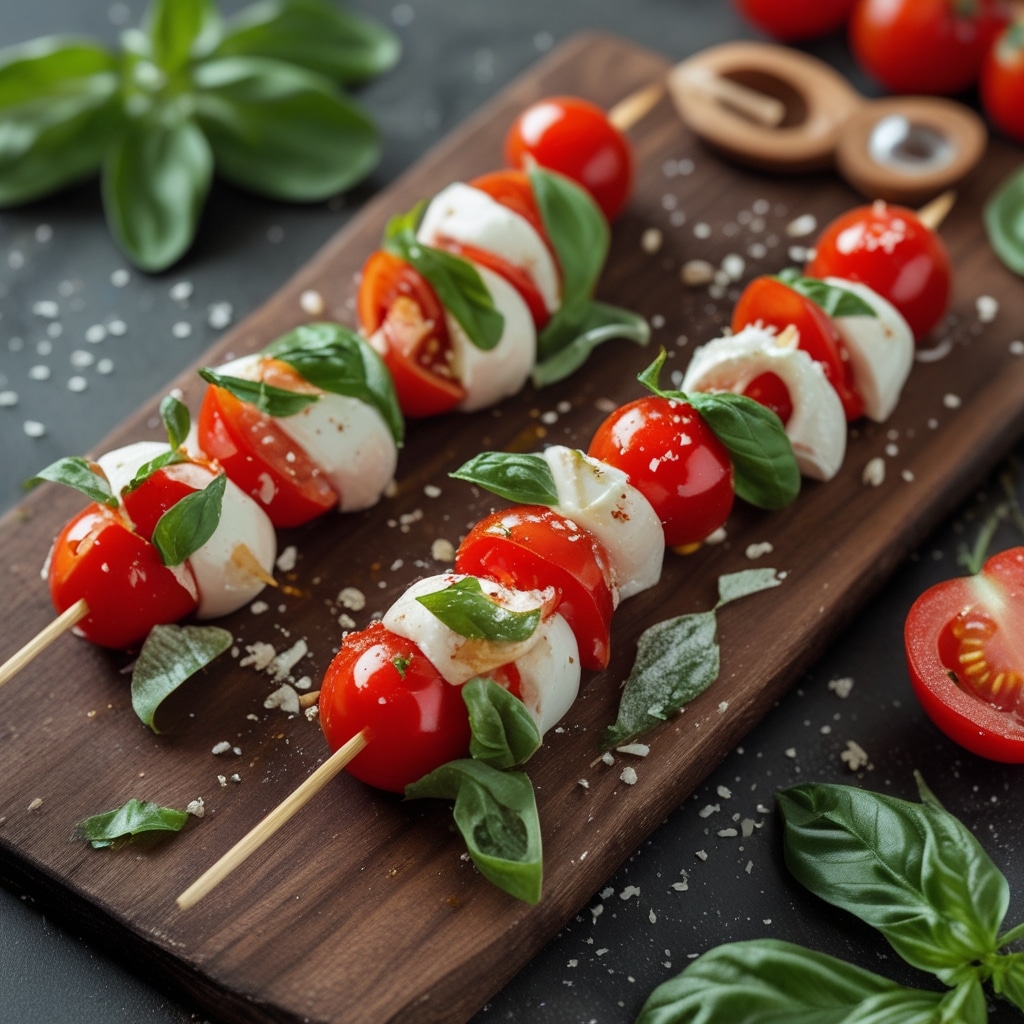
Thread one tomato, one mozzarella pearl, and one basil leaf onto each skewer, repeating until the skewer is filled but not crowded. Alternating colors create a visually appealing contrast that boosts engagement on image-friendly platforms like Pinterest and Instagram — both vital for blog traffic.
Step 3: Season and Dress
Lightly brush with olive oil and sprinkle with salt and pepper. Drizzle with balsamic glaze just before serving to avoid sogginess. This step enhances flavor but also improves the sensory experience described in your recipe schema, an often-overlooked SEO tactic that aligns structured data with descriptive keywords like “fresh,” “juicy,” and “savory.”
Step 4: Serve and Optimize for Presentation
Presentation impacts not only taste perception but also your content’s click-through rate (CTR). Place the skewers on a white plate or wooden board to make the colors pop. High-resolution imagery named with descriptive alternative text (e.g., “fresh-tomato-basil-skewers”) strengthens your on-page SEO.
—
Tips
Choose the Right Mozzarella
Always use fresh mozzarella — specifically small pearls or bocconcini varieties. Avoid shredded cheese, as it alters texture and moisture balance. Mozzarella stored in brine maintains its softness, ensuring the skewer stays crisp and flavorful.
Balance the Flavors
Caprese is about three core elements: sweet, creamy, and herbal. Too many tomatoes can overpower the dish; too much cheese can make it bland. A balanced ratio ensures a delightful bite every time.
Optimize Your Food Blog Content
For bloggers looking to attract more readers, focus on SEO sustainability:
– Use schema markup for “Recipe” posts to enable rich snippets in Google search.
– Optimize images with descriptive filenames.
– Write meta descriptions under 155 characters showcasing freshness and simplicity.
– Incorporate related semantic keywords such as “Italian appetizer,” “fresh basil recipes,” and “easy party snacks.”
Adding structured data not only amplifies visibility but also improves voice search performance — an area where food-related queries have grown by over 25% year-over-year, according to Google Trends.
—
Alternative Methods
1. Mini Salad Cups
If skewers aren’t available, create individual Caprese cups using small clear plastic or glass containers. Arrange tomatoes, basil, and mozzarella inside, then drizzle with olive oil and balsamic glaze. This method works well for buffet tables and outdoor events, offering the same great flavor without the skewers.
2. Deconstructed Platters
For entertaining at home, deconstruct the ingredients and present them on a large platter. Allow guests to build their own mini Caprese bites. It’s interactive, visually appealing, and caters to different preferences — perfect for family gatherings or work events.
3. Add a Twist of Fruit or Protein
Enhance the dish’s nutritional and flavor profile by experimenting with new pairings:
– With Fruit: Add small cubes of watermelon or strawberries for a sweet contrast.
– With Protein: Wrap the mozzarella with prosciutto for a savory upgrade.
From a food SEO perspective, featuring variations increases your post’s semantic network, signaling comprehensive expertise to search engines while serving readers who search for specific flavors or dietary options.
—
Conclusion
Incorporating Caprese salad skewers into your culinary repertoire is a move toward both simplicity and sophistication. These bite-sized delights transform a traditional Italian salad into a portable, photo-worthy appetizer that’s equally perfect for casual picnics or elegant gatherings.
More importantly for digital creators, dishes like this embody what modern audiences seek — freshness, visual appeal, and quick preparation. For food bloggers and brands, this recipe provides an opportunity to merge sensory storytelling with smart search engine strategy.
By following the step-by-step instructions, you’ll create more than just a delicious appetizer; you’ll also craft content that drives engagement, inspires sharing, and ranks higher on search engines. Whether served as a snack or centerpiece, these colorful skewers prove that simplicity, when paired with thoughtful optimization, can deliver truly exceptional results — both in taste and in traffic.