
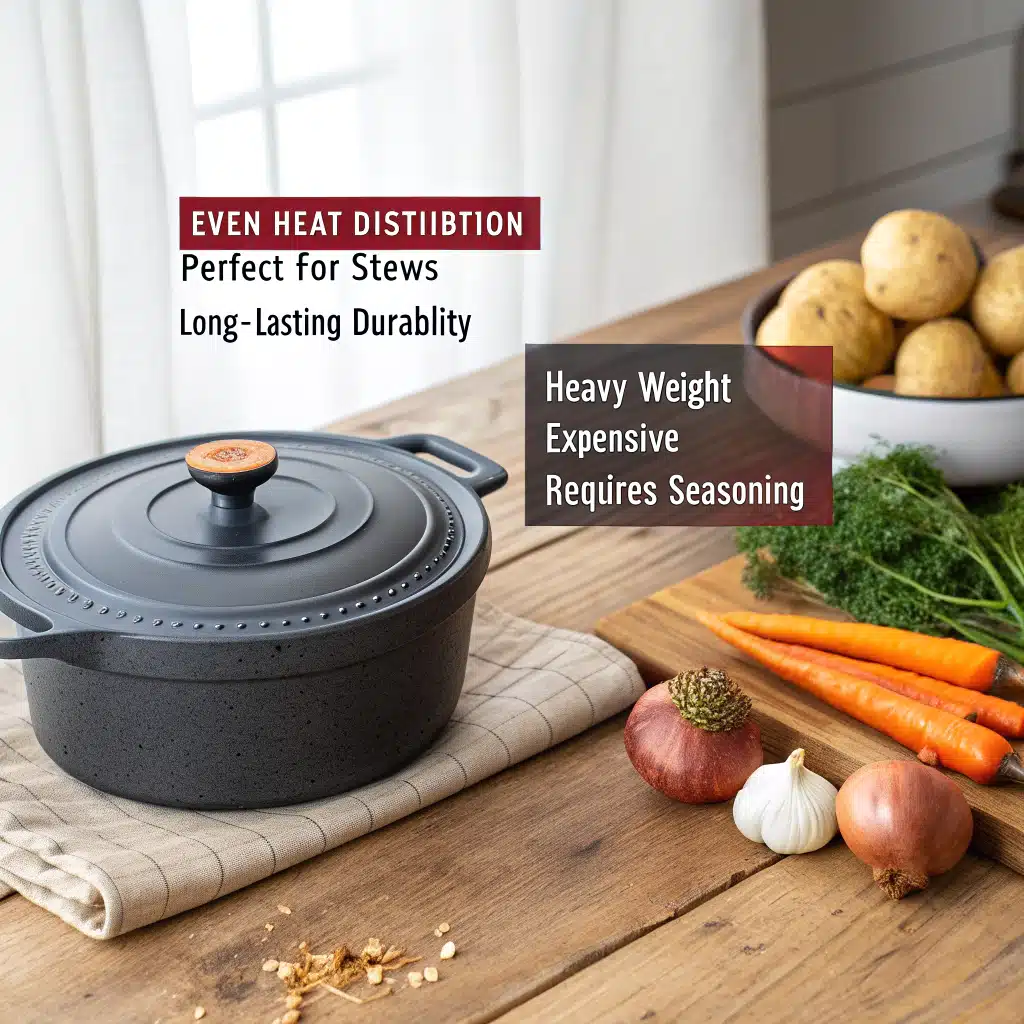
Do You Really Need a Dutch Oven? Pros and Cons for the Home Baker
For many home bakers chasing the elusive, crackling crust and dramatic oven spring of artisan sourdough, the Dutch oven has become non-negotiable—a cornerstone of the bread-baking toolkit. It is frequently cited as the single most effective tool for replicating commercial bakery results in a standard home oven.
But is this heavy, often expensive piece of cookware truly essential? Or is it simply the easiest route to success?
This in-depth guide dissects the science behind baking bread in a Dutch oven, exploring its undeniable advantages, its practical drawbacks, and detailing effective alternatives that can still yield spectacular results. Understanding the underlying principles of steam and heat will empower you to decide if the investment is truly necessary for your baking goals.
Understanding the Core Concept: The Role of Steam in Bread Baking
The primary challenge in baking high-hydration bread at home is managing the environment inside a conventional oven. Unlike commercial deck ovens, which utilize sophisticated steam injection systems, home ovens are typically dry environments. This dryness is the enemy of maximum oven spring.
Image Prompt 1: A realistic photo showing a high-hydration sourdough loaf being carefully lowered into a preheated, dark enamel Dutch oven using parchment paper, with visible steam rising immediately from the dough. The kitchen lighting is warm and natural.
Why Steam is Non-Negotiable
To achieve a beautifully blistered crust and maximum volume, the dough needs two things to happen simultaneously in the first 15–20 minutes of baking: rapid internal expansion and delayed crust formation.
When dough is placed into a hot, dry oven, the surface temperature quickly rises above 212°F (100°C). This causes the starches on the exterior to gelatinize and the crust to set almost instantly. Once the crust sets, it forms a rigid shell that prevents further expansion, limiting the final size and volume of the loaf. This leads to a dense crumb and poor oven spring.
Steam fundamentally changes this process. By surrounding the dough with moist heat, the high humidity keeps the surface of the dough cool and pliable for longer. This delay allows the internal yeast and gasses to continue pushing outward, maximizing the loaf’s volume—a phenomenon known as “oven spring”—before the crust finally sets and browns (the Maillard reaction).
The Dutch Oven Advantage: Pros Explained
The Dutch oven solves the home baker’s steam problem by creating a miniature, self-contained, high-humidity baking chamber.
Superior Heat Retention and Consistency
Dutch ovens, particularly those made of cast iron (enameled or bare), possess extremely high thermal mass. This means they absorb and retain a tremendous amount of heat.
When you open your oven door to load the dough, the ambient temperature inside the oven drops significantly. However, the heavy, preheated cast iron holds onto its heat, providing a massive, consistent thermal boost directly to the base of the loaf. This intense, stable heat transfer from the bottom up is crucial for driving rapid expansion and ensuring the loaf springs evenly.
The Trapped Steam Environment (The “Baking Dome”)
When the dough is dropped into the hot Dutch oven and the lid is immediately placed on top, the moisture rapidly evaporating from the dough itself is trapped. This self-generated steam environment saturates the air immediately surrounding the loaf.
This sealed “baking dome” ensures the surface of the dough remains moist and flexible for the critical first stage of baking (usually 15 to 25 minutes), guaranteeing maximum oven spring and the development of a thin, blistered, beautiful crust that will eventually crisp up when the lid is removed.
The Case Against: Cons and Alternatives

While the results are undeniable, the Dutch oven is not without its drawbacks, and it is certainly not the only path to great bread.
Image Prompt 2: A realistic photo showing an alternative bread baking setup in a home oven. A large, thick baking steel or stone sits on the middle rack. Below it, a shallow metal tray is filled with lava rocks and steaming water, demonstrating a manual steam injection system.
Drawbacks of Using a Dutch Oven
1. **Cost and Weight:** High-quality enameled cast iron is expensive, and the sheer weight of the pot (often 10–15 pounds empty) can be challenging, especially when dealing with extreme heat.
2. **Safety Concerns:** Handling a vessel preheated to 500°F (260°C) requires extreme caution. The risk of serious burns is high when transferring the dough into the pot and removing the lid mid-bake.
3. **Shape Limitations:** Most Dutch ovens are round, limiting the baker to round boules. Achieving consistently shaped batards (oval loaves) requires specialized oval Dutch ovens, which are less common and often more expensive.
4. **Preheating Time:** To fully capitalize on the thermal mass, the Dutch oven must be preheated with the oven for 45 to 60 minutes, adding significant time to the baking process.
Effective Alternatives for High-Quality Loaves
If budget, storage, or safety concerns make a Dutch oven impractical, excellent results are still achievable by manually creating a controlled steam environment:
* **Baking Stone/Steel with Manual Steam:** Use a pizza stone or baking steel (for superior heat transfer) on the middle rack. Place a shallow metal pan, preferably filled with lava rocks or old nuts/bolts (to increase surface area for evaporation), on the rack below. Preheat everything. Just before loading the dough, pour 1 cup of boiling water into the steam pan. The steel provides the necessary heat boost, and the steam pan mimics the Dutch oven’s humidity.
* **Inverted Roasting Pan/Casserole Dish:** For a more localized steam dome, place the dough on a preheated baking steel and immediately cover it with a large, oven-safe metal roasting pan or a deep glass casserole dish (without plastic handles or seals). This traps the dough’s moisture effectively, mimicking the Dutch oven’s function, though heat transfer may be slightly less efficient.
Practical Methods and Techniques: Using the Dutch Oven Safely
If you choose to use a Dutch oven, adherence to a strict protocol is key for both safety and success.
Preheating Protocol
Always place the empty Dutch oven (including the lid) into a cold oven and allow it to preheat to your desired temperature (usually 450°F to 500°F / 230°C to 260°C). Allow a full 45 to 60 minutes after the oven registers the target temperature to ensure the heavy cast iron is fully saturated with heat. This saturation is non-negotiable for maximizing oven spring.
* *Safety Note:* Ensure your lid knob is oven-safe for high temperatures. If it’s plastic, replace it with a metal one or use an oven-safe foil ball to protect it.
The Covered vs. Uncovered Bake
The baking process in a Dutch oven is divided into two distinct stages:
1. **The Steam Stage (Covered):** Bake the loaf covered for the first 15 to 25 minutes. This is the period of maximum oven spring, where the steam prevents the crust from setting.
2. **The Browning Stage (Uncovered):** Carefully remove the lid (using heavy-duty oven mitts) and continue baking for another 20 to 30 minutes. Removing the lid releases the steam, allowing the surface temperature to rise rapidly, setting the structure, drying the crust, and initiating the Maillard reaction for deep color and flavor development.
Common Mistakes and How to Avoid Them
Even with the right equipment, small errors can derail the perfect bake.
* **Mistake 1: Insufficient Preheating.** The pot feels hot to the touch, but the core thermal mass isn’t fully saturated.
* *Solution:* Always use a timer and commit to a minimum 45-minute preheat after the oven reaches temperature.
* **Mistake 2: Using a Cold Pot.** Some bakers attempt to place the dough in a cold Dutch oven, then place it in the oven.
* *Solution:* This is ineffective. The thermal lag prevents the rapid heat transfer needed for oven spring, and the dough will spread before the pot heats up. The pot *must* be screaming hot upon contact with the dough.
* **Mistake 3: Removing the Lid Too Early.** If you remove the lid before the crust has finished expanding, the remaining potential for oven spring is lost, and the crust will set too quickly.
* *Solution:* Wait at least 18 minutes, especially for high-hydration sourdough, before uncovering.
Tips, Best Practices, and Variations

For optimal safety and results, consider these expert tips:
* **Parchment Paper Slings:** Always transfer dough into the hot Dutch oven using a parchment paper sling. This minimizes handling time over the hot pot and reduces the risk of burns. Once the lid is removed, you can carefully slide the loaf out of the pot and onto the oven rack for the final browning stage if you desire a darker base.
* **Ice Cube Trick:** If your dough is particularly low-hydration or you want an extra boost of steam, drop one or two ice cubes between the parchment paper and the side of the Dutch oven just before covering it. The rapid evaporation creates a burst of intense steam.
* **Enamel vs. Bare Cast Iron:** Enameled cast iron is easier to clean and prevents seasoning issues. Bare cast iron offers slightly better thermal transfer and is generally cheaper, but requires proper seasoning maintenance to prevent sticking. Both work exceptionally well for bread.
Image Prompt 3: A realistic, close-up photo of two finished loaves of rustic sourdough bread side-by-side. One loaf, baked in a Dutch oven, shows dramatic oven spring, deep scoring expansion (ear), and a dark, blistered crust. The second loaf, baked without steam, appears flatter and paler with a tight, less appealing crust.
FAQ
How hot should my Dutch oven be for baking bread?
Most artisan bread recipes call for preheating the Dutch oven to between 450°F and 500°F (230°C to 260°C). The high temperature ensures the necessary thermal shock to initiate maximum oven spring immediately.
Can I use a Dutch oven that is not cast iron?
Yes, provided it is rated for high oven temperatures (usually stoneware or high-quality thick ceramic). However, cast iron’s superior thermal mass and heat conductivity make it the preferred material for achieving the best crust and spring. Avoid thin metal pots, as they lose heat too quickly.
Why is my bread burning on the bottom in the Dutch oven?
This usually happens because the heat transfer from the base is too intense. Try placing a baking sheet on the rack below the Dutch oven to shield the bottom from direct heat, or slide the loaf out of the pot and onto a baking stone for the final uncovered stage.
Conclusion
Do you absolutely *need* a Dutch oven to bake excellent bread? Technically, no. Skilled bakers can achieve superb results using a combination of a baking steel and manual steam injection.
However, the Dutch oven provides the most reliable, efficient, and effortless solution for creating the ideal humid environment necessary for maximum oven spring and a perfect crust in a standard home oven. It simplifies the process by trapping the dough’s natural moisture, making it the highest-value tool for consistently producing professional-quality, rustic loaves. If you are serious about artisan bread baking, the convenience and consistent results offered by a Dutch oven make it a worthwhile investment.