
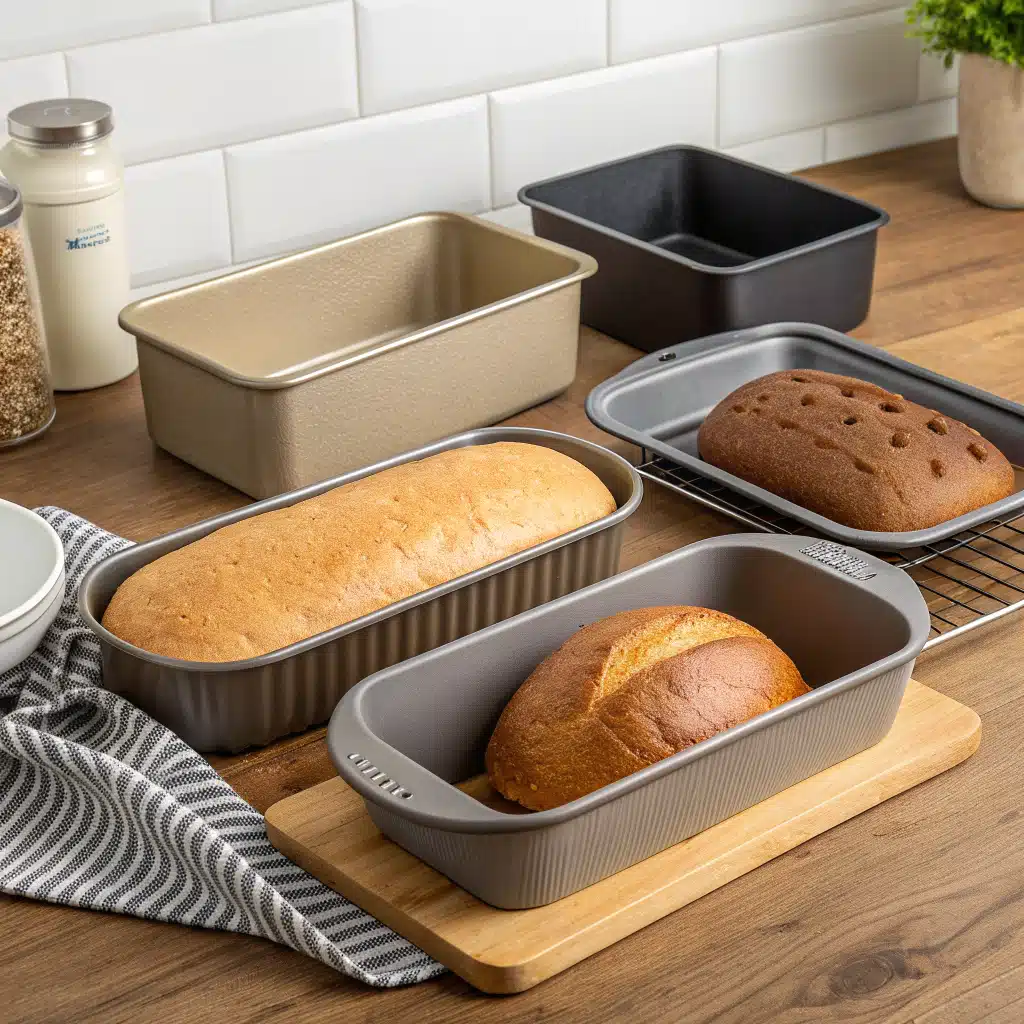
How to Choose the Right Bread Pan Shape and Material
The difference between a perfectly golden, evenly risen loaf and a dense, unevenly browned failure often comes down to a single, easily overlooked piece of equipment: the bread pan. For the home baker, the pan is not merely a vessel; it is a critical tool that manages heat transfer, dictates crumb structure, and provides essential support during the delicate process of oven spring.
Choosing the right pan material and dimensions can dramatically influence the final crust, crumb texture, and overall shape of your bread. This guide delves into the physics and practicalities of bread pan selection, ensuring your next loaf emerges flawless every time.
Understanding the Core Concept: Heat and Structure
The bread pan performs two primary functions: managing heat transfer and providing physical structure. Understanding these roles is the foundation of selecting the correct pan.
Heat Transfer Rate: Conduction vs. Insulation
Bread bakes through heat transfer, primarily conduction (heat moving directly from the pan surface to the dough) and convection (heat circulating in the oven).
The pan’s material determines how quickly and evenly it conducts heat. Materials like thin aluminum are excellent conductors, heating up and cooling down quickly. Materials like thick ceramic or glass are poor conductors but excellent insulators, retaining heat for longer and transferring it more slowly to the dough. This difference directly impacts the crust:
* **Fast Conduction (Metal):** Promotes rapid oven spring and a relatively thin, crisp crust.
* **Slow Conduction (Glass/Ceramic):** Leads to a slower initial rise and often results in a thicker, sometimes tougher, bottom and side crust.
Structural Support and Oven Spring
During the first 10 to 15 minutes of baking, the dough undergoes “oven spring”—a rapid expansion driven by yeast activity and steam production. The pan provides crucial structural support, preventing the dough from spreading excessively.
If the pan is too large, the dough will spread outward rather than upward, resulting in a squat, dense loaf. If the pan is too small, the dough will overflow the sides, leading to an unsightly “mushroom cap” and potential structural collapse. Matching the pan volume to the dough weight is paramount for achieving a high, symmetrical loaf.
Key Factors and Principles of Pan Selection
Beyond basic material and size, several subtle factors influence how a pan performs in the oven.
The Role of Color: Dark vs. Light
The color of a pan is arguably as important as the material itself, particularly concerning crust development.
* **Light-Colored Pans (e.g., Shiny Aluminum):** Reflect heat away from the surface. This results in slower, gentler browning, ideal for recipes where a soft, pale crust is desired (like brioche or classic white sandwich bread).
* **Dark-Colored Pans (e.g., Dark Non-stick or Black Steel):** Absorb radiant heat quickly. These pans brown the crust faster and more intensely, especially the bottom crust. If you use a dark pan, you often need to reduce the oven temperature by 25°F (about 15°C) or shorten the baking time to prevent over-browning.
Pan Volume and Dough Weight Ratio
A good rule of thumb for most standard sandwich bread recipes is that the dough should occupy approximately 60–70% of the pan’s volume before baking.
For the most common standard loaf pan (8.5 x 4.5 x 2.75 inches), a dough weight between 900g and 1000g is usually appropriate. Always check your recipe’s specified dough weight and compare it to the pan volume to ensure a proportional fit.
Practical Methods and Techniques: Choosing the Right Material

The material of your pan dictates its heat performance and longevity. Here is a breakdown of the most common options and their best uses.
Aluminized Steel and Carbon Steel: The Professional Standard
Aluminized steel is the workhorse of the professional baking world. It consists of steel sheeting coated in aluminum or an aluminum-silicone alloy.
**Pros:** Excellent, consistent heat conduction; durable; relatively lightweight; produces an even golden-brown crust.
**Best For:** All-purpose sandwich loaves, enriched doughs, and recipes requiring consistent, reliable heat transfer.
Carbon steel is heavier and heats up slightly slower than aluminized steel but retains heat exceptionally well, making it excellent for deep, dark crusts.
Image Prompt 1: A realistic photo showing three identical 9×5 inch loaf pans side-by-side. One is shiny, light-colored aluminum; one is dark gray non-stick carbon steel; and the third is a clear glass loaf pan. The image uses natural overhead lighting to clearly show the difference in material color and finish.
Glass and Ceramic Pans: Insulation and Retention
Glass and ceramic pans are popular because they are non-reactive and attractive. However, they handle heat very differently from metal.
**Pros:** Excellent heat retention (they stay hot long after leaving the oven); non-reactive (safe for acidic ingredients); easy to see the crust formation.
**Cons:** Poor conductors; they transfer heat slowly, which can delay oven spring. This often results in a thicker, sometimes over-baked bottom crust. They are also prone to thermal shock if moved rapidly between hot and cold environments.
**Best For:** Quick breads (like banana bread or zucchini bread) where a dense, moist interior is desired, or recipes where the loaf needs to stay warm for serving.
Non-stick Coatings: The Trade-off
Non-stick coatings (often PTFE or silicone-based) are applied to steel or aluminum pans to ensure easy release.
**Pros:** Effortless removal of the loaf; less need for heavy greasing.
**Cons:** The coating often makes the pan dark, increasing browning speed; the coating acts as a slight barrier to heat transfer, which can sometimes interfere with optimal crust formation compared to uncoated metal. Non-stick coatings also degrade over time.
**Best For:** Beginners who prioritize easy loaf release; rich doughs that are prone to sticking.
Practical Methods and Techniques: Choosing the Right Shape
The shape of the pan determines the final geometry of the crumb structure.
The Standard Loaf Pan: Versatility
The standard loaf pan (typically 8.5×4.5 inches or 9×5 inches) is designed for maximum versatility, allowing the dough to rise high into a classic dome shape. This is suitable for most everyday sandwich breads, whole wheat loaves, and enriched bread recipes.
The Pullman Loaf Pan: Uniformity and Density
Also known as a Pain de Mie pan, the Pullman pan is characterized by its straight sides and, crucially, a tight-fitting lid.
**Function:** The lid confines the dough entirely during baking. This constraint prevents a rounded top and forces the rising dough to expand outward and downward, creating perfectly square slices and an incredibly tight, uniform crumb structure.
**Best For:** True sandwich bread, toast bread, or any recipe where precise, square slices are necessary (e.g., for tea sandwiches).
Specialized Pans for Specific Loaves
* **Baguette Pans:** These are perforated metal sheets with semi-cylindrical troughs. The perforations allow maximum air circulation, ensuring the bottom crust of the baguette gets crispy, while the shape maintains the classic elongated form.
* **Brioche Molds:** Often fluted, these pans have very high, straight sides, designed to support the height of a rich, airy brioche dough.
* **Dutch Oven (Hearth Loaves):** While not a traditional pan, a heavy cast-iron Dutch oven acts as a micro-oven, trapping steam released by the dough. This trapped steam keeps the crust soft longer, allowing the loaf to expand fully before the crust sets, leading to superior volume and a dramatically blistered crust.
Common Mistakes and How to Avoid Them
Even experienced bakers make errors in pan selection or usage.
1. Mismatching Pan Size to Dough Weight
**The Mistake:** Using a pan that is too small for the dough, leading to overflow and poor structure, or using a pan too large, resulting in a short, wide, and dense loaf.
**The Fix:** Always calculate the total dough weight before the final proof. If you must substitute a pan size, aim for a similar volume. If your dough is 1000g and your pan only supports 800g, divide the dough and bake a smaller second loaf.
Image Prompt 2: A realistic photo of a large, golden-brown loaf of white bread overflowing dramatically over the sides of a small, shiny metal loaf pan. The loaf has a severe “mushroom cap” shape, clearly illustrating the result of using a pan that is too small for the dough volume.
2. Using Dark Pans at Standard Temperatures
**The Mistake:** Placing a loaf in a dark-colored pan and baking it at the temperature specified for a light-colored pan. This often results in a burnt bottom crust long before the interior is fully cooked.
**The Fix:** When using dark metal or dark non-stick pans, reduce the oven temperature by 25°F (15°C) from the recipe recommendation. Monitor the bottom crust closely; if it is browning too quickly, place a baking sheet on the rack below the pan to act as a heat shield.
3. Relying Solely on Non-stick Coatings
**The Mistake:** Trusting that a non-stick coating alone is sufficient for release, especially with very sticky, high-sugar, or high-hydration doughs.
**The Fix:** Always prepare the pan, even if it is non-stick. For standard loaves, a light coat of high-heat oil or butter is usually enough. For enriched or sticky doughs, consider lining the pan with parchment paper, leaving an overhang on the two long sides to act as “slings” for easy removal.
Tips, Best Practices, and Variations

For optimal results, integrate these practices into your baking routine:
Preheating for Success
While you generally don’t preheat a standard loaf pan, specialized items like cast iron Dutch ovens or pizza steels must be fully preheated. Preheating cast iron is essential because its high thermal mass provides an immediate burst of heat to the dough, maximizing oven spring and setting the crust quickly.
The Parchment Sling Technique
To guarantee easy release without damaging the loaf, cut a strip of parchment paper wide enough to cover the bottom and two long sides of the pan, leaving several inches of overhang. Grease the remaining two sides. This allows you to lift the hot loaf out immediately after baking, preventing steam from condensing and softening the bottom crust.
Image Prompt 3: A close-up, realistic photo showing a baker gently lifting a perfectly golden-brown loaf of sandwich bread out of a standard metal loaf pan using a parchment paper sling. The loaf is intact, and the bottom of the pan is clean.
Adjusting for Pan Depth
If you use a deep, narrow pan, the dough will take slightly longer to bake through the center than in a wide, shallow pan, even if the volume is the same. Always measure the internal temperature of the loaf (200–210°F or 93–99°C for most enriched and lean breads) to confirm doneness, adjusting the baking time as needed for deeper pans.
FAQ
Q: Can I use a cake pan instead of a loaf pan?
A: You can, but expect a different result. Cake pans often have sloped sides, which will cause the loaf to have a wider base and a smaller top. They also tend to be shallower, resulting in a shorter, wider loaf. If you must substitute, choose a pan with straight sides.
Q: Is a glass pan better for quick breads than yeast breads?
A: Generally, yes. Quick breads (like muffins or banana bread) benefit from the insulating properties of glass, which helps the interior cook evenly and retain moisture. For yeast breads, metal pans are preferred because they conduct heat faster, ensuring rapid oven spring before the crust sets.
Q: How do I clean and maintain my bread pans?
A: Avoid soaking metal pans, especially carbon steel, as this encourages rust. For non-stick and steel pans, clean immediately with warm, soapy water and a soft sponge. Never use abrasive scrubbers. Ensure all pans are completely dry before storing to prevent corrosion. Seasoning (wiping with oil and baking) is essential for raw carbon steel and cast iron.
Conclusion
Selecting the right bread pan is an act of precision that honors the effort you put into mixing and kneading your dough. By prioritizing material based on the desired crust (light metal for crisp, dark metal for deep color), and matching the pan’s volume and shape to your recipe’s needs (standard for domes, Pullman for squares), you gain invaluable control over the final outcome. Treat your pan as an active ingredient in your baking process, and you will consistently produce professional-quality loaves from your home kitchen.