
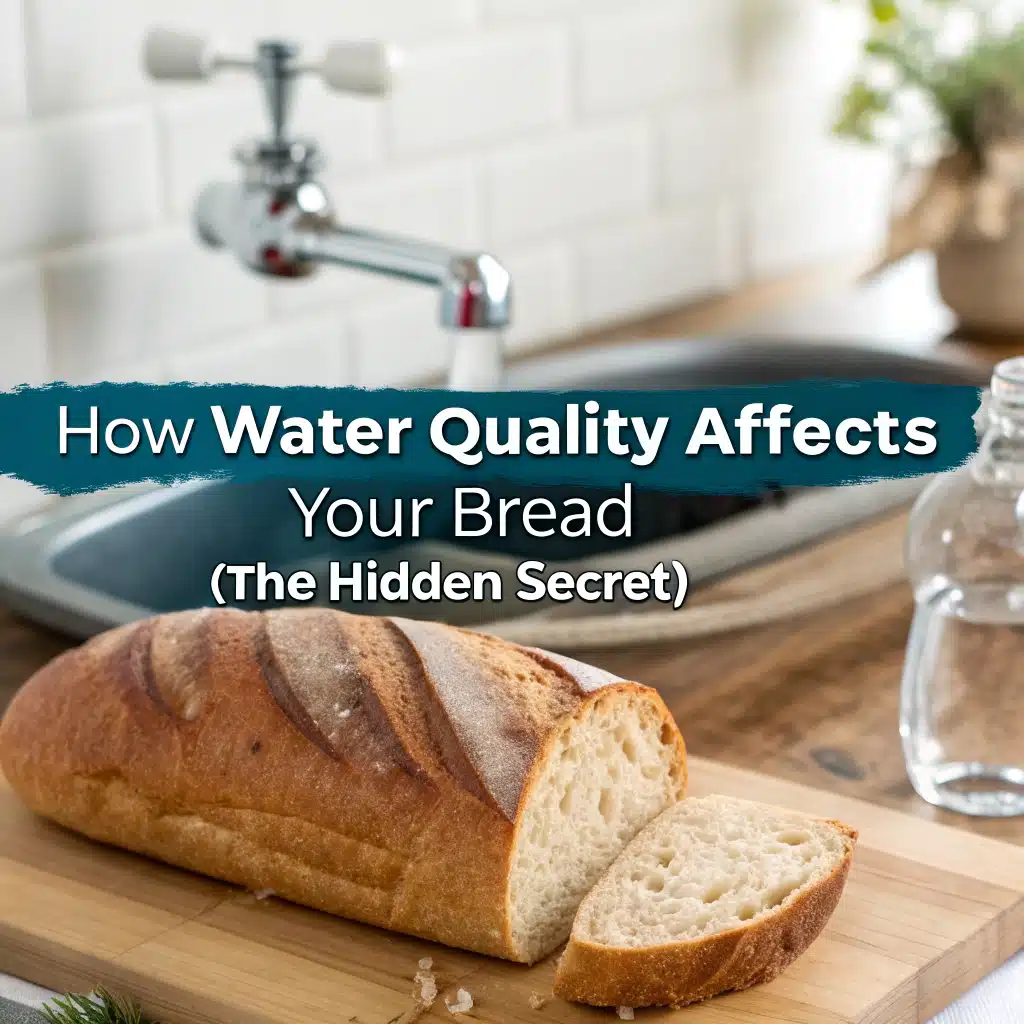
How Water Quality Affects Your Bread (The Hidden Secret)
If you are a home baker searching for the elusive secret to a truly professional loaf, you’ve likely obsessed over flour protein content, starter hydration, and precise fermentation temperatures. Yet, the ingredient that often makes up more than 50% of your dough by weight—water—is frequently overlooked.
Water is not just a carrier for the flour; it is an active chemical participant in the gluten development and fermentation processes. The mineral content, pH level, and chemical treatments present in your tap water can drastically alter the texture, volume, and flavor of your finished bread. Understanding the quality of the water you use is the hidden secret to achieving consistent, spectacular results.
Understanding the Core Concept: Hardness, Softness, and TDS
When we talk about water quality in baking, we are primarily concerned with its mineral content, commonly measured as Total Dissolved Solids (TDS). These solids are typically salts, metals, and, most importantly for bread, calcium and magnesium ions.
Water is generally categorized as soft, moderately hard, or hard.
* **Soft Water:** Contains very few dissolved minerals (TDS below 60 parts per million or ppm).
* **Moderately Hard Water (The Baker’s Ideal):** Contains a balanced level of minerals (TDS between 60 and 120 ppm).
* **Hard Water:** Contains high concentrations of minerals (TDS above 120 ppm).
The type of water you use directly impacts two critical aspects of bread making: gluten structure and yeast activity.
Image Prompt 1: A realistic close-up photo showing a glass of clear tap water next to a small, professional digital TDS meter displaying a reading. The background is a clean, modern kitchen counter with a bowl of flour nearby.
The Chemistry of Crumb: How Minerals Interact with Gluten
The structural integrity of your bread—the open, airy crumb structure—is determined by the strength and elasticity of the gluten network. Mineral ions, specifically calcium and magnesium, play a crucial role in binding the proteins in your flour, acting as crucial cross-linkers.
Hard Water (The Gluten Strengthener)
When water contains a high concentration of calcium and magnesium, these positively charged ions bind tightly to the negatively charged gluten proteins (glutenin and gliadin). This binding action creates a tighter, more rigid, and stronger gluten network.
**The result in your bread:**
1. **Reduced Spread:** The dough holds its shape better during proofing and baking.
2. **Tighter Crumb:** The structure can become overly rigid, sometimes leading to a less voluminous loaf if the water is excessively hard.
3. **Slower Fermentation:** While strong gluten is good, very hard water can slow down yeast activity slightly, requiring longer proofing times.
Soft Water (The Gluten Weakener)
Soft water lacks the necessary mineral ions to cross-link the gluten proteins effectively. Without these structural supports, the gluten network develops weakly.
**The result in your bread:**
1. **Slack Dough:** The dough feels overly sticky, lacks elasticity, and may be difficult to handle.
2. **Poor Volume:** The dough may struggle to hold the gases produced during fermentation, resulting in a loaf that spreads wide rather than rising tall (“pancaking”).
3. **Faster Fermentation:** Yeast thrives in soft water environments, often leading to rapid, sometimes uncontrolled, fermentation.
Chlorine and pH: The Unseen Fermentation Killers

Beyond mineral content, the chemical treatments applied to municipal water supplies—namely chlorine—can sabotage your baking efforts.
The Impact of Chlorine
Chlorine is added to drinking water to inhibit bacteria and pathogens. Unfortunately, yeast is a living organism sensitive to these same sanitizers. Even small amounts of chlorine can inhibit or kill yeast, leading to slow or stalled fermentation. Furthermore, a high concentration of chlorine can impart a noticeable chemical or medicinal off-flavor to the final crust and crumb.
This is especially critical when dealing with long-fermented doughs like sourdough, where the natural yeasts and bacteria in the starter are highly sensitive.
The Role of pH Level
The pH scale measures acidity and alkalinity. Yeast prefers a slightly acidic environment, ideally between pH 5.0 and 6.0. Highly alkaline water (high pH) can slow down yeast metabolism dramatically. If your water is extremely alkaline, you will notice sluggish dough development and a lack of sourness in sourdoughs, as the lactic acid bacteria struggle to produce the necessary acids. Conversely, overly acidic water can weaken the gluten structure.
Practical Methods for Diagnosing and Adjusting Your Water
You don’t need a lab to improve your baking water. A few simple steps and adjustments can make a world of difference.
Step 1: Get to Know Your Water
1. **Check Municipal Reports:** Your local water utility is required to publish annual water quality reports detailing TDS, pH, and chlorine levels. Look for the “Hardness” reading, usually measured in grains per gallon (gpg) or ppm.
2. **Use Test Strips:** Inexpensive aquarium or pool test strips can give you a quick reading of pH and general hardness (GH).
3. **The Taste Test:** If your water tastes strongly metallic or heavily chlorinated, it is likely unsuitable for baking without treatment.
Step 2: Removing Chlorine
Chlorine is volatile and easily removed.
* **The Rest Method:** Pour the required amount of water into an open container (like a measuring jug) and let it sit uncovered on the counter for 12 to 24 hours. The chlorine will naturally evaporate into the air.
* **The Boil Method:** Boiling water rapidly removes chlorine, though this is less convenient for cooling large volumes.
* **Filtration:** A standard activated carbon filter (like those found in pitcher filters) is highly effective at removing chlorine and other volatile compounds, but generally does not remove beneficial minerals.
Image Prompt 2: A realistic photo showing a baker pouring water from a carbon-filtered pitcher into a glass measuring cup on a kitchen scale, emphasizing precision and clean water preparation before mixing dough.
Step 3: Adjusting Mineral Content (Hardness)
**If your water is too soft (under 50 ppm):**
* **Add a Pinch of Salt:** Adding a very small pinch (1/8 teaspoon per liter) of non-iodized sea salt or mineral salt (not table salt) can introduce trace minerals. *Note: Account for this added salt in your total recipe salt calculation.*
* **Blend with Mineral Water:** Mix 1 part bottled mineral water (check the label for mineral content) with 3 parts filtered tap water.
**If your water is too hard (over 150 ppm):**
* **Dilution:** Mix 1 part distilled water (which has zero minerals) with 1 part hard tap water. This effectively halves the mineral concentration.
* **Reverse Osmosis (RO):** If you have an RO system, the water produced is often too soft for baking. You will need to re-mineralize it or blend it with regular tap water.
Common Mistakes and How to Avoid Them
Even experienced bakers can overlook subtle water issues.
Mistake 1: Using Ice-Cold Water Directly from the Tap
While controlling dough temperature is crucial, using water straight from a cold tap can shock the yeast, slowing down the initial fermentation phase drastically. Furthermore, cold water holds onto chlorine more effectively than room-temperature water.
**The Fix:** Always temper your water. Aim for a temperature that allows your final dough temperature to land in the ideal range (typically 75°F to 80°F or 24°C to 27°C). If you are removing chlorine by resting, the water will naturally reach room temperature.
Mistake 2: Assuming Bottled Water is Always Better
Many bakers switch to bottled water, believing it is a guaranteed fix. However, some common bottled waters (like purified or distilled brands) are extremely soft, leading to the slack dough issues described above.
**The Fix:** If buying bottled water, look for *spring water* and read the mineral analysis label. Choose a brand with moderate calcium and magnesium levels, or stick to filtered, rested tap water if your source is moderately hard.
Expert Tips for Consistent Results

1. **The Sourdough Starter Rule:** Always use chlorine-free, moderately mineralized water for feeding your sourdough starter. A starter is far more sensitive to chemical treatments than commercial yeast. Inconsistent water quality is a leading cause of a sluggish or failing starter.
2. **Consistency is Key:** Once you find a water source and adjustment method that works, stick to it religiously. If you move or travel, be prepared to adjust your hydration or proofing times to compensate for the new local water supply.
3. **Adjust Hydration for Hardness:** If you are forced to use very hard water, you may need to increase the overall hydration of your dough slightly (by 1–2%) to compensate for the tightening effect of the minerals on the gluten network.
Image Prompt 3: A realistic, high-angle close-up photo of a perfectly baked loaf of sourdough bread resting on a cooling rack, showing a beautiful, open, and consistent crumb structure after being sliced. Natural sunlight illuminates the scene.
Frequently Asked Questions About Baking Water
Is distilled water good for baking bread?
No. Distilled water is pure H2O with virtually zero minerals. While it contains no harmful chemicals, the lack of calcium and magnesium results in a weak, sticky dough structure and poor volume. It is only useful for blending with excessively hard water to reduce mineral concentration.
Does boiling water remove the minerals that affect gluten?
Boiling water removes volatile compounds like chlorine, but it does not remove mineral salts like calcium and magnesium. In fact, boiling can slightly concentrate these minerals, as some water evaporates.
What is the ideal TDS range for bread baking?
The consensus among professional bakers is that water with a Total Dissolved Solids (TDS) range between 80 ppm and 120 ppm provides the optimal balance: enough minerals to strengthen gluten without overly inhibiting yeast activity.
Conclusion
Water is far more than a wetting agent in bread baking; it is a critical chemical component that controls the strength of your gluten, the speed of your fermentation, and the ultimate flavor of your loaf. By recognizing the hidden impact of hardness, chlorine, and pH, you gain a powerful level of control over your final product. Take the time to understand your water supply, implement simple adjustments like resting or filtering, and you will unlock a new level of consistency and quality in your bread baking journey.