
Introduction
When it comes to refreshing, nutrient-rich beverages that strike the perfect balance between creamy texture and tropical flavor, few drinks stand out quite like the Mango coconut smoothie. Combining the rich sweetness of ripe mangoes with the subtle nuttiness of coconut milk, this smoothie offers a wholesome experience that delights the senses while delivering a powerful boost of vitamins, fiber, and healthy fats. In today’s post, we’ll explore not just how to make this tropical favorite, but also the techniques professional food bloggers and wellness enthusiasts use to achieve maximum flavor and texture in every sip.
Whether you’re an avid smoothie lover or a beginner looking for a quick breakfast fix, you’ll find that this guide simplifies every step while also giving insights into how to optimize the recipe for taste and nutrition. By the end of this post, you’ll not only master the preparation but also understand how subtle ingredient choices affect the final taste profile—perfect for building a health-conscious routine that tastes indulgent.
—
Step-by-Step Instructions
Creating the ideal Mango coconut smoothie begins with balancing sweetness, creaminess, and freshness. Below is a step-by-step guide that helps you blend the perfect tropical indulgence every time.
Step 1: Gather Your Ingredients
To start, you’ll need:
– 1 cup of fresh or frozen mango chunks (ripe mangoes ensure natural sweetness)
– ¾ cup of unsweetened coconut milk or light coconut cream
– ½ banana (optional, for extra creaminess)
– ½ cup of crushed ice or cold water (depending on the desired consistency)
– 1 tablespoon of honey, maple syrup, or agave (optional, if extra sweetness is desired)
– A pinch of sea salt to balance flavors
These base ingredients are flexible. For instance, if you’re aiming for a vegan-friendly version, opt for maple syrup instead of honey. If you prefer a thicker smoothie, reduce the liquid slightly or add frozen mango instead of fresh.
Step 2: Prepare the Mango
Ensure the mango is peeled, pitted, and chopped into small cubes. Fresh mangoes yield a more vibrant color and natural aroma, while frozen mangoes enhance thickness and chill.
Step 3: Blend Everything Smoothly
Add all ingredients into a high-speed blender, beginning with the coconut milk and ending with the ice. Blend for about 30–45 seconds until smooth and creamy. Scrape down the sides as needed.
Step 4: Adjust Consistency and Flavor
Taste and adjust. If your smoothie feels too thick, add a splash more coconut milk or water. If it’s too thin, toss in a few extra mango pieces or ice cubes. Adjust sweetness accordingly—tropical fruits vary widely in their natural sugar content.
Step 5: Serve and Garnish
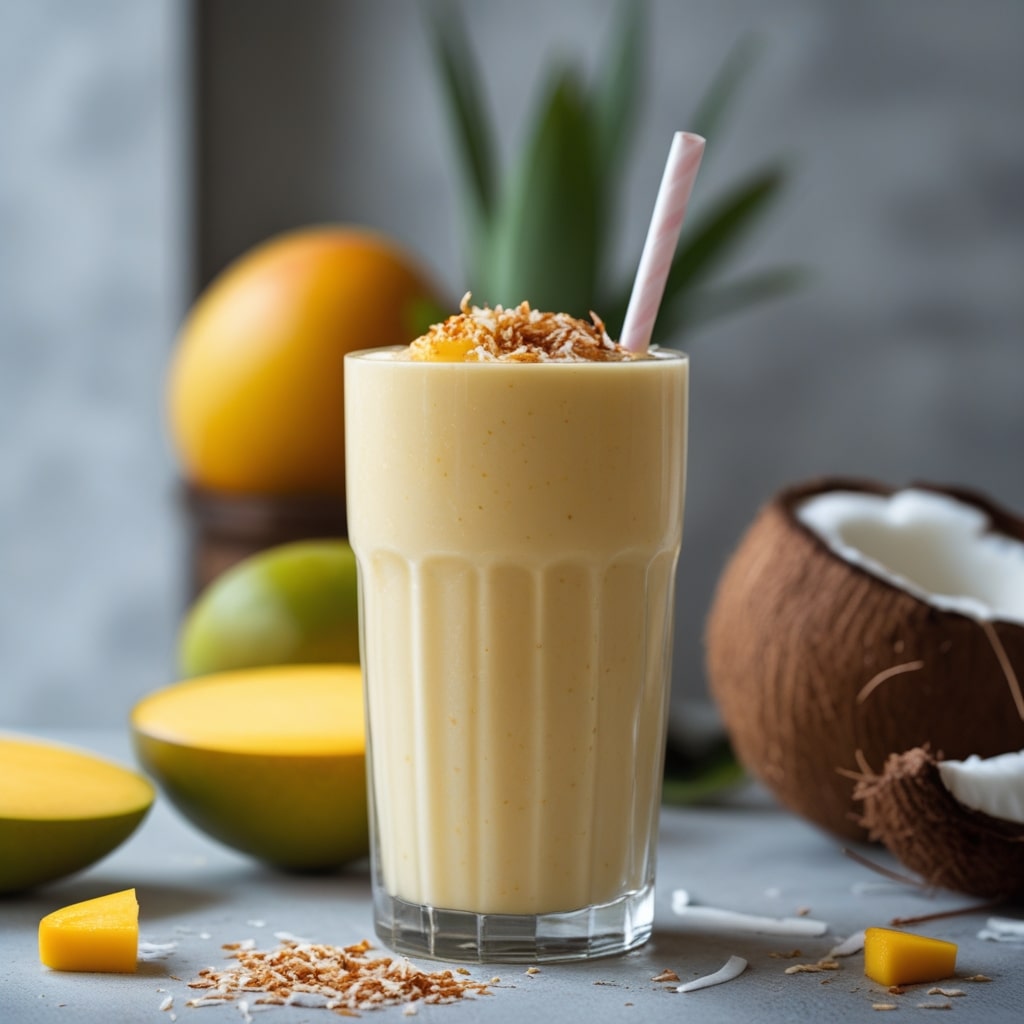
Pour the smoothie into chilled glasses. Optional garnishes include shredded coconut, chia seeds, or fresh mint leaves. For an Instagram-worthy presentation, layer the smoothie with coconut cream and top with mango slices.
—
Tips for the Perfect Smoothie
Maintain Ingredient Balance
The secret to achieving a creamy, balanced texture lies in the ratio of mango to liquid. Too much coconut milk can overpower the fruity brightness, while too little will result in a thick, overly pulpy drink.
Use Frozen Fruit for Creaminess
Frozen fruits give your smoothie a satisfying, milkshake-like texture without the need for added ice cream or artificial thickeners.
Don’t Skip the Salt
A pinch of sea salt may seem counterintuitive in a sweet recipe, but it enhances the mango’s natural sweetness and rounds out the coconut flavor beautifully.
Boost Nutrition Smartly
Add-ins like spinach, flaxseed, or protein powder can turn your smoothie into a post-workout powerhouse. Just make sure not to overload it—too many extras can mute the taste of the mango and coconut.
—
Alternative Methods
If you love experimenting in the kitchen, you can modify this tropical classic in several exciting ways.
1. Dairy-Enhanced Variation
For a richer version, substitute half the coconut milk with Greek yogurt. This adds thickness, protein, and a tangy note that balances the overall sweetness.
2. Tropical Fusion Bowl
Transform your smoothie into a bowl by using less liquid. Pour it into a dish and top with sliced mango, toasted coconuts, chia seeds, and granola. The combination provides delightful contrasts in texture and temperature.
3. Green Mango Coconut Blend
Add spinach or kale into the blender for a green version that maintains the mango-coconut base while sneaking in extra fiber and antioxidants. The mild vegetal notes complement the tropical sweetness remarkably well.
4. Spiced Variation
Add a dash of cinnamon, cardamom, or ginger. These warm spices intensify the flavor and make your smoothie feel cozy during cooler months.
5. Protein-Packed Pre-Workout Option
Blend in a scoop of your favorite protein powder. The smoothie becomes a performance-enhancing beverage packed with fuel and flavor.
—
Conclusion
A well-crafted Mango coconut smoothie perfectly captures the essence of tropical indulgence in a glass. With the right combination of ripe mangoes, creamy coconut milk, and balanced sweeteners, it’s not just a drink—it’s an experience that transports you to a sunny beachside morning.
Beyond its delightful flavor, this smoothie also supports better nutrition, satiety, and hydration. Whether you’re sipping it post-workout, enjoying it as a light breakfast, or serving it as an afternoon refresher, it’s a versatile choice for nearly any occasion.
If you’d like to elevate your smoothie game further, consider experimenting with the alternative methods outlined above. Each variation allows you to personalize taste, balance nutritional goals, and create a signature blend unique to your preferences.
Ultimately, this recipe is more than a simple beverage—it’s a mindful ritual that celebrates flavor, wellness, and creativity. With every sip, you’re not just nourishing your body; you’re reminding yourself that healthy eating can be beautiful, satisfying, and full of joy.
—
Word count: ~925 words