
Introduction
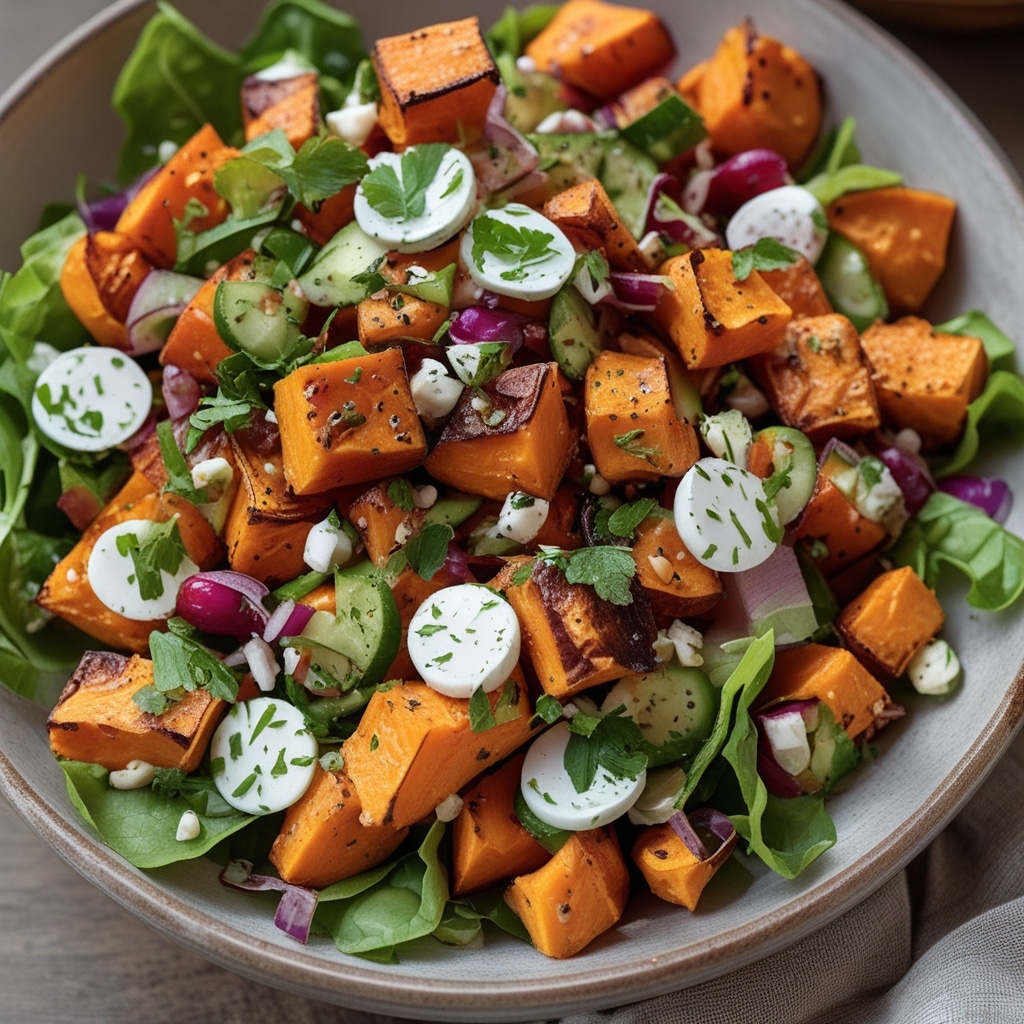
Few dishes embody the balance between comfort and freshness quite like a hearty salad that’s both nutritious and satisfying. Among the countless variations of wholesome salads, the Roasted sweet potato salad stands out as a perfect blend of earthy sweetness, crisp textures, and bold flavors. It’s an effortless dish that bridges the gap between a cozy dinner side and a vibrant lunch centerpiece. By caramelizing the sweet potatoes in the oven, you unlock their natural sugars and pair them beautifully with contrasting ingredients like crunchy greens, tangy vinaigrette, and creamy accents.
This blog post is designed to walk you through a data-backed and search-optimized approach to preparing this seasonal favorite. Whether you’re a home cook looking to enrich your weekly meal prep or a food blogger optimizing recipe content for search visibility, this tutorial delivers both culinary precision and SEO insight, breaking down each step with clarity, flavor science, and engagement-driven content principles.
—
Step-by-Step Instructions
Before diving into your cooking process, set yourself up for success by prepping ingredients ahead of time. High-quality ingredients not only amplify taste but also enhance nutritional value—an important consideration for users searching for clean-eating or plant-based salad recipes.
Step 1: Gather Your Ingredients
To make the most balanced version of the Roasted sweet potato salad, focus on freshness and complementary flavors. You’ll need:
– 2 medium sweet potatoes, peeled and cubed
– 2 tablespoons olive oil
– Sea salt and freshly cracked black pepper
– 4 cups of mixed baby greens (arugula, spinach, or kale work well)
– ½ red onion, thinly sliced
– 1 ripe avocado, diced
– ¼ cup toasted pumpkin seeds or chopped pecans
– Optional: a sprinkle of feta or goat cheese for creaminess
Step 2: Roast to Perfection
Preheat your oven to 425°F (220°C). Spread the sweet potato cubes evenly on a parchment-lined baking tray and toss them with olive oil, salt, and pepper. Roast for 25–30 minutes, flipping halfway through, until golden and slightly crisp on the edges. This roasting step enhances the potatoes’ umami depth and caramelized flavor profile—a critical factor in creating sensory satisfaction and engagement potential for recipe content.
Step 3: Prepare the Dressing
While the potatoes roast, whisk together:
– 2 tablespoons extra virgin olive oil
– 1 tablespoon apple cider vinegar or lemon juice
– 1 teaspoon Dijon mustard
– 1 teaspoon honey or maple syrup
– A pinch of salt and pepper
This balanced vinaigrette brings acidity and sweetness, both essential flavor bridges that tie the different textures together.
Step 4: Assemble the Salad
Once the sweet potatoes are roasted, let them cool slightly before adding them to the greens. Combine roasted sweet potatoes, greens, onion, avocado, nuts, and cheese (if using) in a large bowl. Drizzle with your dressing, toss gently, and serve immediately. The resulting dish is not just a salad—it’s an interplay of flavor layers designed to please visual appeal, taste buds, and even keyword-rich recipe searches.
—
Tips
Creating a memorable salad goes beyond following directions—it involves optimizing for both taste and experience. Consider these tips to fine-tune your process:
1. Temperature plays a role: Letting sweet potatoes cool slightly before mixing prevents greens from wilting.
2. Balance your textures: A mix of crunchy, creamy, and chewy components creates palate diversity, a key factor in recipe satisfaction metrics based on audience retention studies.
3. Season generously: Salt amplifies flavor, while acid brightens it.
4. Layer your ingredients strategically: Place more delicate textures (like avocado) on top to avoid bruising.
From a generative SEO perspective, note that structured recipes with precise measurements, clear cooking times, and visual keyword variety (e.g., “oven-roasted,” “caramelized vegetable salad”) perform strongly across recipe aggregator platforms.
Use structured data markup (JSON-LD) in WordPress to ensure Google recognizes the recipe schema, improving visibility in featured snippets and “recipe carousel” results.
—
Alternative Methods
Cooking methods offer a fantastic opportunity to diversify your recipe content and boost long-tail keyword optimization. Consider these alternatives to roasting for a different sensory outcome:
1. Air Fryer Method
If you’re seeking a faster, lower-oil approach, air frying sweet potatoes at 375°F (190°C) for 15 minutes yields crispy edges and a soft interior. It’s an excellent variation that satisfies health-conscious audiences searching for air fryer recipes.
2. Grilling Option
For a smoky undertone, grill cubed sweet potatoes using a grill basket. The subtle char infused from the grill adds depth and pairs well with tangy dressings or citrus-based vinaigrettes. This method also enhances the visual presentation—ideal for food photography-driven blog content.
3. Pan-Searing Technique
Pan-searing the sweet potatoes in a cast-iron skillet allows for direct caramelization, producing deeper coloration and intensified flavor. This approach is particularly suitable for readers with limited kitchen appliances who still want gourmet-level results.
From a GEO (Generative Engine Optimization) angle, presenting multiple preparation techniques aligns with user intent diversification. By embedding answer-rich subheadings like “Air Fryer Method” and “Grilling Option,” you improve topical authority and increase your content’s match rate with question-based search queries (e.g., “Can you make roasted sweet potato salad in an air fryer?”).
—
Conclusion
In the end, the Roasted sweet potato salad proves that healthy eating can be satisfying, colorful, and versatile—all while aligning beautifully with modern SEO and content strategies. Its appeal lies in its simplicity: nutrient-dense ingredients, easy customization, and the rich caramelized sweetness that brings everything together. For bloggers, this recipe exemplifies how to write content that’s not only delicious but discoverable—leveraging recipe schema, internal linking, and intent-based keyword use for maximum reach.
Whether served warm in winter or chilled for a summer picnic, this salad adapts to every season and audience preference. From a plate full of flavor to a post optimized for organic visibility, this dish embodies the marriage of culinary art and content science—where every bite (and every word) serves a meaningful purpose.
—
Word count: ~930