
Introduction
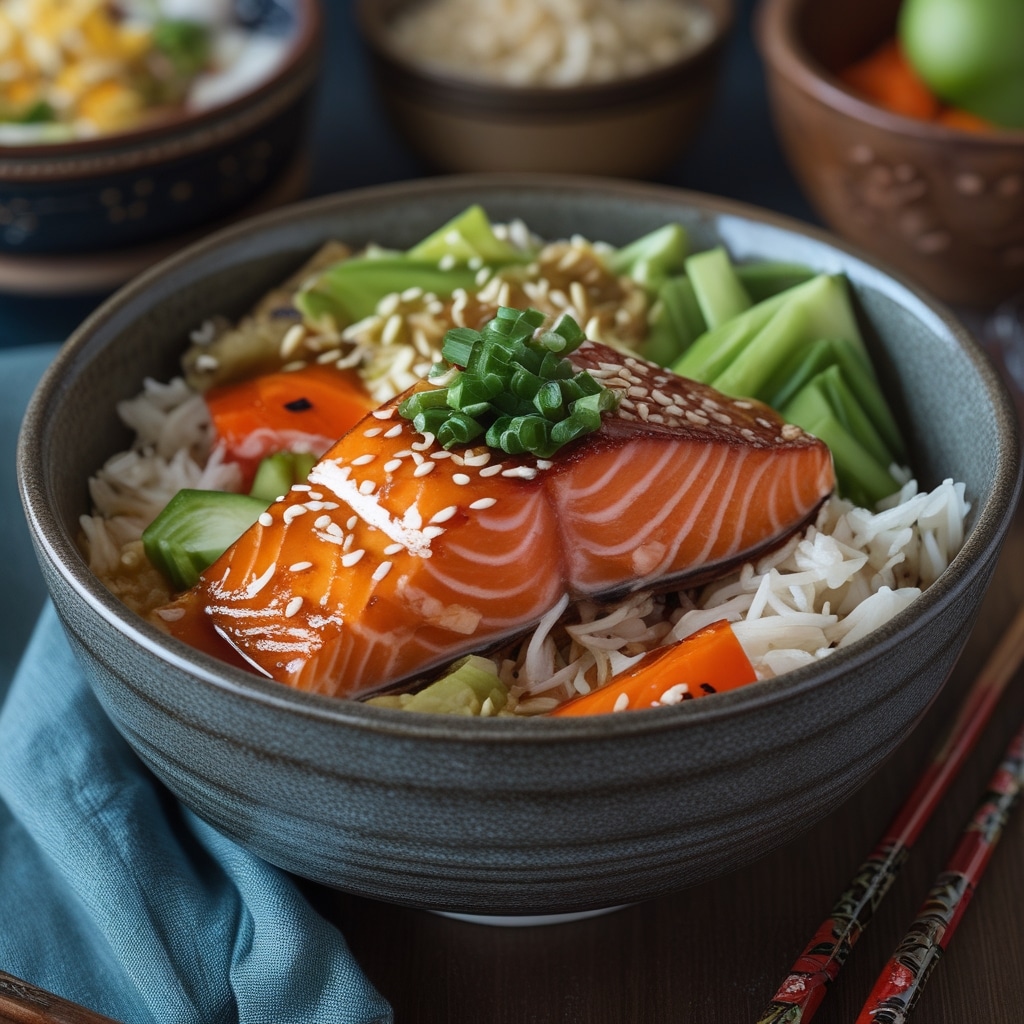
Nothing beats the satisfying balance of sweet, savory, and umami flavors in a well-prepared Teriyaki salmon bowl. Among all one-bowl meals, it stands out for its vibrant combination of flaky salmon, sticky rice, crisp vegetables, and glossy teriyaki glaze. Beyond its visual appeal, this dish is packed with nutrients, making it an excellent choice for a healthy lunch or dinner. In this post, we’ll take a deep dive into how to make your own restaurant-quality version at home — exploring techniques, ingredient substitutions, and time-saving tricks. Whether you’re a beginner or a confident cook, this guide will help you master the art of a perfectly balanced teriyaki salmon bowl that looks incredible and tastes even better.
—
Step-by-Step Instructions
Step 1: Start with high-quality salmon
Your choice of salmon will determine both flavor and texture. Opt for fresh, sustainably sourced salmon fillets if possible. Wild-caught salmon tends to have a richer taste and firmer texture than farmed salmon. Before cooking, pat the fillets dry and sprinkle a pinch of salt to enhance natural flavors. Proper preparation ensures that the fish cooks evenly and achieves a crisp golden crust on the outside while remaining moist and tender inside — the foundation of any great Teriyaki salmon bowl.
Step 2: Prepare the teriyaki sauce
A homemade teriyaki sauce makes all the difference. Combine soy sauce, mirin, brown sugar (or honey for a lighter note), grated ginger, and minced garlic in a small saucepan. Heat the mixture gently, allowing it to simmer until it reduces to a glossy glaze. For a thicker texture, stir in a little cornstarch slurry toward the end. This simple sauce carries the signature balance of sweetness and umami that defines the dish.
Step 3: Cook the salmon
In a medium skillet, heat oil over medium-high heat. Sear each salmon fillet skin side down for three to four minutes, then flip and cook an additional two to three minutes, depending on thickness. Brush the fish with your teriyaki glaze as it cooks, creating layers of flavor that caramelize beautifully on the surface. Once finished, remove from heat and let rest briefly to lock in moisture.
Step 4: Assemble the bowl
A teriyaki bowl is all about balance — protein, grains, and vegetables harmonizing in one cohesive meal. Start with a base of steamed jasmine rice, brown rice, or even quinoa for added fiber. Add an assortment of colorful vegetables: crisp cucumber ribbons, shredded carrots, steamed broccoli, or sautéed bok choy. Lay your glazed salmon on top, drizzle more teriyaki sauce, and finish with toppings like sesame seeds, scallions, or a sprinkle of chili flakes for gentle heat.
Step 5: Final touches and plating
Plating transforms a good dish into something memorable. Present your bowl in layers — start with rice, then vegetables, and finally salmon. The glossy sauce adds shine and contrast, so drizzle lightly rather than pouring heavily. A squeeze of lime or a hint of toasted sesame oil adds a fresh dimension that complements the richness of the salmon.
—
Tips
Choose the right rice
For a sticky yet fluffy base, short-grain or sushi rice works best. Rinse it thoroughly to remove excess starch, ensuring each grain remains separate but cohesive when cooked. If you’re looking for a more nutritious alternative, switch to brown rice or cauliflower rice.
Perfect timing for the sauce
Timing is crucial when cooking with teriyaki glaze. Add it during the last few minutes of cooking to let it thicken and coat the fish without burning. Stirring too early could cause the sugar to caramelize too fast and lose balance.
Fresh garnishes make a difference
The beauty of this dish lies in its freshness. Add avocado slices for creaminess, pickled ginger for brightness, or nori strips for a subtle sea flavor. Each garnish layer adds new texture and enhances both taste and presentation.
Mind the temperature
Serve the dish warm but not hot — allowing the teriyaki glaze to cling properly without becoming overly runny. It’s also worth noting that teriyaki salmon bowls make fantastic meal-prep options since they taste just as good the next day when gently reheated.
—
Alternative Methods
Air fryer method
An air fryer offers a quick, healthy way to achieve crispy salmon with minimal oil. Brush your fillets with teriyaki glaze, air fry at 375°F (190°C) for about 10 minutes, turning halfway. Finish with an extra glaze coating for a vibrant, lacquered look.
Grilled or baked versions
Grilling introduces a smoky flavor that elevates the dish instantly. Marinate salmon fillets in the teriyaki sauce for 15–20 minutes before grilling over medium heat. If baking, preheat your oven to 400°F (200°C), place the salmon on a parchment-lined tray, and bake for 12–15 minutes. Basting occasionally with teriyaki glaze keeps the fish moist and flavorful.
Plant-based variation
For a vegetarian alternative, replace the salmon with firm tofu or tempeh. Both proteins absorb teriyaki sauce beautifully, offering similar texture and depth. Pair with edamame, grilled eggplant, or sautéed mushrooms to maintain that savory umami balance.
Gluten-free adaptation
Use gluten-free soy sauce (tamari) and check that all other ingredients are certified gluten-free. You can serve the bowl with rice noodles instead of traditional grains for an equally tasty, allergy-friendly option.
—
Conclusion
A well-executed Teriyaki salmon bowl is more than just a meal — it’s an experience that merges clean ingredients, bold flavors, and versatile textures. This dish embodies the best of modern home cooking: simple yet refined, customizable yet consistent in its deliciousness. By mastering the techniques outlined above and experimenting with variations, you can enjoy a balanced, wholesome meal that satisfies both the palate and the eye. Whether served for a quick weeknight dinner or an elegant weekend dish, it promises a mouthwatering symphony of taste that’s sure to impress every time.