

Introduction
Few things are more disappointing than pulling a loaf of bread out of the oven only to find cracks, splits, or burst seams across the crust. While cracked bread is usually safe and delicious to eat, it’s often a sign that something went wrong during mixing, shaping, or baking.
In this guide, we’ll explore the most common reasons bread cracks, what each crack pattern means, and—most importantly—how to fix it so you can achieve smooth, beautiful, bakery-quality loaves every time.
1. The Dough Was Under-Proofed
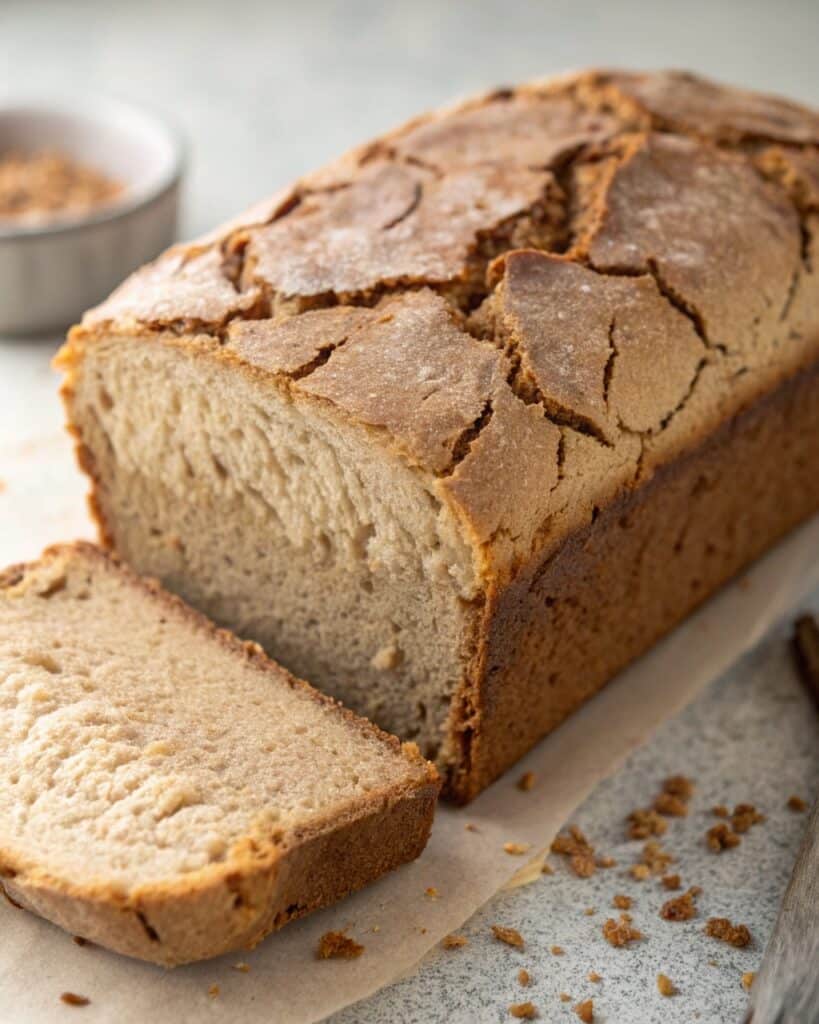
If your dough doesn’t rise enough before baking, the yeast continues releasing gas in the oven. This sudden expansion causes the crust to tear open in random places.
Signs of Under-Proofing
- Dense or gummy interior
- Tight or uneven crumb
- Random cracks on the top or sides of the loaf
- Dough feels tight and springs back immediately when pressed
How to Fix It
- Give the dough more time to rise.
- Use the poke test: press the dough gently—if it slowly springs back, it’s ready.
- Keep the dough in a warm, draft-free environment.
2. The Dough Was Over-Proofed
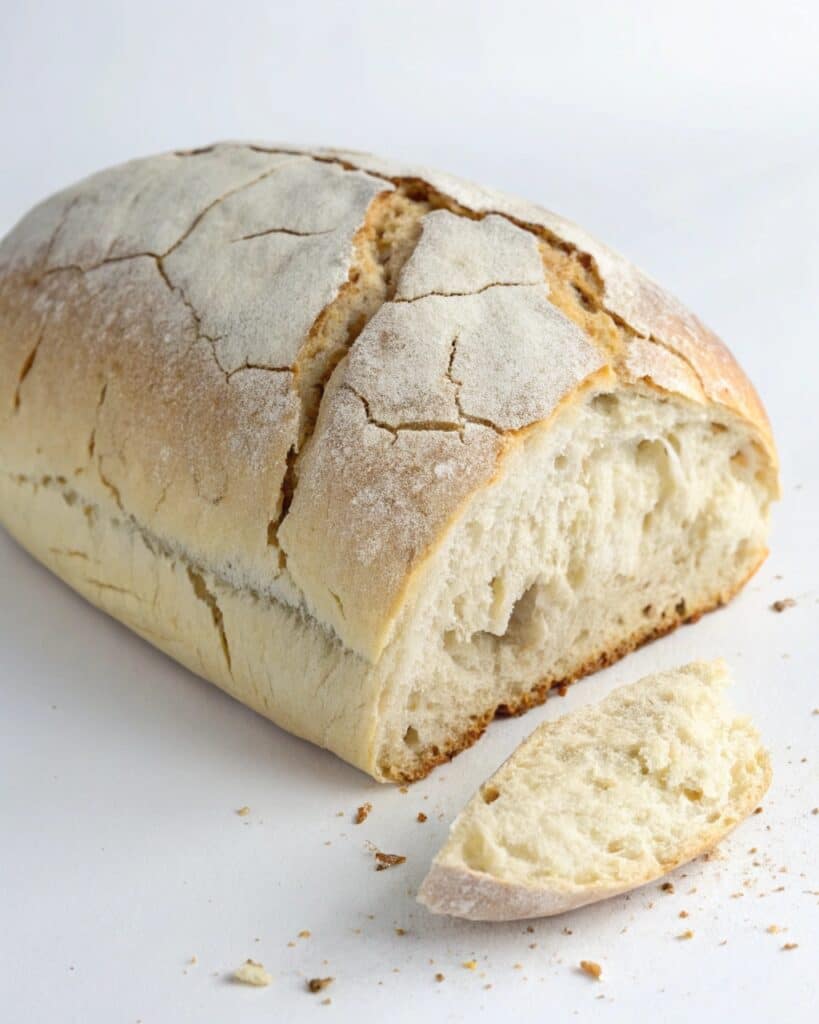
Over-proofing weakens the gluten structure, making the dough collapse or crack unpredictably during baking.
Signs of Over-Proofing
- Dough feels overly soft and fragile
- Bread collapses or deflates after baking
- Pale crust
- Uneven cracking
How to Fix It
- Reduce proofing time.
- Watch the dough, not the clock.
- Avoid letting shaped dough rest too long before baking.
3. The Loaf Was Not Scored (or Poorly Scored)
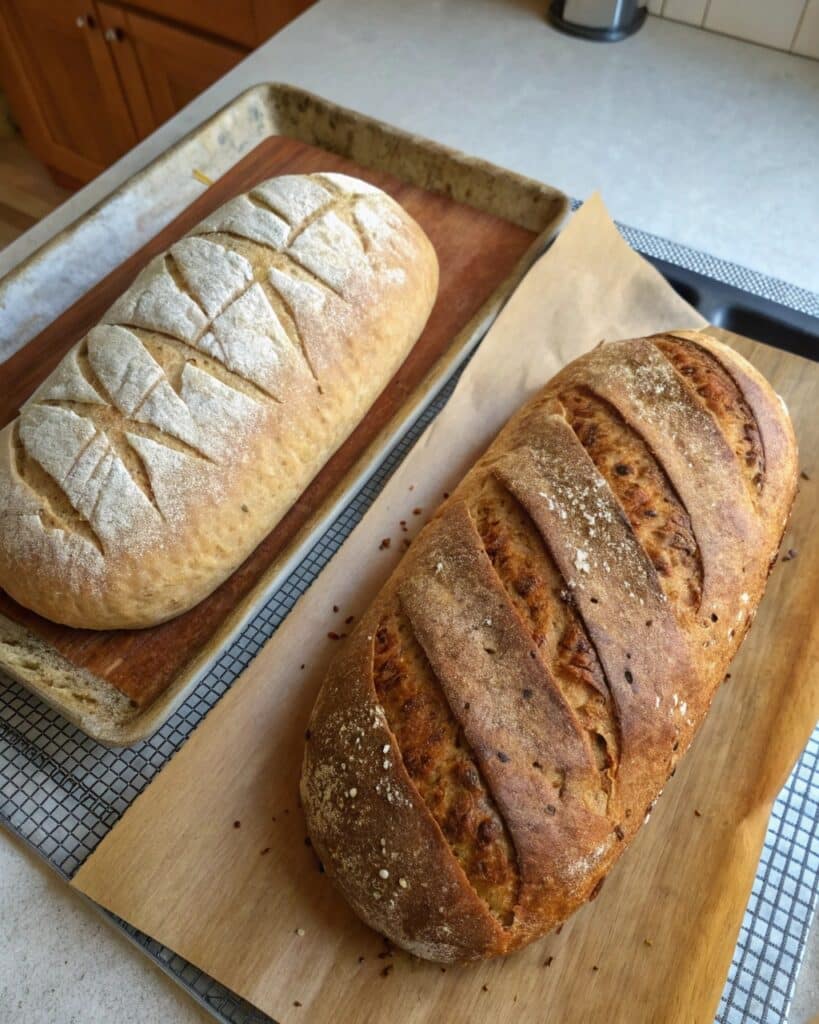
Scoring creates intentional weak points, allowing steam to escape and the bread to expand evenly.
If You Don’t Score the Dough
The loaf finds its own place to expand → resulting in cracks.
If You Score Incorrectly
Shallow cuts or cuts in the wrong direction lead to:
- Side cracks
- Blowouts
- Uncontrolled splitting
How to Fix It
- Use a sharp blade (a bread lame or razor).
- Score 0.5–1 cm deep.
- Use clean, confident cuts.
- Score with purpose—one long slash for simple loaves, multiple slashes for bâtards or artisan styles.
4. The Oven Temperature Was Too High
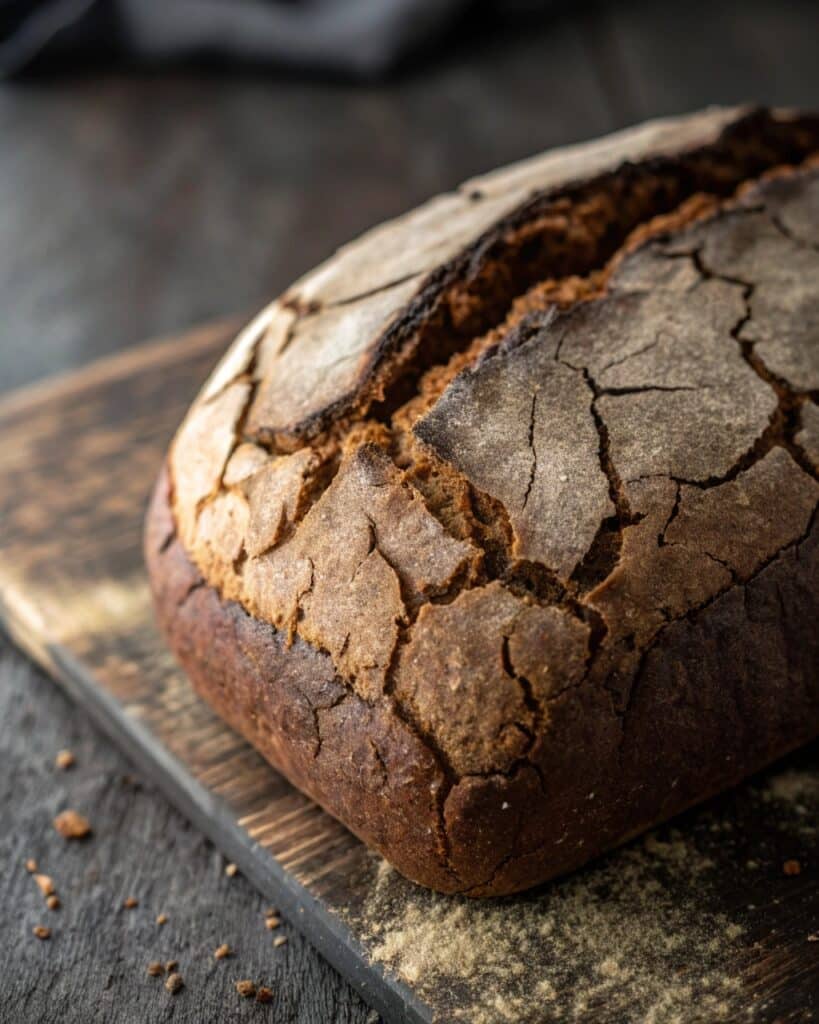
Excessive heat causes the crust to harden before the interior has time to expand. As the inside continues rising, the crust splits.
Signs
- Very dark crust
- Cracks forming early in baking
- Hard crust with tight crumb inside
How to Fix It
- Reduce the oven temperature by 10–20°C (20–35°F).
- Preheat fully before placing the dough.
- If using a Dutch oven, consider lowering the temp after the first 15 minutes.
5. Not Enough Steam in the Oven
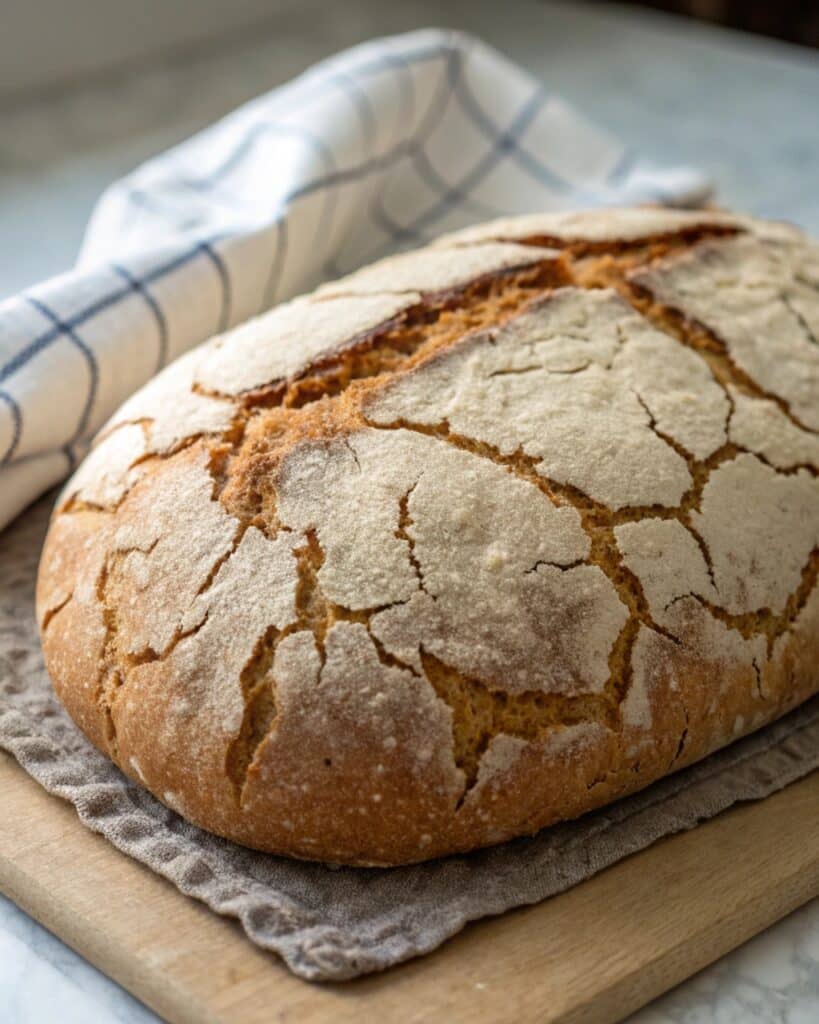
Steam keeps the crust soft during the first 10–15 minutes, allowing the loaf to expand properly.
Without steam:
- The crust sets too quickly → cracks form
- You lose oven spring
- Bread becomes pale and tough
How to Fix It
- Add a tray of hot water to the oven.
- Mist the dough lightly before baking.
- Use a Dutch oven for natural steam.
6. Improper Dough Shaping
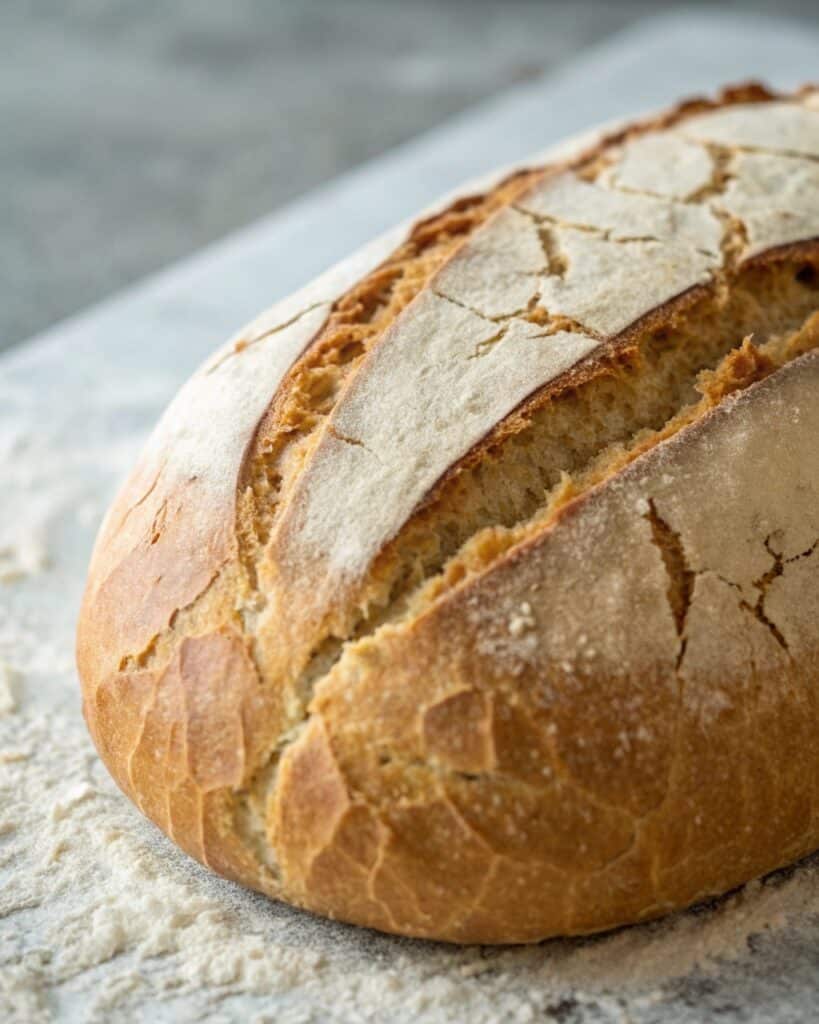
When the dough is shaped loosely or unevenly, weak spots develop. These areas stretch faster and crack during baking.
Signs
- Wide cracks on one side
- Bottom of loaf splits
- Lopsided loaf shape
How to Fix It
- Build surface tension while shaping.
- Tuck edges firmly and seal seams properly.
- Allow dough to rest before final shaping (bench rest).
7. Flour Type and Hydration Issues
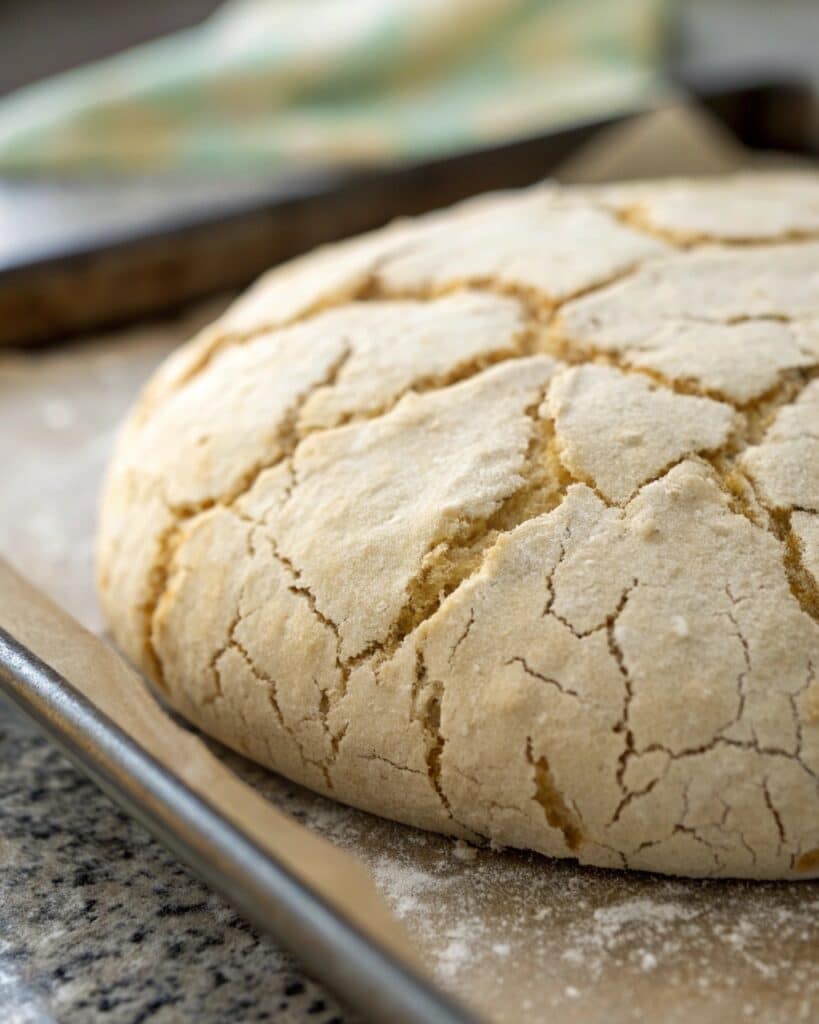
Low-hydration doughs crack more easily because they lack elasticity.
Fixes
- Increase hydration by 2–5% if the dough feels stiff.
- Use bread flour instead of all-purpose flour for better gluten strength.
- Knead until smooth and elastic.
8. Cracks Caused by Cooling
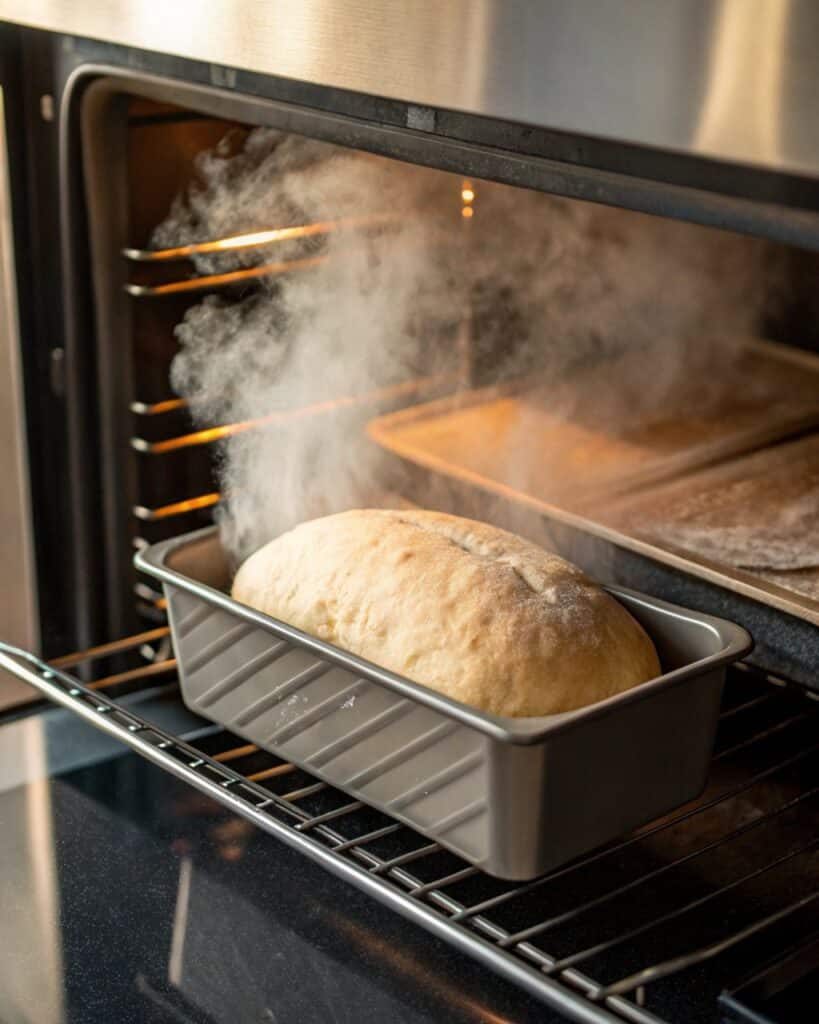
Sometimes cracks appear after baking, especially when the bread cools too quickly.
Why It Happens
- Sudden temperature change
- Moisture escaping rapidly
How to Fix It
- Allow gradual cooling at room temperature.
- Don’t place bread near open windows or cold surfaces.
- Avoid cutting while the bread is still hot.
Frequently Asked Questions
1. Is cracked bread safe to eat?
Yes! It’s usually just a cosmetic issue unless caused by under-baking.
2. Can I prevent cracks in artisan-style loaves?
Some rustic cracks are natural, but controlled scoring helps create a beautiful pattern.
3. Should I oil the dough to prevent cracking?
Lightly oiling during proofing can help but won’t replace proper shaping and scoring.
Final Tips for a Smooth, Even Crust
- Score with confidence and depth.
- Use steam during the first 15 minutes.
- Keep dough properly hydrated.
- Allow enough proofing time.
- Bake at a stable, appropriate temperature.
With practice and these adjustments, you’ll be able to produce beautifully smooth, evenly baked loaves with consistent crusts every time.