
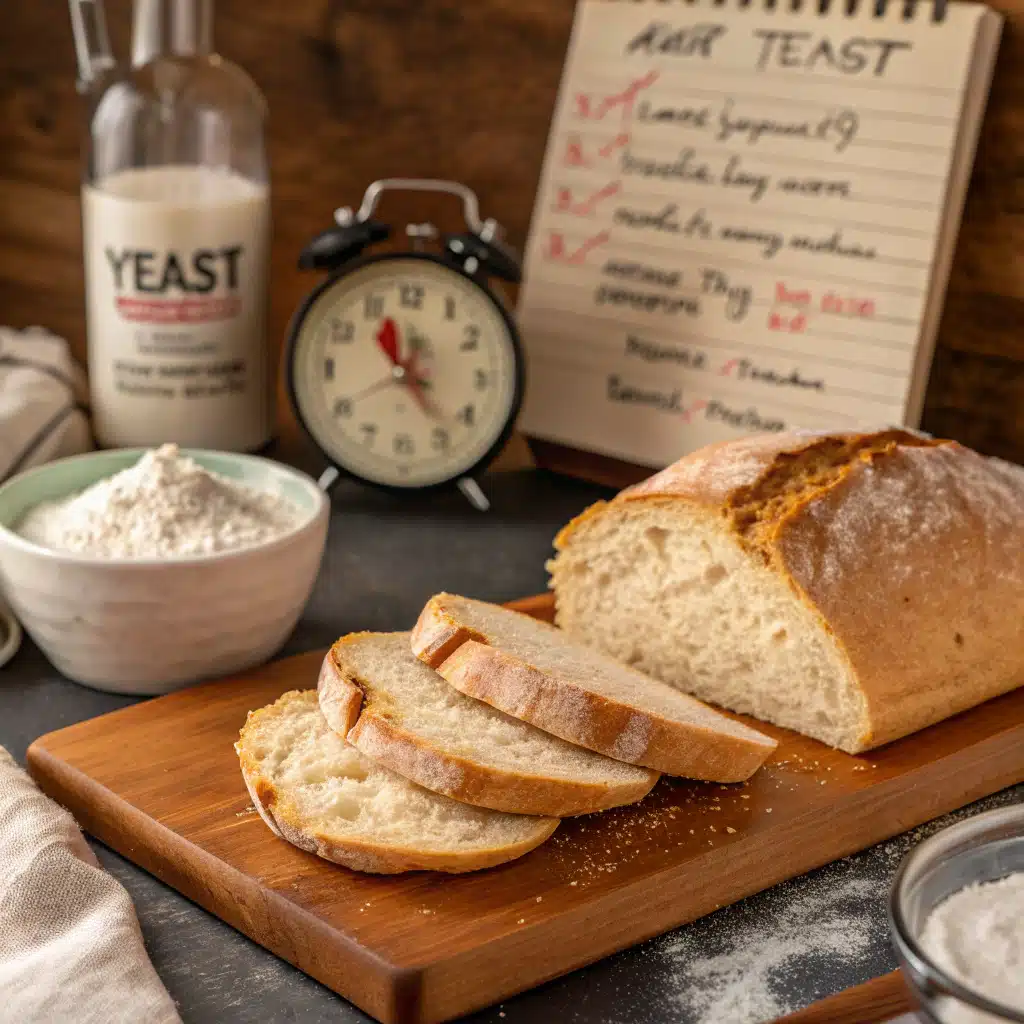
Why Does My Bread Taste Yeasty? How to Avoid Strong Yeast Flavor
The aroma of freshly baked bread is one of the greatest joys of the kitchen. But occasionally, that beautiful loaf disappoints with a flavor that’s too aggressive, too sharp, or simply too much like raw yeast. Instead of the complex, nutty, or slightly sweet notes we crave, we are left with a strong, sometimes unpleasant, “yeasty” taste. This common issue plagues many home bakers, yet the solution is often simpler than you might think. This guide will dive deep into the science of fermentation to help you identify the root causes of overly yeasty bread and provide actionable steps to achieve perfectly balanced flavor in every bake.
Understanding the Core Concept: Flavor is Fermentation
Bread flavor is fundamentally a byproduct of fermentation—the process where yeast consumes sugars and starches in the flour, producing carbon dioxide (which creates rise) and, crucially, alcohol and various organic acids (which create flavor).
When bread tastes “yeasty,” it usually means one of two things: either the yeast was overworked, or the final product contains too much residual alcohol and acetaldehyde (a sharp, green apple-like flavor compound often associated with under-fermented or rushed dough). A balanced loaf allows the yeast to work slowly, giving time for these byproducts to evolve into complex, desirable flavors, rather than remaining as harsh, raw notes.
Image Prompt 1: a realistic photo of a small, precise scale measuring out a tiny mound of dry active yeast next to a bowl of flour, emphasizing the importance of accurate measurement.
The Role of Yeast Quantity
The single biggest determinant of yeasty flavor is the amount of yeast used relative to the flour. Many recipes designed for speed—often called “rapid” or “one-hour” recipes—call for an excessive amount of yeast to force a quick rise. While this saves time, it dramatically accelerates fermentation, leading to a rapid production of gases and flavor compounds that don’t have time to mature or dissipate. Using less yeast is the first, and often most effective, step toward achieving a clean, nuanced flavor profile.
Key Factors Influencing Yeasty Flavor

Several interconnected factors determine whether your loaf develops a rich, complex flavor or a sharp, yeasty one.
Temperature Control
Temperature is the accelerator pedal of fermentation. Yeast is most active between 75°F and 95°F (24°C and 35°C). Fermenting dough at warmer temperatures speeds up the yeast’s activity, generating gas and flavor compounds quickly. If the dough rises too fast in a warm environment, the resulting flavor is often overly alcoholic and yeasty. Slower, cooler fermentation—especially in the refrigerator (cold proofing)—allows flavor compounds to develop complexity while the sharp, volatile compounds dissipate.
Fermentation Time (The Long and Slow Approach)
Time is the baker’s secret ingredient. A short, fast proof means the yeast doesn’t have enough time to consume its own harsh byproducts and convert them into desirable flavor acids (like lactic and acetic acids). When the proof is too short, the high concentration of residual yeast compounds leads directly to that strong, yeasty taste. Extended fermentation, particularly the bulk fermentation stage, is critical for flavor development.
Incomplete Punch Down and Degassing
After bulk fermentation, the dough is typically “punched down” or gently degassed. This step is not just about reshaping; it releases built-up carbon dioxide and, crucially, volatile alcohols and other fermentation byproducts trapped within the gluten structure. If the dough is not adequately degassed before the final proof and baking, those harsh, yeasty flavors can remain trapped in the finished loaf.
Practical Methods and Techniques for Flavor Balance
To banish the strong yeasty taste from your bread, focus on slowing down and optimizing the fermentation process.
1. Reduce the Yeast Quantity
For standard bread recipes (not enriched doughs), aim for 0.5% to 1% fresh yeast, or 0.25% to 0.5% active dry yeast (ADY) or instant dry yeast (IDY), based on the total flour weight (baker’s percentage). For a standard 500g flour loaf, this means using just 2.5g to 5g of IDY. If your current recipe calls for a whole packet (7g or more), halve it and increase your proofing time.
Image Prompt 2: a realistic close-up photo of dough undergoing a slow bulk fermentation in a clear container, showing small, even bubbles and a slight doming structure, emphasizing controlled, cool fermentation.
2. Embrace Cold Fermentation (Cold Proofing)
If you have time, move your dough to the refrigerator (around 40°F or 4°C) after an initial short bulk rise at room temperature. A cold proof lasting 12 to 24 hours dramatically slows the yeast while allowing beneficial bacteria (naturally present in the flour) to produce those complex, desirable acids. This technique is highly effective at reducing yeasty flavor and introducing nutty, wheaty notes.
3. Use Pre-Ferments (Poolish or Biga)
Introducing a pre-ferment—a small portion of the dough mixed hours or a day ahead of time—is the gold standard for flavor. A poolish (a wet pre-ferment) or a biga (a stiff pre-ferment) allows a small amount of yeast to work slowly, building complex flavor compounds before it’s mixed into the main dough. By the time the main dough is mixed, the yeast in the pre-ferment has already matured, resulting in a deeper, cleaner flavor in the final loaf.
Common Mistakes and How to Avoid Them
Home bakers often fall into traps that exacerbate yeasty flavors. Identifying these mistakes is key to improvement.
Mistake 1: Using Water That Is Too Hot
If the water you use to activate or mix the yeast is above 115°F (46°C), you risk killing some of the yeast, but you also supercharge the survivors. Very hot water causes the yeast to begin fermentation aggressively and prematurely, leading to a quick burst of harsh flavors. Use lukewarm water, ideally between 90°F and 100°F (32°C and 38°C), for gentle activation.
Mistake 2: Baking Before the Final Proof is Complete
When dough is under-proofed (not given enough time to rise fully), the yeast cells are still highly active and the concentration of alcohol and acetaldehyde is high. Baking under-proofed bread traps these volatile, yeasty flavors inside the loaf. Always perform the “poke test”: gently poke the dough; if the indentation springs back slowly but doesn’t completely disappear, it is perfectly proofed. If it springs back immediately, it needs more time.
Mistake 3: Relying Solely on Visual Cues
Many beginners rely only on the dough doubling in size. However, the volume increase is primarily carbon dioxide, not flavor development. True flavor needs time. If your dough doubled in 45 minutes because your kitchen was 85°F (29°C), the flavor will be inferior to a dough that doubled in 2 hours at 70°F (21°C), even if the volume is the same. Always prioritize time and temperature over volume alone.
Tips, Best Practices, and Variations

For bakers looking to refine their flavor control, consider these best practices.
Switch to Sourdough
If you consistently struggle with strong yeast flavor, consider transitioning to natural leavening (sourdough). Sourdough starters utilize a symbiotic culture of yeast and lactic acid bacteria (LAB). The LAB produce complex organic acids (lactic and acetic) that completely overshadow the simple, harsh notes associated with commercial yeast, providing superior flavor depth.
Salt Placement and Mixing
Ensure salt is mixed thoroughly into the flour before adding the liquid and yeast. Salt acts as a flavor enhancer and, critically, controls yeast activity. If salt is accidentally excluded or unevenly distributed, the yeast will ferment wildly and quickly, leading to an immediate yeasty taste.
Image Prompt 3: a realistic close-up photo of a cooling rack holding two different loaves of bread: one loaf is pale and dense (representing under-proofed, yeasty bread), and the other is deeply golden brown with an open crumb structure (representing perfectly fermented bread).
FAQ
Q: Can I use less yeast than the recipe calls for?
A: Yes, absolutely. Most commercial recipes over-yeast for speed. You can often reduce the yeast by 30% to 50% without affecting the final result, provided you extend the bulk fermentation time to compensate.
Q: Does the type of yeast (Active Dry vs. Instant) affect flavor?
A: Instant Dry Yeast (IDY) is often more aggressive and faster-acting than Active Dry Yeast (ADY) or fresh yeast, which can sometimes contribute to a sharper flavor if not proofed correctly. However, the quantity and fermentation time are far more critical than the type.
Q: Will adding sugar mask the yeasty taste?
A: While sugar provides food for the yeast and contributes sweetness, adding more sugar may actually accelerate fermentation, potentially making the yeasty flavor worse. Focus instead on slowing the yeast down.
Conclusion
Achieving bread with a clean, complex flavor profile is a hallmark of skilled baking. The key to eliminating that harsh, yeasty taste lies in control: controlling the amount of yeast, controlling the temperature, and controlling the time. By reducing your yeast quantity and embracing the slow, cool fermentation process, you allow the volatile, undesirable flavors to dissipate while the rich, nuanced flavors of the grain and the fermentation process fully develop. Be patient, trust the process, and your loaves will reward you with flavor depth you never thought possible.