
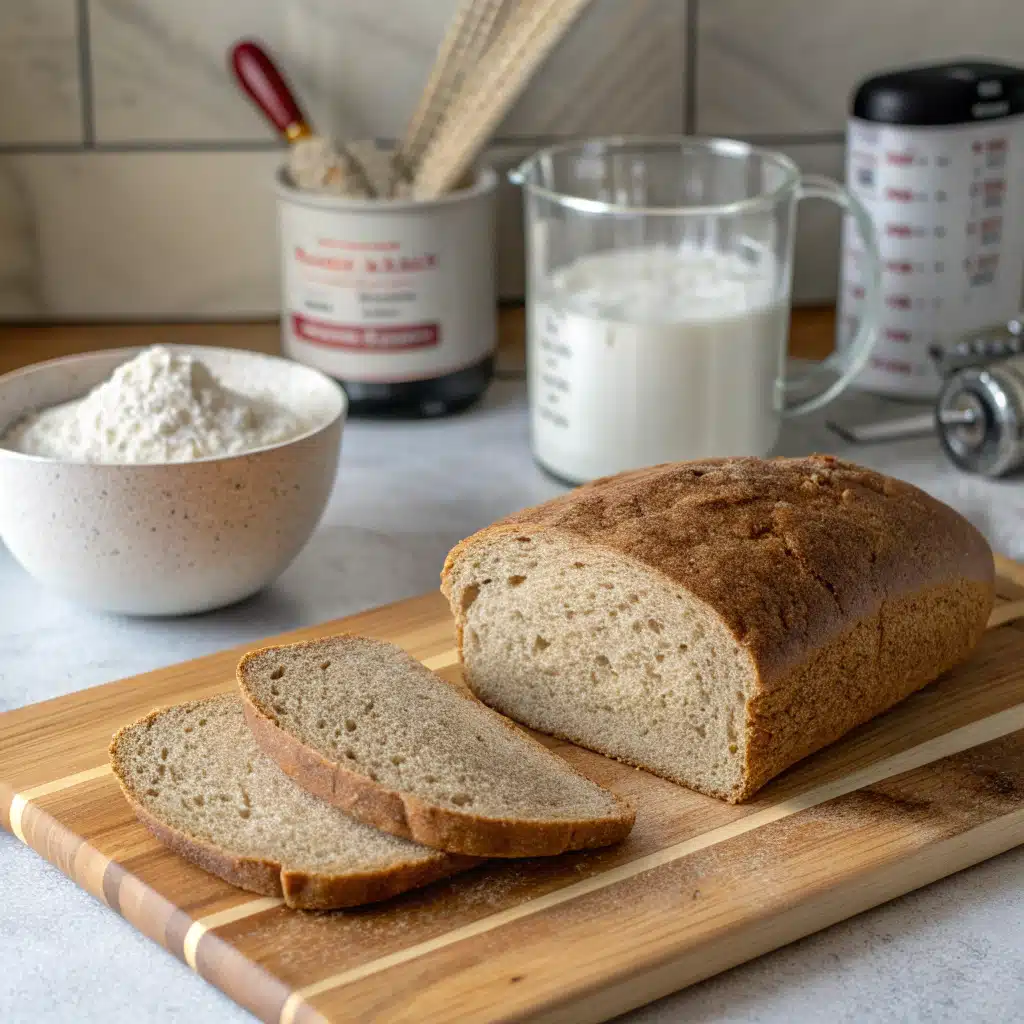
Why Is My Bread Dense? The Real Reasons and Proven Fixes
The moment a baker slices into a freshly baked loaf, they are looking for that light, airy crumb structure—the hallmark of successful bread. But sometimes, instead of springy pockets, we find a heavy, compacted texture that feels more like a brick than a cloud. This frustrating phenomenon is commonly known as dense bread. Understanding why your bread lacks loft is the first step toward achieving the perfect loaf every time. This comprehensive guide, written for the dedicated home baker, breaks down the core reasons behind density and provides proven, actionable fixes rooted in baking science.
Understanding the Core Concept: Gluten and Gas Retention
Bread structure relies on a delicate partnership between two elements: gluten and carbon dioxide gas. Gluten, a protein network formed when flour and water combine, acts like a flexible, elastic balloon. Yeast produces carbon dioxide gas during fermentation, which infl inflates this balloon. The gluten network must be strong enough to trap the gas bubbles (creating the airy crumb) but elastic enough to allow them to expand without tearing.
Density occurs when either the gluten network is underdeveloped (too weak to trap the gas) or overdeveloped (too tight and restricts expansion), or when the gas production itself is insufficient. The key to a light loaf is achieving optimal gluten development and precise fermentation timing.
Image Prompt 1: A realistic photo showing a cross-section of perfectly baked sourdough bread with large, open air pockets (alveoli) next to a cross-section of a dense, heavy white sandwich loaf with tightly packed crumb. Natural kitchen light.
The Role of Hydration in Crumb Structure
Hydration (the ratio of water to flour) is a critical determinant of density. Higher hydration doughs (wetter doughs) generally yield lighter, more open crumbs because the water allows the gluten strands to move more freely, developing a more extensible network that can stretch farther during the final oven spring. Conversely, doughs that are too dry often result in a dense, tight crumb because the stiff gluten structure resists expansion. While beginners often start with lower hydration for easier handling, remember that increasing water slightly, even by 5%, can dramatically improve the final texture.
Key Factors and Principles Causing Density

There are three primary categories where issues leading to dense bread arise: Ingredients, Mixing, and Fermentation.
1. Insufficient or Overdeveloped Gluten
If your dough is not mixed or kneaded enough, the gluten strands remain short and disorganized. This weak network cannot trap gas effectively, leading to bubbles that escape during proofing or oven spring, resulting in a dense, gummy texture.
Conversely, aggressive or prolonged mixing, especially with high-protein flours, can overdevelop the gluten. This makes the dough stiff and inelastic, preventing the gas bubbles from expanding fully during the final bake. The result is a tight, uniform, and heavy crumb.
2. Incorrect Fermentation Timing (Proofing)
Fermentation, often called “proofing,” is where yeast does its work.
* **Underproofed Dough:** If the dough is rushed and hasn’t had enough time to ferment, the yeast hasn’t produced enough gas. The dough may look dense and heavy before baking, and it will fail to rise adequately in the oven, leading to a compact, often pale interior.
* **Overproofed Dough:** This is a common culprit. If the dough proofs for too long, the yeast consumes all the available sugars and essentially “starves.” The gluten structure, stretched to its limit by the excessive gas production, weakens and collapses. During baking, the bread can’t hold its shape and collapses back, resulting in a dense bottom layer often referred to as a “gummy line.”
3. Temperature and Oven Issues
Bread needs a rapid, powerful burst of heat—called oven spring—to achieve maximum volume. If the oven temperature is too low, or if the dough is placed into a cold oven, the yeast dies slowly, and the gluten sets gradually. This prevents the vigorous expansion needed for a light crumb. Furthermore, inadequate steam in the oven prevents the crust from remaining flexible long enough, restricting the dough’s ability to fully expand.
Practical Methods and Techniques for a Lighter Loaf
Fixing density involves adjusting your technique in the kitchen. Here are the proven methods.
Mastering the Dough Consistency (The Windowpane Test)
To ensure optimal gluten development, use the windowpane test. After mixing, take a small piece of dough and gently stretch it with wet hands. If you can stretch it thin enough to see light through it without tearing, the gluten is perfectly developed. If it tears immediately, continue kneading. If it feels stiff and tears quickly, it might be overdeveloped.
Image Prompt 2: A realistic close-up photo of a baker’s hands gently stretching a piece of white bread dough until it is translucent, demonstrating the “windowpane test” technique. Soft, professional kitchen lighting.
Controlling Dough Temperature
Yeast activity is highly sensitive to temperature. Use a dough thermometer to aim for a final mixed dough temperature between 75°F and 78°F (24°C–25°C). Use warmer water in cold kitchens and colder water in warm kitchens to regulate this. Consistent temperature ensures predictable fermentation rates, reducing the chance of under or overproofing.
The Gentle Touch During Shaping
After bulk fermentation, handle the dough gently. Excessive degassing during pre-shaping and final shaping crushes the vital gas bubbles you spent hours creating. While you need to lightly deflate the dough to redistribute the gas, avoid punching it down aggressively. A gentle fold and roll technique preserves the internal structure, leading to a more open crumb.
Common Mistakes and How to Avoid Them
Many home bakers encounter density due to simple, repeated errors.
Mistake 1: Measuring Ingredients by Volume (Cups)
Flour compacts easily, meaning a cup of sifted flour weighs significantly less than a cup scooped straight from the bag. Inaccurate measurements, particularly too much flour (too little water), guarantee a dry, dense loaf.
**The Fix:** Always measure flour, water, and yeast by weight using a digital kitchen scale. This is the single most important step for consistent baking results.
Mistake 2: Relying on Time, Not Observation, for Proofing
Proofing times listed in recipes are estimates. Your kitchen temperature, the yeast activity, and the ingredients all affect the actual time needed.
**The Fix:** Judge proofing by the dough’s appearance and feel. Use the “poke test”: gently poke the side of the dough with a floured finger.
* If the indentation springs back immediately, it needs more time (underproofed).
* If the indentation slowly springs back halfway, it is perfectly proofed.
* If the indentation remains fully, it is likely overproofed.
Mistake 3: Failing to Use Steam in the Oven
Baking bread requires high heat and steam during the first 10–15 minutes. Steam keeps the exterior crust soft, allowing the dough to rise maximally (oven spring) before the crust sets.
**The Fix:** Use a Dutch oven for superior results, or place a pan on the bottom rack of your oven and pour a cup of boiling water into it just before loading the bread.
Tips, Best Practices, and Variations

For the ambitious baker looking to maximize crumb openness, consider these advanced techniques:
* **Autolyse:** Mixing only the flour and water and letting it rest for 30–60 minutes before adding the salt and yeast allows the flour to fully hydrate and the gluten to begin forming naturally without mechanical mixing. This leads to a more extensible dough.
* **Stretch and Folds:** Instead of continuous kneading, try a method of intermittent “stretch and folds” during the bulk fermentation. This gently develops strength in high-hydration doughs while preserving gas and avoiding over-mixing.
* **High-Quality Flour:** Use bread flour (high protein content, typically 12–14%) for recipes requiring significant structure, such as sourdough or artisan loaves. All-purpose flour is suitable for softer sandwich breads but may struggle to support a highly open crumb.
Image Prompt 3: A realistic close-up photo of a baker performing a gentle “stretch and fold” technique on a bowl of high-hydration dough during bulk fermentation. The dough is slightly bubbly.
FAQ
Q: Can adding too much yeast cause dense bread?
A: Yes. While yeast produces gas, too much yeast can cause the dough to rise too quickly (overproof) before the gluten network has time to develop sufficient strength. The resulting aggressive rise and subsequent collapse leads to density.
Q: Why is my whole wheat bread always denser than white bread?
A: Whole wheat flour contains sharp bran particles that physically cut and damage the developing gluten strands, making the network weaker and less effective at trapping gas. To mitigate this, consider sifting out some of the bran, or using an autolyse period to soften the bran before kneading.
Q: Does salt affect the density of bread?
A: Absolutely. Salt controls the rate of yeast activity and strengthens the gluten network. Dough made without salt will rise too quickly and collapse (resulting in density), while dough with too much salt will inhibit yeast activity, leading to a slow, weak rise and a small, dense loaf.
Conclusion
Achieving a light, airy crumb is the ultimate reward in bread baking, and density is a signal that one of the core pillars—hydration, gluten development, or fermentation—needs adjustment. By moving away from guesswork and embracing precision (using a scale, controlling temperature, and observing your dough), you gain mastery over the process. Remember that dense bread is not a failure, but a valuable clue. Adjust your technique based on the principles outlined here, and your next loaf will surely soar.