
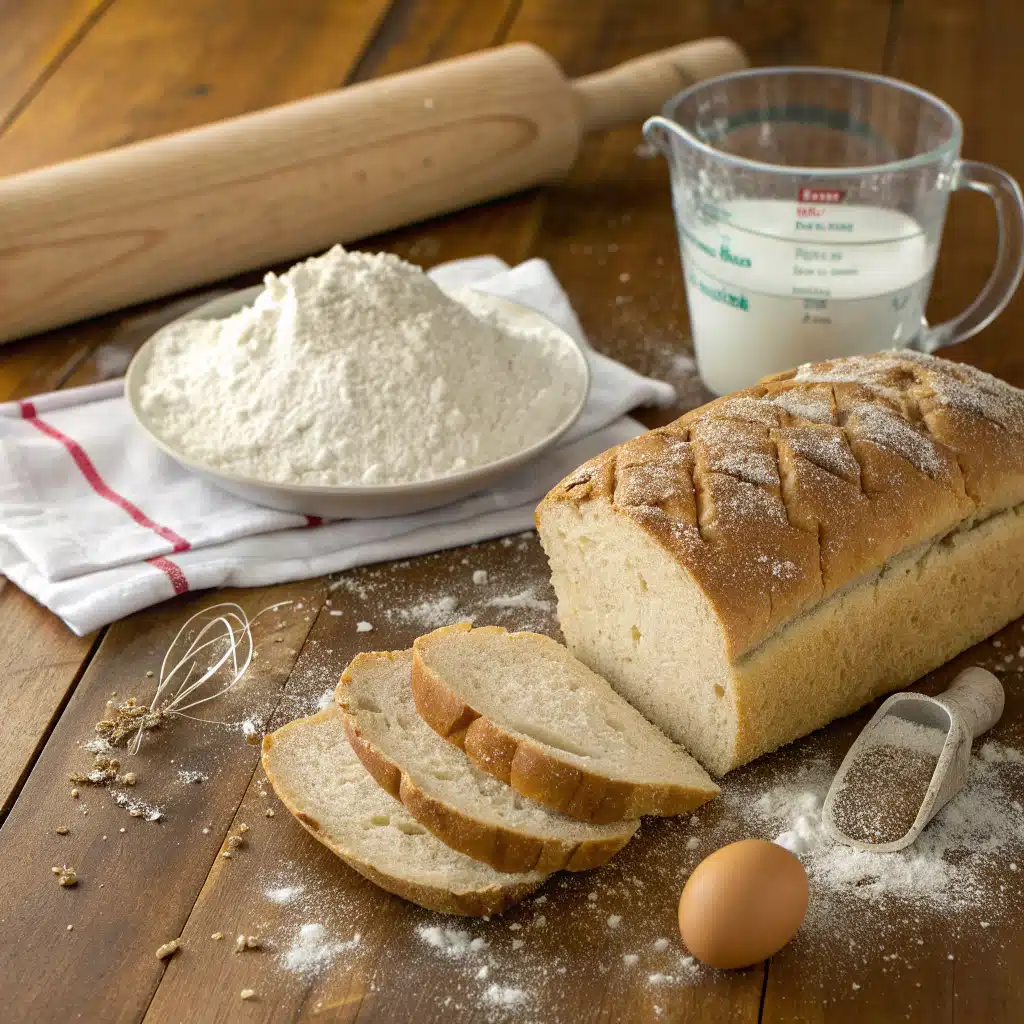
Why Is My Bread Too Dry or Crumbly? Here’s What You’re Doing Wrong
There is nothing more frustrating for a home baker than pulling a beautiful, golden loaf from the oven, only to discover that the interior—the crumb—is disappointingly dry, sandy, or crumbles apart the moment you try to slice it. Instead of the soft, moist, elastic texture we crave, we are left with a loaf that stales quickly and feels heavy.
If you’ve experienced this common baking disappointment, you are not alone. Dry or crumbly bread is rarely the result of one single error; rather, it’s usually a combination of issues related to hydration, gluten development, and heat management. As a professional bread expert, I can assure you that understanding the science behind moisture retention is the key to achieving that perfect, resilient crumb. This comprehensive guide will walk you through the precise factors causing your dry bread and provide actionable, expert solutions to fix them permanently.
Understanding the Core Concept: Structure and Moisture
To understand why bread becomes dry, we must first understand how moisture is held within the loaf. Bread is essentially a matrix of starch and protein (gluten) that gelatinizes and sets during baking. The gluten network acts like a net, trapping the steam and water vapor released by the starch granules as they cook.
A dry or crumbly crumb signals a failure in this retention system. Either the initial water content (hydration) was too low, or the gluten structure was too weak or damaged to hold the moisture, allowing it to evaporate excessively during baking. When the starch molecules are unable to fully hydrate or are cooked too aggressively, they become hard and brittle, leading to the characteristic sandy, crumbly texture.
Image Prompt 1: A realistic close-up photo of a cross-section of a poorly baked loaf of bread. The crumb is visibly dry, dense, and falling apart with a sandy texture, contrasted against a well-developed, slightly shiny, moist crumb in the background. Natural lighting emphasizes the dryness.
The Role of Hydration Percentage
Hydration is the ratio of water to flour by weight. Most standard sandwich loaves require a hydration level between 60% and 70%. If your recipe calls for 500g of flour but only 250g of water (50% hydration), the loaf will inherently be dense and dry, regardless of how perfectly you bake it. Using a digital kitchen scale for all ingredients is non-negotiable for accurate hydration control.
Key Factors and Principles Causing Dry Bread

Several interconnected factors determine the final moisture content and texture of your loaf. Overlooking any one of these can lead to a disappointing result.
1. Insufficient Gluten Development
A weak gluten network is the number one structural cause of crumbly bread. If the dough is not mixed or kneaded long enough, the gluten strands remain short and disorganized. This underdeveloped structure cannot effectively trap and hold the moisture during fermentation or the intense heat of the oven. The result is a structure that fractures easily, leading to a crumbly, sand-like texture.
2. Overbaking and Internal Temperature
Many home bakers rely solely on visual cues (a golden-brown crust) or the time listed in the recipe. However, internal temperature is the only reliable indicator of doneness. When bread is baked past the optimal internal temperature (typically 200°F–210°F or 93°C–99°C), the excess heat continues to drive off moisture, essentially desiccating the starch and protein matrix. Even a few extra minutes can turn a perfect loaf into a dry one.
3. Low Humidity and Lack of Steam
The initial phase of baking, often called “oven spring,” is crucial. When bread is placed in a dry oven environment, the exterior crust hardens rapidly. This premature crust formation restricts the dough’s ability to fully expand and traps the internal moisture, but it also allows moisture to escape through the hardened, brittle surface later in the bake. Introducing steam at the start of the bake keeps the surface pliable, allowing for maximum expansion and ensuring a slower, more controlled evaporation rate.
Image Prompt 2: A realistic, dramatic photo showing steam billowing out of a slightly ajar oven door where a freshly loaded loaf of bread is baking on a baking steel. The steam is visible and emphasizes the humid environment inside the oven.
4. Flour Type and Absorption
Different flours absorb water differently. High-protein bread flour absorbs more water than all-purpose flour. Crucially, whole wheat and rye flours absorb significantly more water due to the presence of germ and bran, which act like tiny sponges. If you substitute whole wheat for white flour in a recipe without increasing the hydration (sometimes by as much as 10–15%), the resulting loaf will be exceptionally dry and heavy.
Practical Methods and Techniques to Ensure Moist Bread
Preventing dryness requires precision and attention to the dough’s needs at every stage.
Use a Scale and Adjust Hydration Dynamically
Always measure ingredients by weight. Furthermore, learn to adjust the hydration based on feel. If your dough feels stiff, dense, or tears easily during kneading, add water (a tablespoon at a time) until the dough feels supple and slightly tacky. Remember that flour moisture content varies seasonally.
Embrace the Autolyse Technique
The autolyse involves mixing only the flour and water and letting it rest for 20 to 45 minutes before adding the yeast and salt. This rest period allows the flour to fully hydrate before gluten development begins. Full hydration leads to a much more extensible and moisture-retentive dough.
Develop Gluten Thoroughly
Ensure your dough passes the “windowpane test.” Knead until the dough is smooth, elastic, and when stretched thin, you can see light through it without it tearing immediately. If you are using a lower hydration dough (like for baguettes or standard sandwich bread), use the full kneading time specified in the recipe. For wet doughs (like sourdough), rely on stretch-and-folds during the bulk fermentation to build strength gently.
Master Steam Management
Use steam for the first 10 to 15 minutes of baking. Methods include:
1. **Ice Cubes:** Placing a tray of ice cubes on the oven floor beneath the bread.
2. **Misting:** Spraying the oven walls with water (carefully) 3–4 times in the first 10 minutes.
3. **Dutch Oven:** Baking the loaf inside a preheated Dutch oven, trapping the moisture released by the dough itself. This is often the most effective method for home bakers.
Image Prompt 3: A close-up shot of a hand inserting a digital instant-read thermometer into the center of a freshly baked loaf of bread resting on a cooling rack. The thermometer screen clearly displays a reading of 205°F.
Common Mistakes and How to Avoid Them
Even experienced bakers sometimes fall prey to habits that sabotage moisture retention.
Mistake 1: Adding Too Much Flour During Kneading
The most common mistake beginners make is adding flour to the bench or the bowl to combat stickiness. While a little flour prevents sticking, excessive addition drastically lowers the overall hydration percentage, leading directly to a dry, tight crumb.
**Solution:** Use water or a light layer of oil on your hands and work surface instead of flour to manage sticky dough. Embrace the tackiness; wet doughs yield softer crumbs.
Mistake 2: Cutting the Bread While It’s Still Hot
When bread first comes out of the oven, it is still cooking (a process called carryover baking) and stabilizing. The internal temperature drops slowly, and the starch molecules are still setting. Slicing hot bread allows all the trapped steam and moisture to rapidly escape. This leads to a gummy texture initially, but the rest of the loaf dries out incredibly fast.
**Solution:** Always cool bread completely on a wire rack—usually 1 to 2 hours for a standard loaf—before slicing.
Mistake 3: Poor Storage Practices
Storing bread in the refrigerator accelerates staling dramatically due to a process called starch retrogradation (the recrystallization of starch molecules). If you leave your bread uncovered, it will also dry out rapidly as moisture evaporates into the air.
**Solution:** Store bread at room temperature, wrapped tightly in a cloth bag, beeswax wrap, or a sealed paper bag placed inside a plastic bag. For long-term storage, slice and freeze the bread.
Tips, Best Practices, and Variations

For an exceptionally moist loaf, consider enriching your dough.
Enrichments for Moisture
Adding fats and dairy products significantly improves the shelf life and moisture retention of bread.
* **Fats:** Butter, oil, or lard coat the flour particles, inhibiting gluten development slightly and tenderizing the crumb, leading to a much softer texture that resists staling.
* **Milk:** Replacing some or all of the water with milk adds fat, protein, and lactose (a sugar), which results in a softer crust and a more tender, moist crumb.
* **Potatoes:** Adding cooked, mashed potato or potato flour (not starch) to a recipe acts as a humectant, helping the bread retain moisture over several days.
Using the Tangzhong Method
If dryness is a persistent issue, explore the Asian baking technique known as Tangzhong (water roux). This involves cooking a small portion of the flour and liquid into a paste before mixing the main dough. The cooked starch can hold significantly more water, resulting in unbelievably soft, pillowy loaves that stay fresh and moist for days longer than conventional bread.
FAQ
Q: What is the ideal internal temperature for most baked bread?
A: For lean loaves (flour, water, yeast, salt), aim for an internal temperature between 200°F and 210°F (93°C–99°C). Enriched loaves containing sugar and fats may be removed slightly earlier, around 190°F–195°F (88°C–90°C).
Q: I followed the recipe exactly, but my dough still feels too stiff. Why?
A: Flour differs widely in absorption capacity based on brand, grind, and climate. If your dough feels stiff, the flour is likely thirstier than anticipated. Always add 5–10% more water than the recipe calls for, gradually, until the dough reaches the correct consistency (supple and tacky).
Q: Does using whole wheat flour always result in drier bread?
A: Whole wheat flour contains bran, which shreds the gluten structure and absorbs a lot of water. This combination often leads to a drier result. To combat this, increase the hydration percentage and use an autolyse rest period to soften the bran before kneading.
Conclusion
Dry and crumbly bread is a sign that the delicate balance of moisture, structure, and heat was disrupted. By focusing on accurate hydration using a scale, ensuring robust gluten development, and meticulously checking the internal temperature for doneness, you can eliminate dryness from your baking vocabulary. Remember that great bread is built on a strong, well-hydrated foundation. Apply these principles, and you will consistently achieve the moist, resilient crumb every home baker strives for.