
Introduction
There’s something undeniably festive about a dessert that brings color, flavor, and tradition together—and nothing does that better than the 4th of July Trifle. This patriotic dessert has become a centerpiece of Independence Day celebrations, known for its vibrant layers of red, white, and blue. What makes it especially appealing is that it looks elaborate but is surprisingly simple to create. Whether you’re hosting a backyard barbecue, attending a picnic, or enjoying a small family gathering under the fireworks, this sweet treat delivers a perfect blend of freshness and indulgence.
From a culinary perspective, trifles are fascinating because they balance texture and flavor. Combining airy cake, creamy custard or whipped topping, and juicy fruit results in a layered spoonful of satisfaction. The magic of this recipe lies in its flexibility—you can customize it to your taste or dietary needs while maintaining that iconic patriotic aesthetic. In this guide, we’ll break down how to create the perfect version, share expert tips, and explore creative alternatives that keep the star-spangled spirit alive.
—
Step-by-Step Instructions
If you’ve ever thought that making a trifle requires professional pastry skills, think again! The 4th of July Trifle is as simple as it is stunning. Here’s how to assemble it from start to finish:
Step 1: Gather Your Ingredients
You’ll need the following items:
– Cake base: Use angel food cake, pound cake, or vanilla sponge. Pre-cubed store-bought cake saves time.
– Cream layer: Whipped cream, vanilla pudding, or a mix of cream cheese and whipped topping.
– Fruits: Fresh strawberries (or raspberries), blueberries, and optional blackberries for added depth.
– Extras: Optional garnishes like mint leaves, edible glitter, or festive sprinkles for presentation flair.
Step 2: Prepare Your Components
– Wash and slice your strawberries into thin, even pieces.
– Cube the cake into bite-sized chunks—each should be sturdy enough to hold form but soft enough to soak up flavor.
– Prep your cream layer by whipping it until it’s light and fluffy. If you want extra sweetness, add a teaspoon of vanilla extract and a dash of powdered sugar.
Step 3: Assemble the Layers
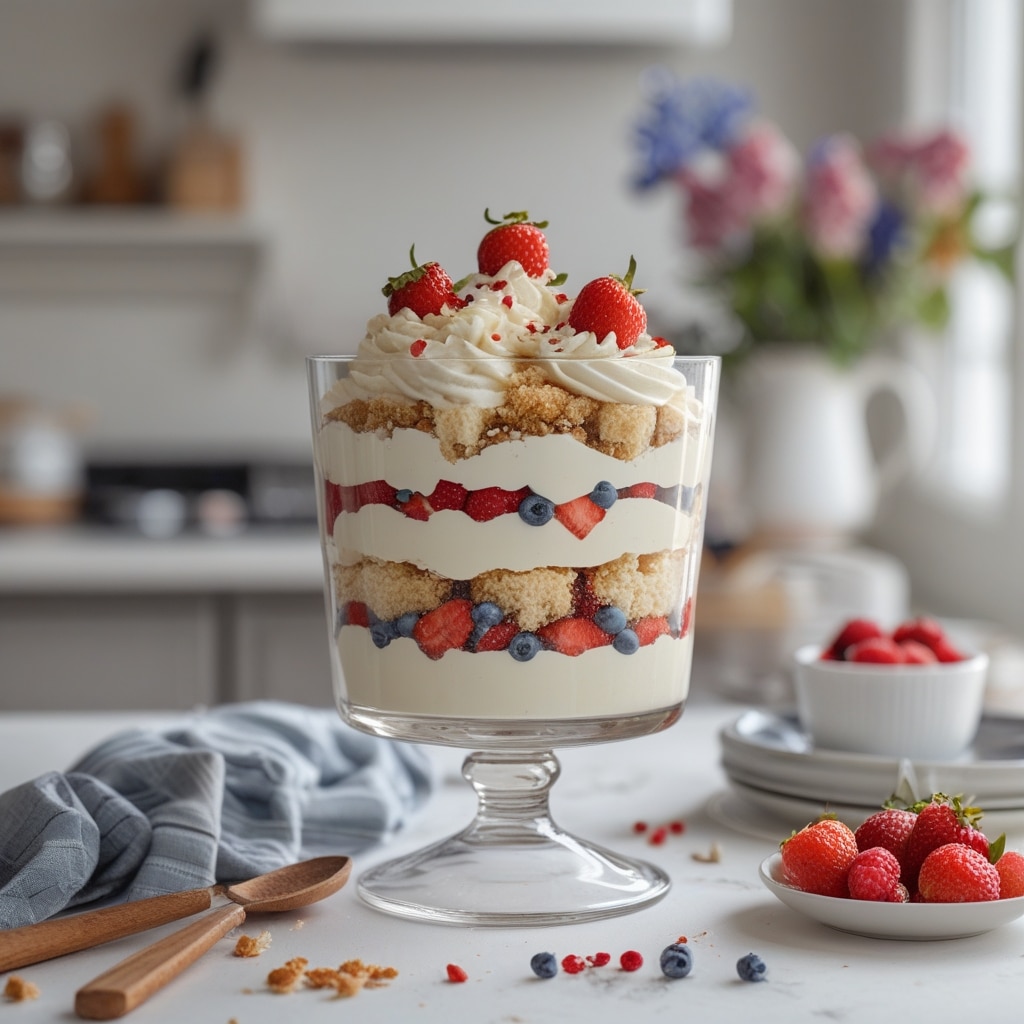
1. Start with a base of cubed cake, evenly spread at the bottom of your trifle dish.
2. Add a layer of cream mixture, ensuring full coverage.
3. Scatter blueberries evenly over the cream.
4. Add another layer of cake cubes and repeat the process—cream, strawberries, cake, blueberries—until your dish is full.
For presentation, aim for clear, defined layers that showcase the red, white, and blue contrast. End with a final layer of whipped cream and decorate with extra fruit on top.
Step 4: Chill and Serve
Refrigerate your trifle for at least 2 hours before serving. This allows the flavors to meld together and the cream to set slightly. Serve chilled, preferably in a clear glass bowl that highlights the colorful layers.
—
Tips
1. Choose Fresh and Firm Fruit
For the best visual and taste experience, choose firm, ripe berries. Overripe fruit tends to leak juices, which can cause the layers to blend and create a soggy texture.
2. Keep Proportions Balanced
Each layer should be even—too much cream can overpower the fruit, while too little can make the trifle feel dry. Aim for consistency in thickness throughout.
3. Customize the Cream Base
If whipped cream feels too light, mix in mascarpone or cream cheese for extra structure and tang. This helps the trifle hold its shape and adds richness.
4. Make It a Day Ahead
One of the best time-saving tips is to prepare your trifle ahead of time. As it sits overnight, flavor integration improves. However, add your final fruit layer right before serving for peak freshness.
5. Add Crunch for Texture
Sprinkle crushed vanilla wafers or shortbread between layers for a delightful bite. Texture contrast keeps guests coming back for seconds.
—
Alternative Methods
Low-Sugar or Keto-Friendly Version
If you’re watching your sugar intake, you can easily adapt this dessert. Use sugar-free pudding or whipped topping, and replace traditional cake with keto-friendly almond pound cake. Opt for natural sweeteners like erythritol or monk fruit instead of sugar.
Dairy-Free or Vegan Adaptation
For dairy-free diets, use coconut whipped cream, plant-based pudding, or cashew-based frosting. Many vegan bakeries offer suitable sponge cakes, or you can bake one at home using almond or oat milk as substitutes.
Portable Trifles in Jars
For picnics or outdoor events, assemble individual trifles in mason jars. They’re convenient, easy to transport, and make serving effortless. Plus, guests love having their very own mini version of this festive dessert.
Alcohol-Infused Adult Twist
Add a splash of liqueur—such as amaretto, Grand Marnier, or blueberry vodka—to the cream layer for a more mature version. Just a hint enhances flavor complexity without overwhelming the dessert.
Frozen Trifle Variation
For a cooling spin, freeze your prepared trifle for 1–2 hours before serving. The cream firms up like semifreddo, providing a refreshing texture that’s perfect for warm July days.
—
Conclusion
Creating a 4th of July Trifle is more than just making dessert—it’s about celebrating flavor, color, and tradition in one show-stopping dish. Each spoonful combines layers of sweetness and freshness, representing the joy and unity of Independence Day gatherings. What’s remarkable is its adaptability; you can tailor it for different palates, dietary needs, or presentation styles while preserving its signature patriotic charm.
From families sharing this dessert on picnic blankets to friends feasting under fireworks, the trifle carries meaning beyond its ingredients—it becomes a shared experience. With the right balance of color, texture, and creativity, your dessert table will be as memorable as the celebration itself.
So this July Fourth, let your culinary creativity shine with a trifle that’s as vibrant as the fireworks overhead and as sweet as the memories you’ll make.