
Introduction
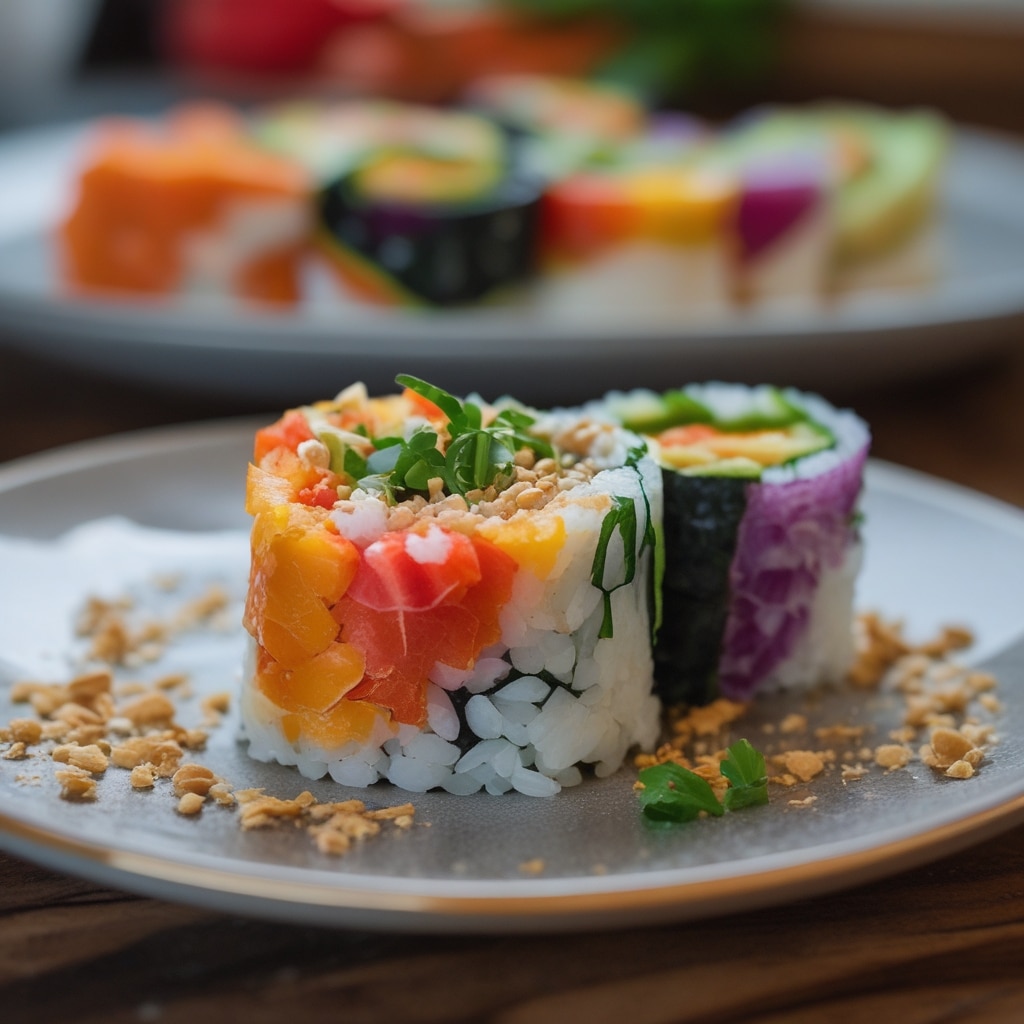
There’s something truly satisfying about creating a dish that’s as visually stunning as it is delicious. Imagine vibrant layers of fresh vegetables wrapped in delicate seaweed sheets and fluffy sushi rice—a combination that’s both nutritious and delightful to eat. That’s exactly what you’ll enjoy with Colorful Rainbow Veggie Sushi Rolls. Perfect for a light lunch, party platter, or creative family meal, these rolls bring together the art of Japanese cuisine with a fresh, plant-based twist.
What makes this recipe stand out is not just its eye-catching hues, but also its versatility. From crunchy carrots to creamy avocado, the variety of textures and flavors create a balanced experience your guests will remember. Plus, this recipe caters effortlessly to vegan, vegetarian, and even gluten-free diets when made with the right ingredients. In this post, we’ll walk you through a simple process to prepare these stunning veggie rolls at home, along with tips and variations to make them your own.
—
Step-by-Step Instructions
Creating Colorful Rainbow Veggie Sushi Rolls is easier than you might think. Follow this step-by-step guide to achieve perfect, restaurant-quality rolls in your home kitchen.
Step 1: Gather Fresh Ingredients
Begin by assembling your produce. The quality and freshness of your vegetables make a huge difference in both flavor and appearance:
– Sushi rice: Use short-grain Japanese rice for the best stickiness and texture.
– Rice vinegar, sugar, and salt: To season the cooked rice, giving it that authentic sushi flavor.
– Nori sheets: Thin sheets of seaweed that hold your rolls together.
– Colorful vegetables: Think beyond the basics—try red bell peppers, purple cabbage, yellow pickled radish, cucumbers, and orange carrots.
– Avocado and microgreens: For added creaminess and a pop of freshness.
Step 2: Cook and Season the Sushi Rice
Rinse one cup of rice until the water runs clear. Cook it with slightly less water than usual to keep it firm. Once done, transfer it to a wide bowl, gently fold in rice vinegar, sugar, and salt, then let it cool to room temperature. The rice should be sticky but not mushy.
Step 3: Prepare the Vegetables
Slice your vegetables into long, even strips. Uniformity is key to achieving balanced and tight rolls. Blanch tougher veggies like carrots for 30 seconds if needed, then pat dry. Keep everything organized on a large cutting board.
Step 4: Rolling Technique
Place a bamboo sushi mat (wrapped in plastic wrap) on a flat surface. Lay one nori sheet shiny-side down. Spread a thin, even layer of rice across the nori, leaving one inch at the top edge uncovered. Arrange your sliced vegetables in horizontal rows in the center of the rice.
Carefully lift the edge of the mat closest to you and start rolling upward while applying gentle pressure. Continue rolling until the seam is sealed. Moisten the edge of the nori with a bit of water to stick it down securely.
Step 5: Slice and Serve
With a sharp knife, cut each roll into even pieces. Clean the knife with a damp cloth after every slice for neat edges. Arrange the rolls on a platter with slices positioned to showcase the colorful centers. Serve with soy sauce, wasabi, or spicy mayo.
—
Tips
Make your sushi-making experience smoother with these practical suggestions:
– Keep your hands wet: Sticky rice can cling easily; dipping your fingers in water helps when spreading it evenly.
– Balance the filling: Don’t overfill your roll, or it will be difficult to close. A modest, evenly distributed layer makes for a cleaner roll.
– Use a sharp knife: A clean, sharp blade ensures precise cuts that show off those stunning rainbow cross-sections.
– Add a creative garnish: Sprinkle black sesame seeds or drizzle a touch of sriracha mayo for extra flavor and presentation points.
– Chill before slicing: If your rolls seem too soft, refrigerate them for 10–15 minutes before cutting—they’ll hold their shape beautifully.
These small details elevate your sushi from good to gourmet, ensuring every bite feels fresh and intentional.
—
Alternative Methods
Once you perfect the basics, try experimenting with different ingredients and techniques:
1. Grain-Free Option
Replace sushi rice with cauliflower rice seasoned with a light touch of rice vinegar. This low-carb twist still pairs perfectly with crisp, colorful vegetables.
2. No-Nori Version
For those who aren’t fans of seaweed, use thinly sliced cucumber sheets as your wrapper. They create a refreshing alternative that’s ideal for summer appetizers.
3. Fusion Flavors
Add unexpected fillings like mango and tofu, or drizzle with peanut sauce instead of soy for a Thai-inspired fusion roll. Healthy food doesn’t have to be predictable—play with flavors that inspire you.
4. Cooked Options
If you prefer a heartier meal, include roasted sweet potato, grilled portobello mushrooms, or marinated tempeh for extra depth of flavor and texture.
Customizing your sushi opens up endless possibilities, making each experience unique—and ideal for sharing on social media or your food blog for that eye-catching, SEO-friendly imagery!
—
Conclusion
Making Colorful Rainbow Veggie Sushi Rolls at home is a joyful and rewarding experience that brings color, creativity, and balance to your plate. This beautiful dish celebrates healthy eating without compromising flavor, offering a feast for both the eyes and the taste buds.
Beyond being an Instagram-worthy meal, these rolls serve as an engaging way to explore plant-based cooking and mindful eating. With just a few ingredients and an open mind for culinary creativity, anyone can master sushi-making at home. Whether you’re preparing a family-friendly dinner or impressing guests at your next gathering, these veggie rolls are sure to spark conversations and smiles.
Embrace the art of simple, colorful, plant-based cuisine—because good food isn’t just about nutrition, it’s about experience. Your next kitchen adventure starts with these vibrant rolls that prove healthy eating can be both beautiful and deeply satisfying.