
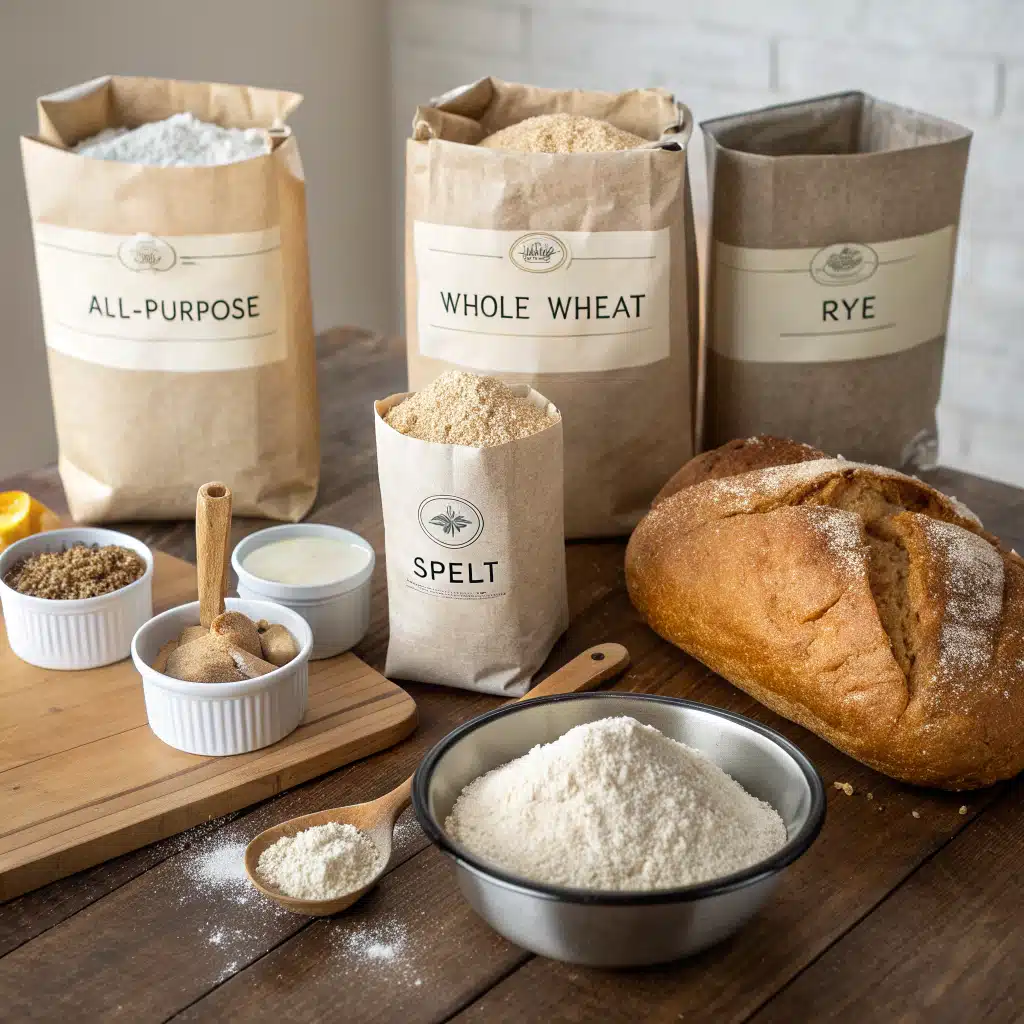
How to Choose the Right Flour for Any Bread Recipe
The difference between a dense, brick-like loaf and an airy, perfectly structured artisan boule often comes down to a single ingredient: flour. While many home bakers treat flour as a monolithic commodity, professionals understand it is the foundational building block whose specific composition dictates the texture, rise, and flavor of the final bread. Choosing the wrong type of flour for a specific recipe—say, using pastry flour for sourdough—is a guaranteed path to disappointment. This guide will demystify the essential qualities of baking flours, focusing on how protein content and milling process influence gluten development, ensuring you select the optimal flour for every bread you bake.
Understanding the Core Concept: The Power of Protein
The single most crucial factor distinguishing flours suitable for bread from those designed for cakes or biscuits is protein content, specifically the proteins gliadin and glutenin. When these proteins are hydrated and kneaded, they link together to form gluten—the elastic network that traps the carbon dioxide gas produced by yeast, allowing the bread to rise and hold its shape.
A flour’s protein percentage directly correlates with its potential for structure and volume. Higher protein flours (12–14%) produce strong, chewy breads, while lower protein flours (8–10%) result in tender, delicate crumb structures. Understanding this relationship is the key to successful bread baking.
Image Prompt 1: a realistic photo showing three small bowls of different flours labeled clearly: one bowl of high-protein bread flour, one bowl of all-purpose flour, and one bowl of low-protein cake flour, emphasizing the subtle differences in color and texture. Soft kitchen lighting.
Key Factors and Principles Affecting Flour Choice

Selecting the correct flour requires evaluating three primary characteristics: protein content, mineral content (ash), and the method of milling.
Protein Content and Gluten Potential
* **Bread Flour (12–14% Protein):** This is the gold standard for yeast-leavened breads, especially those requiring significant structure, like baguettes, sourdough, and sandwich loaves. Its high protein ensures maximum gluten development, resulting in excellent volume and a characteristic chewiness.
* **All-Purpose (AP) Flour (10–12% Protein):** A versatile middle ground, AP flour works adequately for many quick breads and simple yeast doughs, but it lacks the strength for long-fermentation artisan loaves. If a recipe calls for AP flour, you can usually substitute bread flour for a slightly better structure.
* **Pastry or Cake Flour (8–10% Protein):** These flours are explicitly designed for tenderness and minimal gluten development. They are unsuitable for structural bread baking but perfect for soft rolls, brioche, or tender pizza doughs where a delicate crumb is desired.
Mineral Content (Ash) and Extraction Rate
The “ash content” refers to the percentage of minerals remaining after the flour is burned, which acts as a proxy for how much of the wheat kernel (bran and germ) was included in the final grind.
* **White Flour (Low Ash):** Milled primarily from the endosperm, resulting in a cleaner, whiter flour and a milder flavor.
* **Whole Wheat Flour (High Ash):** Contains all parts of the kernel. The presence of bran and germ cuts the gluten strands, requiring higher hydration and often leading to denser bread.
* **High-Extraction Flours (Medium Ash):** These flours, often used in artisan baking (like Type 85 or T80), fall between white and whole wheat. They retain some bran for flavor and nutrition but not so much that they severely inhibit gluten development, offering a great balance.
Flour Treatment and Conditioning
Flour is often treated to improve baking performance. Bleached flour is chemically treated for whiteness and tenderness, while unbleached flour is aged naturally, resulting in a slightly stronger gluten structure. For bread baking, unbleached flour is generally preferred as it provides more reliable strength.
Practical Methods and Techniques for Selection
When approaching a new recipe, follow these steps to ensure you select the appropriate flour:
1. Determine the Desired Crumb Structure
Ask yourself: What is the goal of this bread?
* **High Volume and Open Crumb (Sourdough, Ciabatta):** Requires high-protein bread flour (13%+) to handle high hydration and long fermentation.
* **Soft, Tender, and Rich (Brioche, Dinner Rolls):** Requires AP flour or a blend of AP and pastry flour, as too much gluten will make the rolls tough.
* **Dense, Hearty, and Nutritious (Rye, Whole Wheat):** Requires specific whole grain flours, often blended with strong white bread flour to provide the necessary structure that the whole grains themselves lack.
2. Adjusting Hydration for Different Flours
Different flours absorb water differently. Whole wheat flour demands significantly more water than white flour because the bran acts like a sponge. If you substitute a high-protein flour for a low-protein flour (or vice versa), you must adjust the hydration:
* **Switching to a Stronger Flour:** Increase water slightly (1–3%) to compensate for its higher absorption capacity.
* **Switching to a Weaker Flour:** Decrease water slightly, as the dough will become too slack and unmanageable if the hydration remains high.
Image Prompt 2: a close-up, educational photo showing a baker carefully pouring water into a mixing bowl containing high-protein bread flour, illustrating the process of hydration adjustment in a clean, professional kitchen setting.
Common Mistakes and How to Avoid Them
Even experienced bakers sometimes falter when selecting and handling different types of flour.
Mistake 1: Treating All Flours Interchangeably
The most common error is assuming “flour is flour.” Using cake flour for a rustic loaf will result in zero structure and a flat disk. Using high-protein bread flour for biscuits will result in a tough, chewy texture.
**Avoidance:** Always read the recipe specifications carefully. If a recipe calls for a specific type of flour (e.g., “high-gluten bread flour”), use it or be prepared to adjust the recipe significantly.
Mistake 2: Failing to Sift Whole Grains
When using whole wheat or rye flours, the sharp edges of the bran can shred the developing gluten network, leading to poor volume.
**Avoidance:** While not all flours need sifting, sifting whole grain flours before mixing helps separate the bran, making it easier for the flour to absorb water and for the gluten to develop before the bran pieces are incorporated during mixing.
Mistake 3: Misunderstanding Organic vs. Conventional
While organic flours are often highly prized for flavor and environmental reasons, they are not inherently “better” for structure than conventional ones. A conventional flour with 13% protein will always outperform an organic AP flour with 10% protein when baking a structural loaf.
**Avoidance:** Prioritize protein percentage and treatment (unbleached) over organic certification when structure is paramount.
Tips, Best Practices, and Variations

Achieving mastery in flour selection involves understanding how to blend flours for specific results.
The Power of Blending
Professional bakers rarely use a single type of flour. Blending allows precise control over texture and flavor.
* **For Softer Texture in Sourdough:** Substitute 10–15% of the bread flour with AP or even whole spelt flour.
* **For Stronger Whole Wheat:** Replace 25–50% of the whole wheat flour with high-protein white bread flour. This provides the structure needed for a good rise while retaining the whole grain flavor.
Considering Regional Flours
Flour quality varies significantly by region and mill. If you are baking in the US, look for King Arthur or similar high-quality brands that guarantee protein consistency. In Europe, look for “Type” classifications (e.g., T45 for cake, T65 for bread, T150 for whole wheat), which denote ash content and are highly reliable indicators of performance.
Image Prompt 3: a close-up, artistic photo of several small paper bags or containers of specialty flours labeled clearly: Rye Flour, High-Extraction Wheat Flour, and Stone-Ground Whole Wheat Flour, arranged on a rustic wooden table.
FAQ
Q: Can I use all-purpose flour instead of bread flour?
A: Yes, but expect a slightly smaller loaf with less chew and volume. For high-hydration recipes (over 75%), AP flour may not be strong enough to support the dough structure.
Q: What is “high-gluten” flour?
A: High-gluten flour typically has 14–16% protein, significantly higher than standard bread flour. It is primarily used for bagels, pizza crusts, and pretzels, where an extremely strong, chewy texture is desired.
Q: Does the freshness of flour matter?
A: Yes. While dry flour stores well, the fats in whole grain flours can turn rancid quickly, affecting flavor. Always store flours, especially whole grains, in an airtight container in a cool, dark place.
Conclusion
Choosing the right flour is less about finding a single “best” brand and more about understanding the science of protein and hydration. By prioritizing the protein content that matches your desired bread structure—strong bread flour for chewy loaves, and weaker AP flour for tender rolls—you gain the fundamental control needed to elevate your baking. Stop letting the flour dictate your results; start choosing the flour that makes your recipe shine.