
Introduction
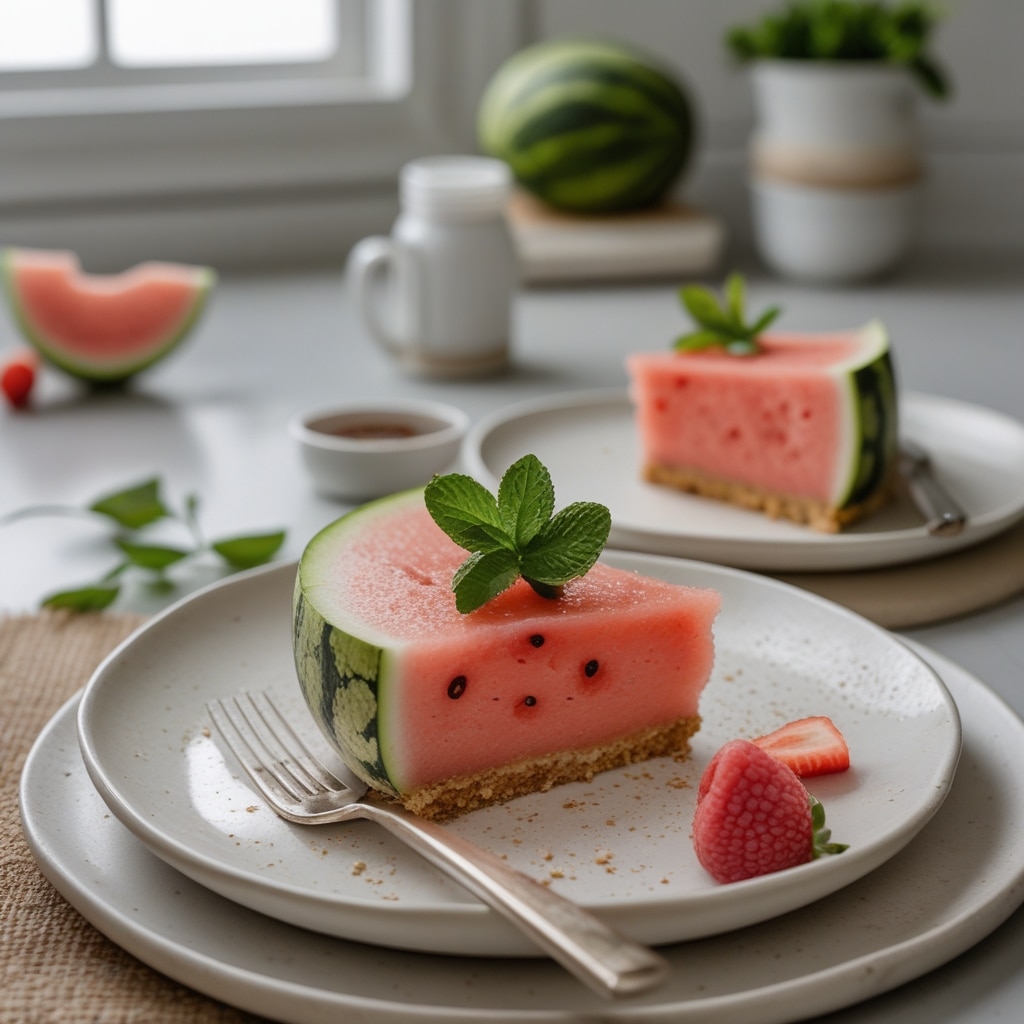
When summer’s heat starts to soar, there’s nothing more satisfying than a chilled dessert that’s as beautiful as it is refreshing. If you’re looking for an eye-catching treat that’s creamy, fruity, and easy to make, then the No-Bake Watermelon Cheesecake is your answer. Unlike traditional cheesecakes that require hours in the oven and precise temperature control, this version is a cool, luscious delight that sets perfectly in your refrigerator. The combination of juicy watermelon, velvety cream cheese, and a buttery graham crust makes this a dessert you’ll want to make again and again. Whether you’re preparing it for a summer get-together, a pool party, or simply to indulge your sweet tooth, this recipe captures the essence of summer in every bite.
Making desserts without baking isn’t just about convenience — it’s also about retaining the fresh, natural flavors of your ingredients. Watermelon adds natural sweetness and color to the cheesecake, creating a dessert that’s as visually stunning as it is satisfying. This recipe is not only great for home bakers but also perfect for food bloggers and culinary artists seeking to add trending, Instagram-worthy treats to their repertoire.
—
Step-by-Step Instructions
Creating your own No-Bake Watermelon Cheesecake is easier than you might think. Follow these simple steps to achieve a perfectly creamy, balanced texture and mouthwatering flavor profile every time.
Step 1: Prepare the Crust
Start by crushing about 1½ cups of graham crackers into fine crumbs. You can use a food processor for even results. Mix in ¼ cup of melted butter and a tablespoon of sugar to bind everything together. Press the mixture firmly into the bottom of a 9-inch springform pan. Chill the crust in the refrigerator for at least 20 minutes to set.
Step 2: Create the Watermelon Puree
Cut fresh seedless watermelon into cubes and blend until smooth. Strain the puree using a fine sieve to remove excess pulp and water. You’ll need about 1 cup of smooth watermelon juice. Keep it aside — this is the essence that gives your cheesecake its refreshing, summery flavor.
Step 3: Make the Cheesecake Filling
In a large mixing bowl, beat 2 cups of cream cheese until soft and fluffy. Gradually add 1 cup of sweetened condensed milk, ensuring a smooth and creamy consistency. Stir in a teaspoon of vanilla extract and ½ cup of heavy cream. Slowly pour in the watermelon puree while mixing at a low speed. The blend should turn a light pink hue. For an extra aesthetic touch, you can divide the mixture and swirl parts of it for a marbled effect.
Step 4: Thicken and Set
To ensure a firm, sliceable consistency, dissolve 1 tablespoon of unflavored gelatin in 3 tablespoons of warm water. Allow it to bloom for a few minutes, then mix it into the cheesecake filling while stirring continuously. Pour the combined filling over your prepared crust and smooth out the top with a spatula. Refrigerate for at least 4–6 hours, preferably overnight, to ensure a firm set.
Step 5: Decorate and Serve
Once set, carefully remove the cheesecake from the pan. Garnish the top with thin watermelon slices, mint leaves, or a sprinkle of chocolate chips to mimic watermelon seeds. Serve chilled and enjoy a dessert that delivers both visual appeal and delicious contrast between the creamy cheesecake base and fresh, fruity topping.
—
Tips
Enhance Texture and Flavor
– Use chilled ingredients: Cold cream cheese and cream whip up more evenly and give your filling a stable, airy texture.
– Balance sweetness: Watermelon varies in natural sweetness, so adjust condensed milk or sugar accordingly.
– Prevent watery results: Always strain your watermelon puree thoroughly — too much liquid can prevent the cheesecake from setting properly.
Creative Presentation Ideas
– Prepare individual servings in small jars or cups for portion control and easy presentation.
– For a two-tone effect, pour a layer of plain cheesecake filling under the watermelon layer.
– Top with crushed pistachios, coconut flakes, or edible flowers for a gourmet touch.
—
Alternative Methods
Vegan Version
If you prefer a plant-based alternative, substitute traditional cream cheese with a cashew-based vegan cream cheese and use coconut cream instead of heavy cream. Agar-agar powder works as a vegan gelatin substitute — simply dissolve it in warm water and mix into your filling before chilling. The texture will remain creamy and firm without any animal-based ingredients.
Sugar-Free Option
For a lighter dessert, replace sweetened condensed milk with sugar-free condensed milk or use natural sweeteners like erythritol or stevia. Watermelon already brings its natural sweetness, so you may need less than you think.
Gluten-Free Crust
Replace graham crackers with crushed gluten-free cookies or almond flour combined with butter and a touch of honey. The result is equally delicious and suitable for those with gluten sensitivities.
Frozen Cheesecake Variation
If you prefer a more ice cream–like version, place your finished cheesecake in the freezer for two hours before serving. The frozen texture blends the feel of ice cream with the flavor of cheesecake — a perfect twist for ultra-hot weather.
—
Conclusion
Making the No-Bake Watermelon Cheesecake is a refreshing and creative way to enjoy summer’s favorite fruit in dessert form. It’s an ideal recipe for anyone who loves quick, reliable sweets that don’t require complicated baking techniques. The combination of smooth cream cheese, light watermelon flavor, and buttery crust delivers a dessert that pleases both visual and taste senses.
Moreover, this chilled treat offers versatility — you can adapt it to fit various dietary needs, experiment with layers, or present it elegantly for events or casual gatherings. Whether you serve it as a centerpiece for a summer party or as a satisfying after-meal dessert, this cheesecake will leave everyone reaching for seconds.
From SEO and food blogging perspectives, recipes like this are gold — they perform strongly for searches around “no-bake desserts,” “summer cheesecakes,” and “fruit-based sweets.” By leveraging seasonal ingredients and stunning visuals, bloggers can increase engagement, keep visitors returning for more, and build strong keyword authority in their niche. With its ease, beauty, and share-worthy appeal, this watermelon-inspired creation isn’t just a recipe — it’s a symbol of how simplicity, freshness, and creativity can turn everyday ingredients into something extraordinary.