
Introduction
Few things capture the essence of summer like an ice-cold pitcher of fruity sangria shared among friends. Whether you’re hosting a backyard barbecue, brunch on the patio, or a casual evening gathering, a vibrant sangria brings festive color and refreshing flavor to every occasion. One recipe that truly stands out is the Red and White Sangria with Fresh Blueberries. This creative twist on a classic Spanish drink combines the brightness of white wine, the richness of red wine, and the sweet-tart pop of seasonal berries—all harmonized in a single, visually stunning glass.
Beyond its striking look, this two-tone sangria is a crowd-pleaser that can be prepared ahead of time and customized to match your preferred fruit and wine profiles. In this post, we’ll break down exactly how to make it step by step, along with insider tips to elevate presentation, flavor, and pairing potential.
—
Step-by-Step Instructions
Step 1: Gather Your Ingredients
Before you start blending flavors, make sure you have the essentials on hand. You’ll need both a dry white wine—such as Sauvignon Blanc or Pinot Grigio—and a light-bodied red wine—think Tempranillo or Garnacha. For sweetness and structure, you’ll incorporate sliced oranges, lemons, limes, and of course, fresh blueberries. These berries not only add gorgeous bursts of color but also release their subtle sweetness into the mix.
Other key ingredients include a splash of brandy, a touch of orange liqueur, and optional soda water or sparkling water to add effervescence. Having your ingredients chilled before combining helps maintain the crispness that defines a balanced sangria.
Step 2: Prepare the Fruits
Slice your citrus fruits thinly to allow more surface area for the wine to absorb their oils and natural juices. Rinse the blueberries and pat them dry gently using a paper towel. If you wish to introduce a bit of contrast, add a few strawberries or raspberries for garnish later.
The combination of citrus fruit acids with natural berry sweetness is what gives sangria its signature complexity—bright yet smooth.
Step 3: Make the Red Sangria Base
In a large pitcher, combine your red wine with half of your citrus slices, a handful of fresh blueberries, and about two tablespoons of sugar. Stir gently until the sugar dissolves. Add a splash of brandy to deepen the flavor and chill in the refrigerator for at least one hour. This resting period allows the flavors to marry perfectly.
Step 4: Make the White Sangria Base
In a separate pitcher, add your white wine, remaining citrus, and another handful of blueberries. Infuse it with orange liqueur and a few mint leaves. Stir lightly and refrigerate until ready to serve. The result is a fragrant, lighter component that balances out the deeper red layer when combined later.
Step 5: Combine and Layer for Presentation
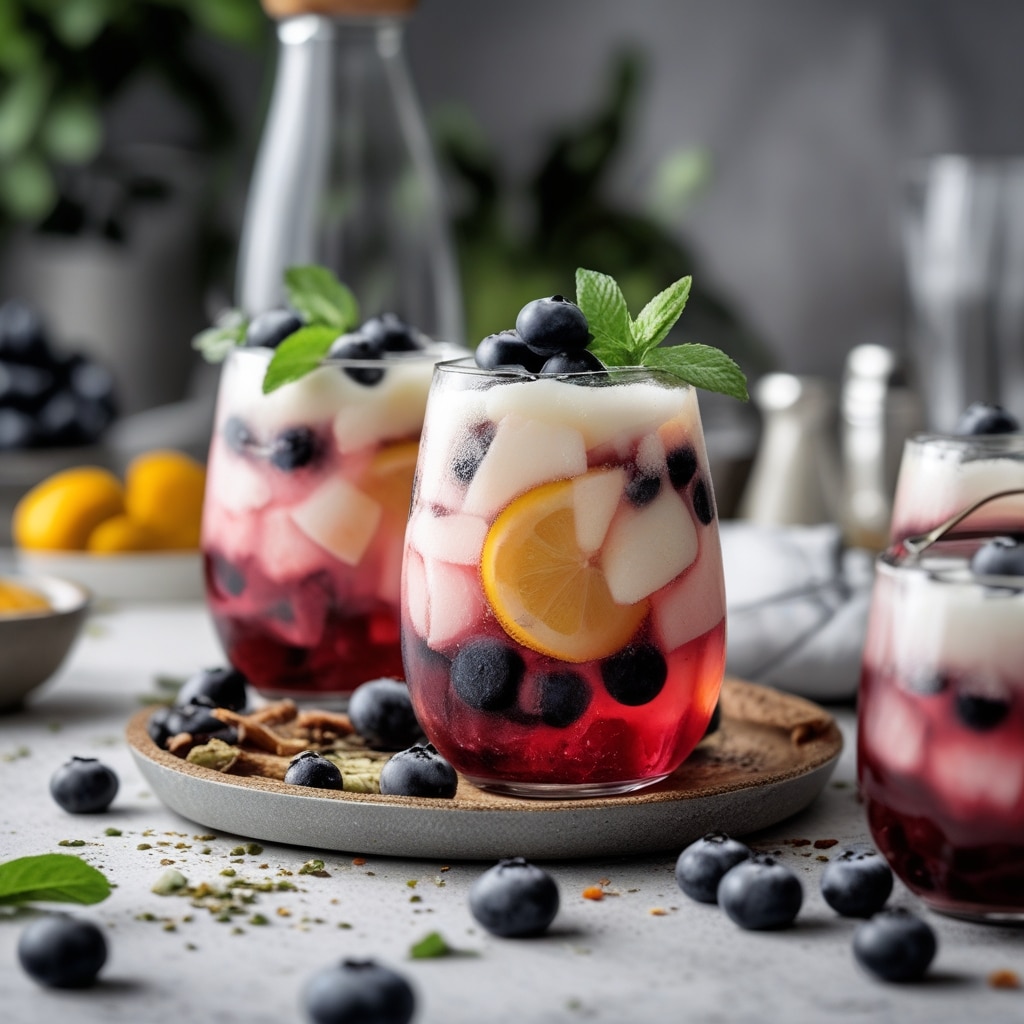
When ready to serve, fill your glasses halfway with the red sangria base, then carefully pour the white sangria over the back of a spoon to create a dual-layered effect. The density difference between red and white wines helps achieve that elegant separation, showcasing beautiful gradients of ruby and gold intertwined with floating blueberries.
Here, you’ll see the full magic of the Red and White Sangria with Fresh Blueberries come to life: a visual masterpiece that looks like it belongs on a summer magazine cover, with refreshing flavor in every sip.
—
Tips
Enhance the Flavor Profile
To add more complexity, consider experimenting with flavored liqueurs such as peach schnapps or elderflower. These blend seamlessly without overpowering the wines’ natural notes.
Adding herbs—mint, basil, or even a sprig of rosemary—introduces an aromatic layer that makes each sip feel sophisticated and refreshing. If you prefer a slightly less sweet sangria, reduce or omit added sugar; the natural fruit sugars will still balance the acidity beautifully.
Temperature Matters
Always serve sangria well-chilled. Room-temperature sangria tends to taste heavy and muddled. Keep your pitcher refrigerated until guests arrive and use frozen fruits instead of ice cubes to keep flavors undiluted as the drink chills.
Pairing and Presentation
Pair this sangria with light appetizers such as tapas, grilled shrimp, or a fresh garden salad. Serve in clear glasses or mason jars to emphasize the layered color gradient, and add a decorative fruit skewer for visual appeal.
—
Alternative Methods
Make It Non-Alcoholic
To create an alcohol-free version, substitute wines with grape juice—red and white varieties respectively—and replace brandy and liqueur with orange juice or sparkling water. The result is a wholesome, fruity beverage that looks just as elegant and delivers the same refreshing sensation without the alcohol content.
Frozen Sangria Slush
For a fun twist, freeze both sangria bases separately. Blend them individually, then layer the frozen mixtures in tall glasses for a vibrant two-tone slush. This icy version is perfect for hot summer days, adding a playful texture to an already impressive cocktail.
Batch Preparation for Events
If you’re catering for a larger group, pre-mix both sangrias in big beverage dispensers. Keep them chilled and pour directly when serving. Guests can watch the gradient blend in real-time, making for an interactive bar feature.
Batch recipes hold well in the refrigerator for up to 24 hours, meaning you can prepare everything the night before an event, giving you more time to focus on hosting.
—
Conclusion
Summertime celebrations, patio evenings, and festive brunches all become more memorable when the drink in hand sparks conversation and delight. The Red and White Sangria with Fresh Blueberries achieves this beautifully—offering a balance of flavor, aroma, and presentation that elevates it far above your average sangria. Its unique composition bridges the best of two wine worlds, creating something distinctly modern yet warmly familiar.
Whether you choose to serve it in tall glasses, mason jars, or a communal pitcher surrounded by bright fruit bowls, this sangria’s dual tones and berry bursts highlight your attention to detail and style. Simple to make, stunning to serve, and endlessly versatile, this refreshing recipe stands as proof that the best summer drinks are often those that blend creativity with simplicity.
By mastering its layered presentation, experimenting with seasonal fruits, and keeping your ingredients perfectly chilled, you’ll have a go-to signature beverage that impresses at any occasion. Cheers to your new favorite warm-weather classic!