
Introduction
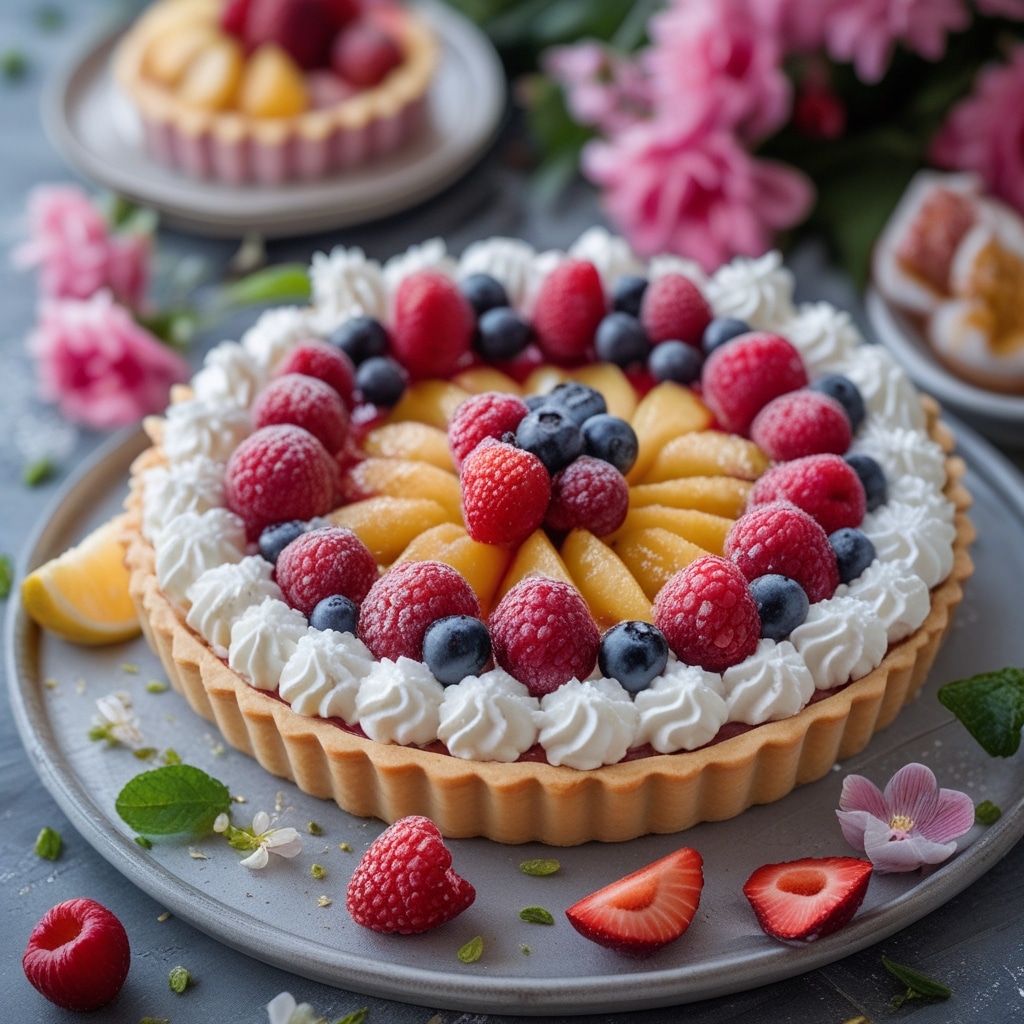
As the days grow longer and the world bursts into vibrant color, few desserts capture the essence of the season better than a beautifully crafted Spring fruit tart. This refreshing dessert blends buttery pastry, velvety custard, and the natural sweetness of seasonal fruits into a visually stunning centerpiece that tastes as good as it looks. Beyond its irresistible flavor, this tart offers a celebration of fresh produce available in spring—think juicy strawberries, tangy kiwi slices, and glistening blueberries. Whether you’re a seasoned baker or an enthusiastic beginner eager to showcase your culinary creativity, this recipe delivers impressive results every time. Get ready to master a tart that’s as photogenic as it is delicious.
—
Step-by-Step Instructions
1. Preparing the Pastry Base
A successful tart starts with a crisp, buttery crust. Begin by combining all-purpose flour, a pinch of salt, and cold unsalted butter in a mixing bowl. Use a pastry blender or your fingertips to crumble the butter into the flour until the mixture resembles coarse breadcrumbs. Gradually add chilled water, one tablespoon at a time, until a soft dough forms.
Shape the dough into a disc, wrap it in plastic, and refrigerate for at least 30 minutes. This chilling period allows the gluten to relax, ensuring a tender texture while preventing shrinking during baking. Once firm, roll the dough evenly into a circle large enough to fit your tart pan. Gently press it into the pan, trimming any excess overhang, and prick the bottom lightly with a fork to prevent bubbling.
Blind-bake the crust: place a sheet of parchment paper over the dough, fill it with pie weights or dried beans, and bake at 375°F (190°C) for 15 minutes. Remove the weights and parchment, then return the crust to the oven for another 10 minutes until lightly golden. Set it aside to cool completely.
2. Making the Custard Filling
The creamy custard base acts as the luscious layer that holds the fruit in place. In a saucepan, whisk together egg yolks, sugar, cornstarch, and a pinch of salt. Gradually add warm milk, whisking continuously to avoid curdling. Cook the mixture over medium heat, stirring until it thickens into a smooth, glossy custard.
Remove from heat and stir in pure vanilla extract and a tablespoon of butter to enhance richness. Transfer the custard to a bowl, cover with plastic wrap directly on the surface (to prevent a skin from forming), and allow it to cool completely before spreading it into the baked pastry shell.
3. Arranging the Fruits
This is where artistry meets dessert-making. For an eye-catching Spring fruit tart, select a palette of seasonal fruits—strawberries, kiwi, raspberries, blackberries, and blueberries. Slice larger fruits into uniform pieces for better layering. Start at the outer edge of the tart and work inward in concentric circles, alternating colors for visual balance.
To add sheen and preserve freshness, lightly brush the fruit with a glaze made from warmed apricot jam or a simple sugar syrup. The glossy finish not only makes the tart look professional but also seals in moisture. Refrigerate for at least one hour before serving to let the flavors blend harmoniously.
—
Tips
Choosing the Right Fruits
Opt for fruits that are at their peak during spring. Berries, stone fruits, and tropical varieties bring natural sweetness and vibrant hues. If possible, source locally grown produce for superior flavor and environmental benefits. Avoid overly ripe fruit that might release excess moisture and make the crust soggy.
Perfecting the Pastry
The secret to a flawless crust lies in controlling temperature. Always use cold butter and water, and if your kitchen is warm, place your tools and mixing bowl in the fridge before starting. Handling the dough too much can result in a tough crust, so minimal manipulation ensures a flaky texture.
Storage and Serving
Store your tart in the refrigerator, covered loosely with plastic wrap, for up to two days. The crust may soften slightly over time, but the flavors often become even more harmonious after a few hours of chilling. Serve your slice with a dollop of whipped cream or a drizzle of lemon glaze for extra indulgence.
—
Alternative Methods
No-Bake Version
If you’re short on time or prefer a simpler approach, try a no-bake variation. Prepare a crust using crushed digestive biscuits or graham crackers mixed with melted butter. Press the mixture into your tart pan and chill until firm. Fill it with a cream cheese-based filling infused with lemon zest and top with fruit as described above. This method preserves the essence of the tart without turning on the oven.
Gluten-Free or Vegan Options
To make this dessert inclusive, substitute the wheat flour in the crust with almond flour or a gluten-free blend. For a vegan adaptation, use coconut milk custard made with cornstarch and plant-based butter. Vegan jellies or agar-agar can replace gelatin in the glaze. These substitutions maintain the elegance and flavor while catering to dietary preferences.
Mini Tartlets for Events
For parties or picnics, miniature versions add elegance and convenience. Use a muffin tray to form smaller crusts, fill them with custard, and top each with a slice of strawberry or a cluster of berries. Mini tarts offer portion control and make presentation easy without sacrificing taste or texture.
—
Conclusion
A Spring fruit tart is more than just a dessert—it’s a celebration of color, freshness, and the art of seasonal baking. From the buttery pastry to the silky custard and the jewel-tone fruit arrangement, every element contributes to a balance of elegance and flavor. With thoughtful preparation and a touch of creativity, this tart can elevate any gathering, from brunches to dinner parties.
By experimenting with local fruits, flavor infusions, or even alternative crust options, you can make this classic treat uniquely yours. Each bite encapsulates the spirit of renewal and abundance that defines spring. So, whether you bake it for guests or as a personal project, this tart reminds us that nature’s sweetest offerings deserve to be celebrated—one slice at a time.
—
Word count: Approximately 930