
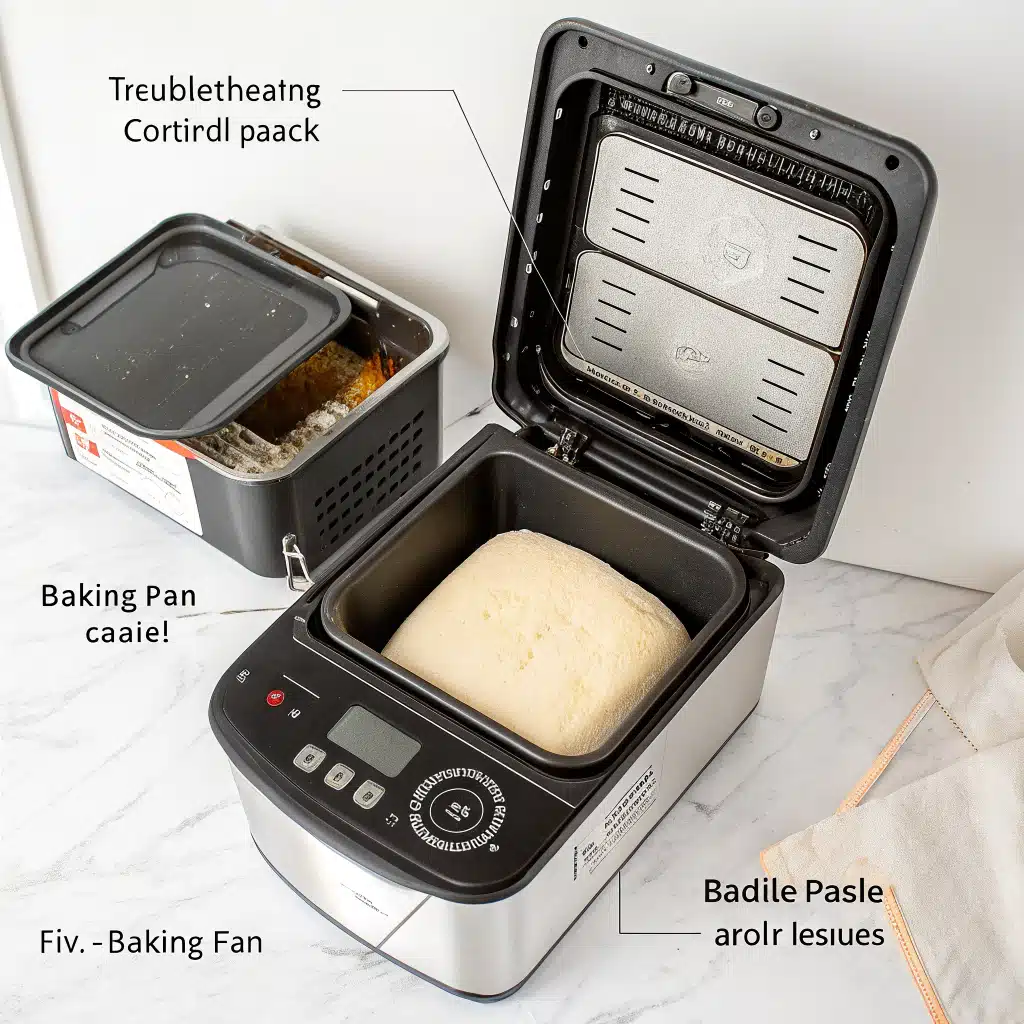
Troubleshooting Bread Machine Problems (Complete Guide)
Bread machines are marvelous pieces of kitchen technology, promising perfect, hands-off loaves with minimal effort. However, even the most reliable machine can occasionally deliver a dense brick, a sunken crater, or a loaf that simply refuses to rise. When your automated baker goes rogue, the frustration is real. This comprehensive guide moves beyond simple fixes, delving into the underlying baking science necessary to diagnose and correct the most common bread machine failures, ensuring you achieve consistently excellent results every time.
Understanding the Core Concept: The Precision of the Cycle
The success of bread machine baking hinges on precision and timing. Unlike traditional hand-kneading, where a baker can adjust hydration and fermentation based on visual and tactile cues, the bread machine relies entirely on a pre-programmed, fixed cycle. This means the baker’s primary job is to provide perfect inputs. The machine controls the temperature, the duration of kneading, and the proofing time, but it cannot compensate for inaccurate measurements or poor ingredient quality.
The three critical phases we must control are: 1) Hydration (the ratio of liquid to flour), 2) Fermentation (the activity of the yeast), and 3) Gluten Development (achieved during the kneading phase). When troubleshooting, we must isolate which of these phases failed, as the symptoms often overlap.
Key Factors and Principles Affecting Bread Machine Performance

Before blaming the machine itself, we must examine the foundational elements of baking that govern the machine’s output.
The Role of Hydration and Measurement Accuracy
In bread machine recipes, liquid amounts are calibrated precisely for the machine’s environment. Small deviations can cause major failures. If you are using volume measurements (cups), the density of flour can vary drastically based on humidity and how it is scooped.
**Principle:** Always measure ingredients, especially flour, by weight using a kitchen scale. A difference of just 30 grams of flour (about ¼ cup) can turn a perfect dough into a dry, dense mixture that strains the machine motor and prevents proper rise.
Yeast Health and Temperature
Yeast is a living organism, and its activity is extremely sensitive to temperature. If the water or milk added to the machine is too cold (below 65°F / 18°C), the yeast will be sluggish, leading to a short, dense loaf. If the liquid is too hot (above 130°F / 54°C), the yeast will be killed instantly.
**Principle:** Use liquid that is lukewarm—ideally between 75°F and 85°F (24°C–30°C). Furthermore, ensure your yeast is fresh. If the packet has been open for months, its potency is likely compromised.
The Impact of Ingredient Loading Order
Most bread machines require a specific loading order—usually liquids first, then dry ingredients, with the yeast placed last, sitting atop the flour, away from the liquid and salt. Salt inhibits yeast activity, and if the yeast dissolves in the liquid and immediately hits the salt at the bottom of the pan, the rise will be significantly stunted, particularly when using the delay timer.
Image Prompt 1: A realistic, top-down photo showing a bread machine pan loaded with ingredients according to the standard method: liquid at the bottom, followed by dry ingredients (flour, sugar, salt), and a small indentation in the flour holding a teaspoon of dry active yeast. The scene is clean and well-lit.
Practical Methods and Techniques for Diagnosis
The key to troubleshooting is observing the dough during the initial mixing phase. Do not walk away immediately after pressing start.
The Initial Dough Consistency Check (The “Pebble Test”)
The most crucial moment occurs 5 to 10 minutes into the first kneading cycle. Pause the machine and check the dough ball consistency.
**The Ideal Dough Ball:** The dough should form a smooth, slightly tacky ball that cleans the sides of the pan entirely. It should look like a smooth, rounded pebble moving rhythmically beneath the paddle.
**Diagnosis: Loaf is Too Short and Dense (Under-risen)**
* **Symptom in the pan:** The dough ball looks shaggy, dry, and tough. It is struggling to incorporate all the flour, and the machine sounds labored.
* **The Cause:** Insufficient hydration. Either too much flour was added, or the environment is very dry.
* **The Fix:** Add liquid, one teaspoon at a time, while the machine is kneading, until the dough ball smooths out and cleans the sides of the pan.
**Diagnosis: Loaf Collapses or Sinks (Over-risen)**
* **Symptom in the pan:** The dough ball looks slack, sticky, and wet. It smears against the sides of the pan rather than forming a tight ball.
* **The Cause:** Excessive hydration or too much yeast/sugar. When the dough is too wet, the gluten structure is too weak to support the gas produced during the final proof, causing it to inflate rapidly and then deflate dramatically during the bake cycle.
* **The Fix:** Add flour, one teaspoon at a time, until the dough firms up into a smooth ball. For future loaves, reduce the yeast by ¼ teaspoon or reduce the liquid by 1–2 tablespoons.
Image Prompt 2: A side-by-side comparison of three small baked bread machine loaves on a wooden cutting board: 1) A dense, short, cracked loaf (under-risen), 2) A perfect, high-domed loaf with even texture, and 3) A loaf with a severely sunken, collapsed top (over-risen). Natural daylight illuminates the difference in structure.
Common Mistakes and How to Avoid Them
Even experienced bakers can overlook these common bread machine pitfalls.
Mistake 1: Relying on All-Purpose Flour
While some basic recipes allow for it, All-Purpose (AP) flour has a lower protein content (around 10–11%) than Bread Flour (12–14%). The vigorous, fixed kneading cycle of a bread machine requires the higher protein content of bread flour to develop the strong gluten network needed to support the rise, especially in a tall, narrow pan.
**How to Avoid:** Always use high-quality bread flour unless the recipe specifically calls for AP or whole wheat. If you must use AP, consider adding 1 teaspoon of vital wheat gluten per loaf to boost the protein structure.
Mistake 2: Forgetting the Salt
Salt is not just for flavor; it is a critical regulator of yeast activity. Without salt, yeast ferments uncontrollably, leading to a massive initial rise followed by a catastrophic collapse. It also strengthens the gluten network, preventing the dough from becoming too slack.
**How to Avoid:** Double-check that salt has been added. Ensure it is placed on the opposite side of the pan from the yeast during the loading phase to prevent immediate contact.
Mistake 3: Ignoring Environmental Temperature
If your kitchen is cold (below 68°F / 20°C), the machine may struggle to reach the necessary proofing temperature, extending the rise time and leading to a dense loaf. Conversely, placing the machine near a heat source or in direct sunlight can cause the dough to over-proof rapidly, leading to collapse.
**How to Avoid:** Ensure the machine is placed in a draft-free location with a stable, moderate room temperature. If your kitchen is consistently cold, pre-warming the liquid slightly (to 90°F / 32°C) can help jumpstart fermentation.
Image Prompt 3: A close-up, high-angle photo of a small glass measuring cup containing lukewarm water, with dry active yeast sprinkled gently over the surface, beginning to bloom and foam slightly. The focus is sharp on the active yeast, demonstrating freshness.
Tips, Best Practices, and Variations

Achieving mastery in bread machine baking involves consistency and attention to detail.
Handling Whole Grains and Specialty Flours
Whole wheat, rye, and other specialty flours absorb liquid much more slowly than white bread flour. If you simply swap them out cup-for-cup, the dough will be too dry initially, leading to a dense loaf.
**Best Practice:** When baking with whole wheat, increase the liquid content by 1 to 2 tablespoons per cup of whole grain flour used. Check the dough consistency earlier than usual (3–5 minutes into kneading) and adjust with liquid as needed. Furthermore, use the “whole wheat” or “rapid” cycle, which often incorporates a longer initial rest period (autolyse) to allow the bran to hydrate properly.
Addressing the Paddle Hole
One common complaint is the large hole left at the bottom of the loaf by the kneading paddle.
**Best Practice:** If you are home during the cycle, set a timer for the end of the final kneading phase (check your machine manual for timing). Just before the final rise begins, carefully remove the dough ball, extract the paddle, reshape the dough slightly, and return it to the pan. This eliminates the hole, though it sacrifices the entirely hands-off nature of the machine.
Altitude Adjustments
At high altitudes (above 3,000 feet), the lower air pressure causes yeast to ferment much faster, and the dough expands more readily. This almost always results in a collapsed loaf.
**Best Practice:** Reduce the yeast by 1/4 teaspoon per loaf. Increase the salt slightly (by 1/8 teaspoon) to slow fermentation. You may also need to slightly decrease the liquid or increase the flour to strengthen the gluten structure.
FAQ
Why is my bread machine loaf gummy or undercooked in the center?
This is usually a hydration issue coupled with insufficient baking time. A loaf that is too wet will often fail to cook completely through the center before the crust is fully browned. Ensure you are weighing your ingredients and check your machine’s manual to confirm you are using the correct size setting for the recipe (e.g., 1.5 lb vs. 2 lb). If the problem persists, try using the “Light Crust” setting combined with the machine’s largest loaf size to ensure a longer overall bake time.
Can I use the delay timer with dairy or eggs?
It is highly discouraged. Using the delay timer requires that all ingredients remain dormant for several hours before mixing begins. Perishable ingredients like milk, butter, or eggs can spoil if left at room temperature for an extended period. Only use the delay function for recipes containing non-perishables (water, oil, dry milk powder).
What should I do if the kneading paddle is stuck in the bread pan?
Do not pry it out forcefully, as this can damage the non-stick coating and the drive shaft seal. Instead, fill the pan with very hot water and let it soak for 30 minutes. The hot water will soften the dried dough cemented around the paddle, allowing you to gently twist and remove it. Always clean the paddle thoroughly immediately after removing the bread.
Conclusion
Mastering the bread machine is less about mechanics and more about mastering the inputs. By paying critical attention to hydration (weighing ingredients), maintaining yeast health, and observing the dough consistency during the initial kneading phase, you gain the power to diagnose and fix nearly any common machine failure. Approach each bake with the mindset of a careful scientist, adjusting liquid one teaspoon at a time based on the “pebble test,” and you will find that consistently perfect, high-rising loaves become the standard, not the exception.