
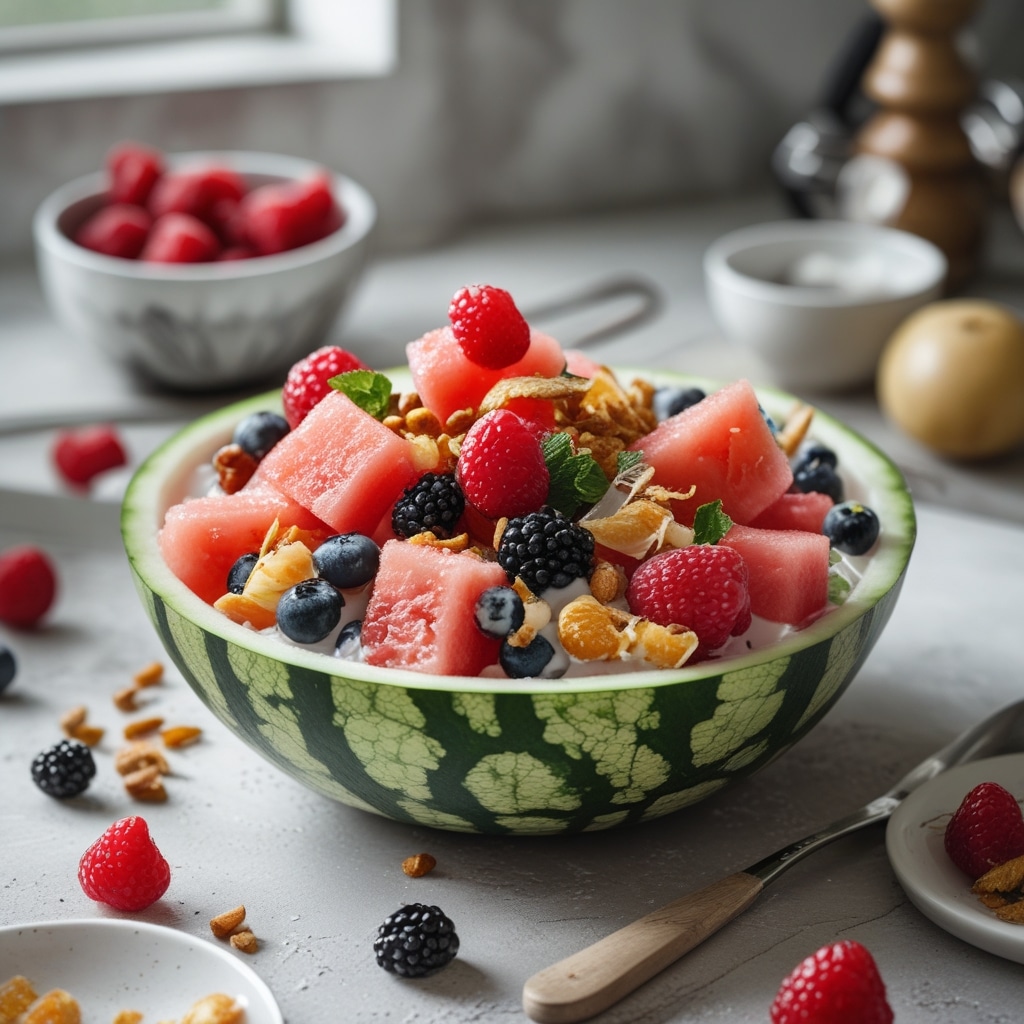
Introduction
Nothing says summer refreshment quite like a bowl of chilled seasonal fruit. Among the many vibrant and hydrating options, the Watermelon and Berry Fruit Salad stands out as a powerhouse of both flavor and nutrition. Bursting with antioxidants, natural sweetness, and colorful appeal, this recipe isn’t just a treat for the eyes—it’s a revitalizing way to stay cool and healthy when temperatures rise. In this post, we’ll dive deep into how to make this delightful dish, explore helpful preparation techniques, and identify alternatives that make it your own. Whether you’re preparing it for a backyard barbecue, weekend brunch, or as a light post-workout snack, this fruit salad delivers big taste with minimal effort.
—
Step-by-Step Instructions
Creating your own Watermelon and Berry Fruit Salad is remarkably simple, but perfecting the texture and balance of flavors requires a little technique and attention to detail. Follow these steps to craft a version that looks stunning and tastes even better.
Step 1: Gather Your Ingredients
Start by gathering all your ingredients. You’ll need about four cups of cubed watermelon, one cup of blueberries, one cup of raspberries, and a cup of sliced strawberries. You can also add blackberries or pomegranate seeds for extra texture and a pop of tartness. Select ripe, firm fruits—especially the watermelon, since it forms the base and contributes most of the salad’s juiciness.
Step 2: Prepare the Fruit
Wash all berries gently using a colander to avoid bruising. Cut seedless watermelon into uniform cubes—around one-inch pieces typically work best. This ensures even distribution and prevents any one fruit from overpowering the others. Pat the berries dry with a paper towel to prevent excess water from diluting the salad’s natural sweetness.
Step 3: Combine and Balance Flavors
In a large chilled bowl, combine the watermelon and mixed berries. To elevate the flavor, squeeze the juice of half a lime on top and add a drizzle of pure honey. Sprinkle fresh mint leaves for aroma and freshness. Toss gently with a wide spoon to avoid crushing the berries. The combination of citrus and mint highlights the fruit’s sweetness while adding a refreshing aroma that feels perfect for warm-weather days.
Step 4: Chill and Serve
Cover the bowl with plastic wrap or a reusable cover and let it chill in the refrigerator for at least 30 minutes. This step allows the flavors to meld and intensify. When ready to serve, give a light toss and transfer to a glass serving dish for an extra visual pop. Garnish with additional mint or a sprinkle of shredded coconut if you like a tropical flair.
—
Tips
Creating a fruit salad that’s as photogenic as it is delicious comes down to a few professional kitchen tricks.
– Use contrasting textures: Watermelon provides a crisp, juicy bite that pairs beautifully with the slightly tart, tender berries. Avoid overripe fruits that could make the salad mushy.
– Keep it cold: Always chill both the bowl and serving utensils before mixing. Cold surfaces keep the fruit firm and help maintain a fresh crunch.
– Sweetness adjustment: Depending on the natural sugar levels of your fruit, adjust honey or agave quantities to your taste. You can also replace sweeteners with monk fruit for a low-calorie alternative.
– Add protein for balance: For a heartier salad, toss in some feta cheese or Greek yogurt. The saltiness and creaminess create a satisfying contrast with the fruity elements.
– Prevent oxidation: A dash of lemon juice not only adds zest but also helps your fruit retain its vibrant colors for hours.
Each of these tips enhances presentation, texture, and overall flavor harmony, turning a simple combination of fruits into a gourmet-worthy dish.
—
Alternative Methods
Traditional recipes like this one work beautifully as written, but variations can help match dietary preferences and creative experimentation. Here are a few ways to customize your salad:
Low-Sugar Option
If you’re watching your sugar intake, omit any added sweeteners and rely solely on the natural sweetness of ripe fruit. Chilling the salad before serving naturally enhances the perceived sweetness without adding calories.
Protein-Boosted Version
Pair your fruit with a scoop of cottage cheese or a handful of almonds. This tweak transforms the dish into a balanced parfait or a light breakfast bowl.
Tropical Upgrade
Add chunks of pineapple, mango, or kiwi for a more exotic twist. This turns the salad into a vacation-inspired snack that transports your taste buds straight to a beachside getaway.
Infused Flavor Experience
For an elegant dinner party version, soak the fruit mixture briefly (10–15 minutes) in a tablespoon of sparkling water mixed with lime zest and crushed mint. The microbubbles add effervescence and elevate texture while accentuating natural juices.
Frozen Twist
Freeze the mixture in popsicle molds for a fun way to beat the summer heat. These fruit ice pops are a kid-friendly, healthy dessert that doubles as a hydration booster.
Each alternative version retains the essence of the original dish while catering to unique flavor preferences and nutritional goals. This adaptability makes fruit salads not only versatile but perfect for experimenting with regional produce and seasonal variations.
—
Conclusion
At its heart, the Watermelon and Berry Fruit Salad captures everything wholesome and joyful about seasonal eating. With minimal prep time and endless room for personalization, it’s an easy dish that delivers both freshness and nutrition in every bite. Packed with hydration, antioxidants, and natural sweetness, it’s a perfect balance between healthy indulgence and pure comfort. Whether you’re making it for a weekday lunch, a festive gathering, or simply as a colorful addition to your meal routine, this recipe reminds us that simplicity often brings the best flavor.
By applying the professional tips and tried-and-true variations shared here, you can consistently make salads that impress guests, energize your day, and photograph beautifully for your own food blog or social feed. Use local fruits whenever possible, adjust ingredients to your taste, and experiment freely. In doing so, you’re not just creating a dish—you’re crafting a refreshing celebration of seasonal flavor that never fails to brighten your table.