
I’m Karino Kada, a Kyoto-born girl who grew up watching my mother shape onigiri and knead dough with quiet grace. When I first moved to California, I carried a wooden box filled with my grandmother’s handwritten recipes — and inside it, a small note that said, “Bread is love you can hold.”
Today, this whole wheat sourdough bread recipe has become my bridge between two worlds: the tradition of slow fermentation I learned in Japan, and the bright, earthy ingredients I’ve discovered here. Its nutty aroma fills my kitchen every weekend, reminding me that home can rise anywhere.
If you’ve been searching for a whole wheat sourdough bread recipe that’s simple, nourishing, and deeply flavorful, this one’s for you. It combines the natural sweetness of whole grains with the tangy complexity of wild yeast — a loaf that’s as comforting as it is wholesome. You’ll find that using 100% whole wheat flour gives the bread a rich, hearty taste and a tender crumb that pairs beautifully with butter or soup.
Choosing the Right Flour for Texture & Flavor
The beauty of this whole wheat sourdough bread recipe lies in its simplicity. Just four ingredients — but each one has a purpose. Whole wheat flour adds depth and nutrition, the sourdough starter brings life, water hydrates, and salt balances everything. If using freshly milled flour, add slightly more water to maintain hydration.
| Ingredient | Quantity | Notes |
|---|---|---|
| Whole Wheat Flour | 500 g | Use stone-ground or freshly milled for richer flavor |
| Active Sourdough Starter | 100 g | Feed 6–8 hours before using |
| Water | 380 g | Use filtered or spring water |
| Sea Salt | 10 g | Balances flavor and strengthens gluten |
Tip: For a softer crumb, add an extra 10–15 g of water. Hydration is key when using whole wheat, as the bran absorbs more liquid.
Instructions for Perfect Whole Wheat Sourdough
Mixing, Folding, and Fermenting Like a Pro
This whole wheat sourdough bread recipe follows a rhythm that feels almost meditative. Each stage—from mixing to shaping—develops strength, flavor, and structure. The trick is not to rush it; patience and attention will reward you with a loaf that rises tall and tastes earthy.
1. Autolyse (Hydration Phase)
In a large glass bowl, mix 100g active sourdough starter with 380g water until milky. Add 500g whole wheat flour and 10g salt, stirring until the dough just comes together. It will look rough and sticky — that’s perfect. Cover with a damp towel and rest for 1–2 hours. This phase allows flour to absorb water and makes your dough easier to handle later.
2. Bulk Fermentation (Developing Flavor and Strength)
After autolyse, it’s time to strengthen your dough. Use the stretch and fold method: grab one side of the dough, stretch it up gently, and fold it over itself. Rotate the bowl and repeat four times. Do this every 30 minutes for 4–6 rounds. Over time, your dough will become smoother, more elastic, and easier to shape.
If your kitchen is cool, place the bowl in a slightly warm spot. The ideal dough temperature should hover around 75°F (24°C).
3. Bulk Rise
Once you’ve finished folding, cover the bowl and let the dough rest at room temperature. Watch your dough—not the clock. When it’s nearly doubled and feels light and airy with visible bubbles, it’s ready. The fermentation time can range from 4 to 8 hours depending on room temperature and starter strength.
4. Shaping the Dough
Turn the dough onto a lightly floured surface, smooth side down. Gently shape it into a round or oval (batard) by folding the edges inward. Tension helps your bread rise upward instead of outward. Place the dough seam-side up in a banneton or bowl lined with a floured towel. Cover and refrigerate for 8–12 hours (up to 24 for deeper flavor).
This cold ferment improves the crust, enhances flavor, and gives you beautiful blisters on the baked loaf.
Baking & Cooling for Perfect Crust and Crumb
5. Preheat and Bake
Place a Dutch oven in your oven and preheat to 450°F (230°C) for at least 45 minutes. Once hot, gently transfer your cold dough onto parchment paper. Score the top with a sharp blade to help it expand during baking.
Lower the dough into the Dutch oven, cover, and bake for 30 minutes. Remove the lid and bake for another 15 minutes at 410°F (210°C) until the crust is deep golden brown and the kitchen smells divine.
6. Cooling and Resting
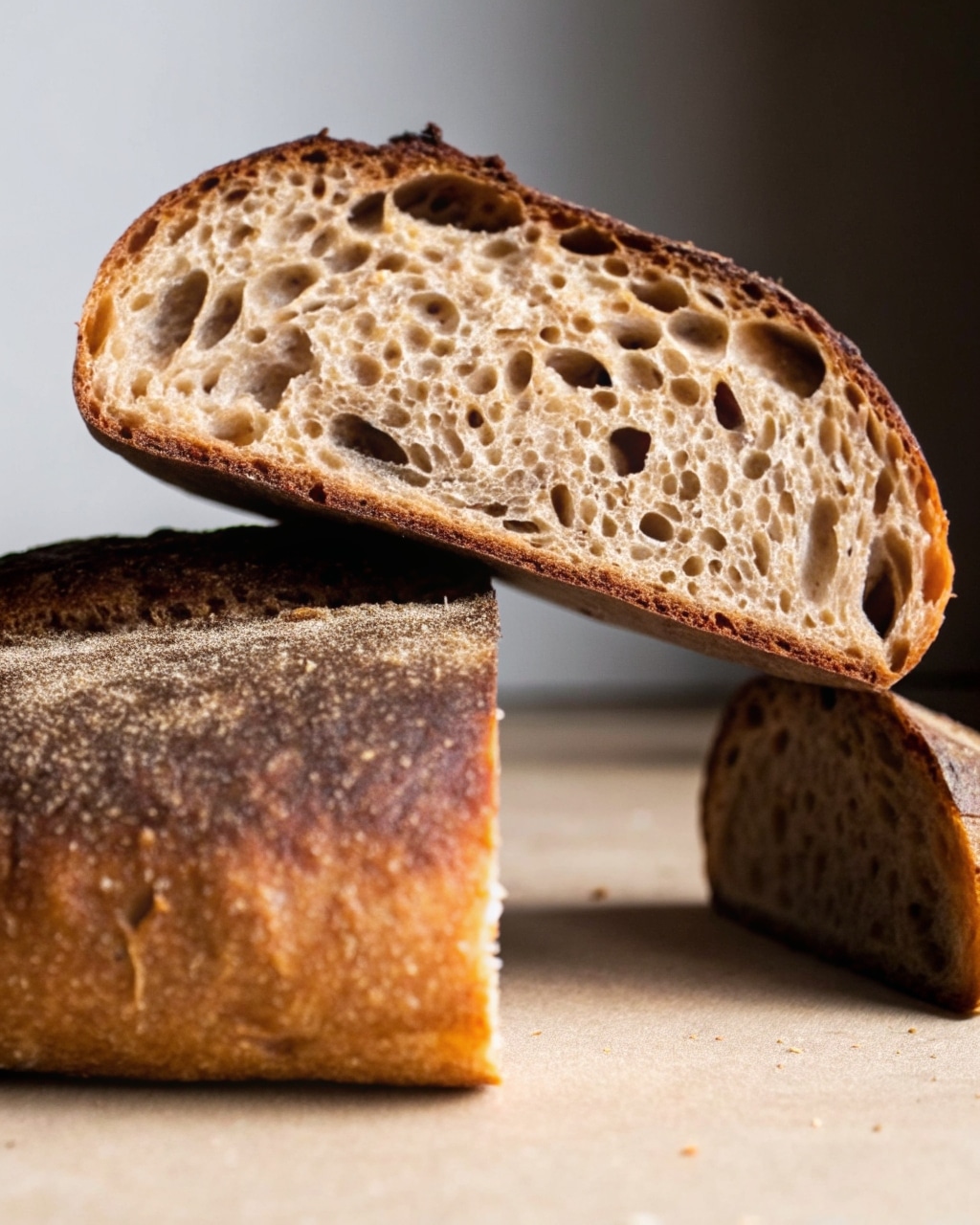
Remove the bread and place it on a wire rack. Listen — that crackling sound means success! Resist slicing right away; allow the loaf to cool for at least one hour. Cutting too soon can make the crumb gummy. Once cooled, your whole wheat sourdough bread recipe delivers a chewy interior, crisp crust, and deep nutty flavor.
Pro Tip: If your dough spreads too much, it may be slightly overproofed or too wet. Try reducing hydration by 10g next time or performing extra folds early on.
Baker’s Timeline (Optional)
| Step | Time | Description |
|---|---|---|
| Feed Starter | 9 AM | Feed your starter; wait until it doubles |
| Mix & Autolyse | 3 PM | Combine flour, starter, water, and salt |
| Stretch & Fold | 4–6 PM | Perform 4–6 folds over 2 hours |
| Bulk Rise | 6 PM–10 PM | Let dough rest until doubled |
| Shape & Chill | 10 PM | Place shaped dough in fridge |
| Bake | Next morning | Bake directly from cold for best oven spring |
The Art of Serving and Pairing
When your whole wheat sourdough bread recipe leaves the oven, it’s more than just a loaf — it’s the story of patience, flavor, and comfort coming together. The crackle of the crust gives way to a tender, aromatic crumb that pairs beautifully with both sweet and savory spreads.
For breakfast, toast a slice until the edges darken slightly, then spread with salted butter and Kyoto honey — my grandmother’s favorite pairing. For lunch, it becomes the perfect foundation for avocado toast or a roasted vegetable sandwich. By dinner, it’s best served alongside a warm bowl of soup or stew, soaking up every drop of broth like a sponge of love.
Because this bread’s flavor is naturally nutty and tangy, you can balance it with rich toppings such as almond butter, soft cheeses, or slow-cooked meats. If you want to showcase its rustic charm, cut it thick, brush lightly with olive oil, and grill it for smoky edges that make each bite unforgettable.
You can explore more creamy, protein-packed inspirations in my Specialty Breads Collection and discover more cottage cheese-based dishes on Greaty Recipes’ .
Storing and Savoring the Freshness
Whole wheat sourdough stays moist longer than white bread, thanks to its higher bran and fiber content. Once fully cooled, store your loaf in a linen bag or paper wrapper at room temperature for up to three days. Avoid plastic; it traps moisture and softens the crust. If you love crisp crusts, reheat slices briefly in the oven before serving.
For longer storage, slice the loaf and freeze the pieces in an airtight container. Toast directly from frozen — the flavor stays pure, the texture remains satisfying. Each time you warm a slice, that familiar aroma of whole wheat sourdough bread fills your kitchen again, as comforting as the first bake.
A loaf baked with care deserves to be enjoyed with intention. Whether shared with family at breakfast or savored alone by candlelight, this whole wheat sourdough bread recipe reminds you that simplicity and love always taste best when served warm.
Nutrition & Health Notes for Whole Wheat Sourdough
When you bake this whole wheat sourdough bread recipe, you’re creating more than just bread — you’re making nourishment. Each slice offers the earthy comfort of whole grains and the gut-friendly magic of fermentation. Unlike refined white bread, whole wheat flour retains the bran and germ, giving your loaf extra fiber, vitamins, and minerals that fuel your body while keeping you full longer.
The natural fermentation process also lowers gluten content and increases mineral absorption, making this bread easier to digest. Lactic acid bacteria in the sourdough starter break down phytic acid, unlocking nutrients like iron, zinc, and magnesium that your body can absorb more efficiently.
Regularly enjoying whole wheat sourdough can support healthy blood sugar levels and improve gut balance — thanks to its rich prebiotic fiber. Combined with a balanced diet, this whole wheat sourdough bread recipe fits beautifully into mindful, wholesome eating.
Calories and Macros (Per 100g)
| Nutrient | Amount | Notes |
|---|---|---|
| Calories | 179 kcal | Satisfying energy from complex carbs |
| Carbohydrates | 37.9 g | Slow-releasing whole grains for lasting fuel |
| Protein | 6.9 g | Helps build and repair muscles |
| Fiber | 5.4 g | Aids digestion and supports gut health |
| Fat | 1.3 g | Minimal fat for a light, balanced loaf |
| Sodium | 390 mg | Naturally regulated by sea salt |
This loaf is a natural source of energy that fits into everyday wellness. Each slice offers the satisfaction of homemade food with the gentle tang of sourdough — a balance between nourishment and nostalgia. Pair it with soups, salads, or even avocado toast for a complete meal that feels good and tastes even better.
FAQs
1. How much whole wheat flour should I use in sourdough bread?
For a classic loaf, use 100% whole wheat flour — about 500g. You can blend in 50–100g of bread flour if you want a slightly lighter texture.
2. Does whole wheat sourdough need more hydration?
Yes. Whole wheat flour absorbs more water than white flour, so start at 75% hydration (about 380g water per 500g flour) and adjust by feel.
3. How do I get whole wheat sourdough to rise well?
Perform several stretch-and-folds to strengthen gluten, and allow enough fermentation time. Colder dough rises slower but develops better flavor.
4. What is the best starter for whole wheat sourdough?
An active starter fed with whole wheat flour gives a deep flavor, but even a white flour starter works well if it’s bubbly and mature.
Conclusion
Every loaf of whole wheat sourdough bread carries a quiet rhythm — mix, wait, fold, bake — a pattern of patience that mirrors life itself. When I pull my bread from the oven, golden and fragrant, I feel connected to my grandmother’s wisdom from Kyoto and to the home I’ve built here in California.
This recipe isn’t just about baking; it’s about creating comfort, one crust at a time.

Whole Wheat Sourdough Bread Recipe: A Nutty, Hearty Loaf from Scratch
- Total Time: 1 day 2 hours
- Yield: 1 loaf 1x
- Diet: Vegetarian
Description
A simple, nourishing whole wheat sourdough bread recipe made with 100% whole wheat flour. It’s hearty, tangy, and rich with nutty flavor — a comforting loaf that honors tradition and wellness.
Ingredients
500 g whole wheat flour
100 g active sourdough starter (fed and bubbly)
380 g water (filtered or spring)
10 g sea salt
Instructions
1. Mix sourdough starter and water in a large bowl until combined.
2. Add whole wheat flour and salt; stir until a rough dough forms.
3. Cover and let rest for 1–2 hours (autolyse stage).
4. Perform 4–6 sets of stretch and folds over 2 hours to build gluten.
5. Cover and allow dough to bulk ferment until nearly doubled (4–8 hours depending on temperature).
6. Shape into a round or oval loaf and place in a floured banneton.
7. Refrigerate overnight (8–12 hours) for a cold ferment.
8. Preheat oven with Dutch oven inside at 450°F (230°C) for 45 minutes.
9. Score dough and bake covered for 30 minutes; uncover and bake 15 minutes more at 410°F (210°C).
10. Cool completely on a wire rack before slicing.
Notes
If using freshly milled flour, increase water slightly for proper hydration.
Use rice flour or semolina to prevent sticking in the banneton.
Store at room temperature in a linen bag for up to 3 days or freeze slices for longer freshness.
Bake directly from cold for the best oven spring and crust.
- Prep Time: 30 minutes
- Cook Time: 45 minutes
- Category: Bread
- Method: Baking
- Cuisine: Japanese-American
Nutrition
- Serving Size: 100 g
- Calories: 179
- Sugar: 2
- Sodium: 390
- Fat: 1.3
- Saturated Fat: 0.2
- Unsaturated Fat: 1.1
- Trans Fat: 0
- Carbohydrates: 37.9
- Fiber: 5.4
- Protein: 6.9
- Cholesterol: 0