
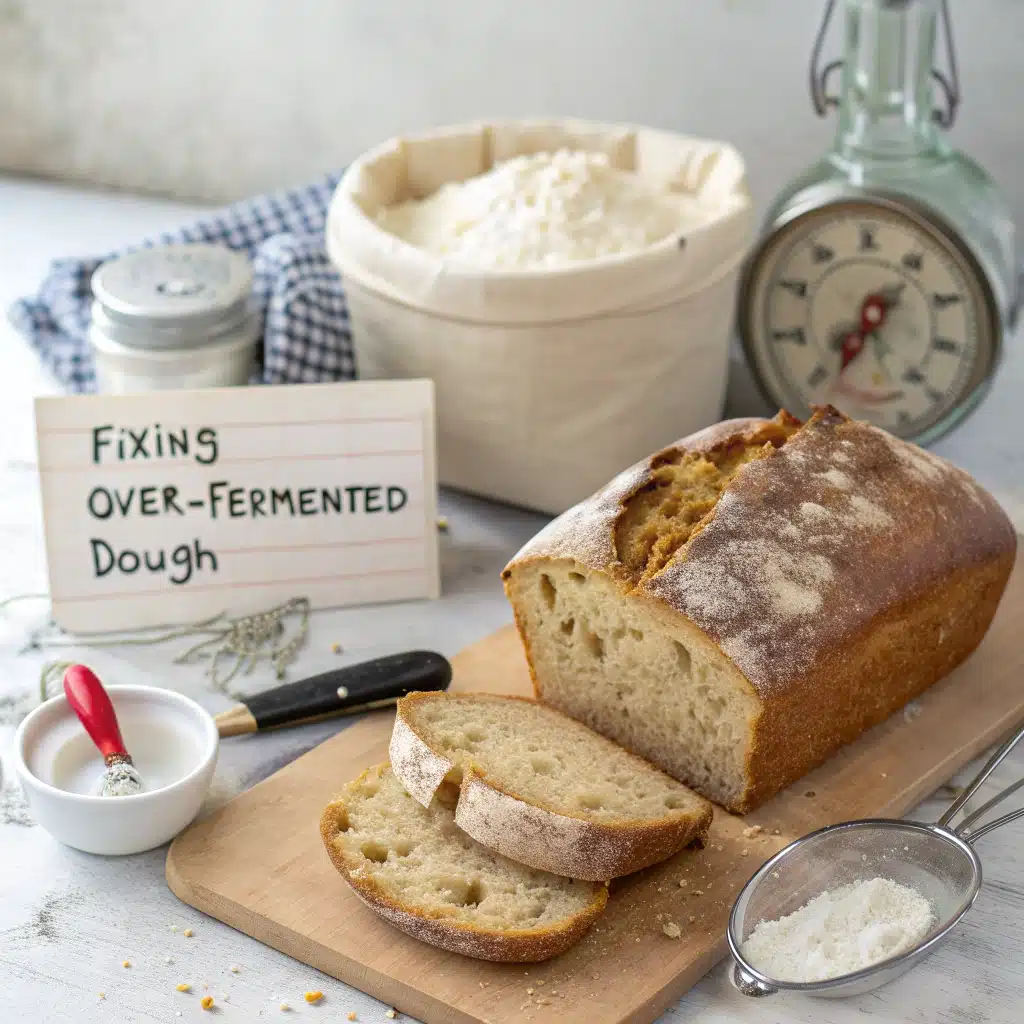
Why Is My Bread Too Sour? Fixing Over-Fermented Dough
The smell of freshly baked bread is one of the great joys of the kitchen. While a subtle, complex tang is highly desirable in artisanal loaves like sourdough, sometimes that sourness crosses the line into an unpleasant, vinegary flavor. If you’ve ever sliced into a beautiful loaf only to be met with an overpowering, acidic taste, you’ve likely encountered the classic issue of over-fermentation. This guide will delve into the science behind that sour flavor and provide actionable steps to help you master the art of temperature and time, ensuring your next loaf is perfectly balanced.
Understanding the Core Concept: The Acidic Byproducts of Fermentation
When we bake bread, we are harnessing the power of fermentation—a metabolic process where yeast and bacteria consume sugars in the flour and produce gases (carbon dioxide), alcohol, and organic acids. These acids are the key players in flavor development, particularly lactic acid and acetic acid.
Image Prompt 1: A realistic close-up photo showing bread dough that has been proofed too long, looking slack and slightly bubbly on the surface, next to a digital kitchen thermometer measuring ambient temperature.
Lactic Acid vs. Acetic Acid
Lactic acid provides a mild, creamy, yogurt-like tang. It is generally the preferred acid in bread dough and is produced predominantly by Lactobacillus bacteria in warmer environments (around 75°F to 85°F).
Acetic acid, on the other hand, is sharp, pungent, and vinegary. It is responsible for the intense sourness we often want to avoid. Acetic acid production is favored by cooler temperatures (below 70°F) and longer fermentation times. It is also produced more readily when the dough is stiffer (lower hydration). An imbalance favoring acetic acid is usually the root cause of “too sour” bread.
Key Factors and Principles Affecting Sourness

The level of sourness in your finished loaf is a direct consequence of three intertwined variables: time, temperature, and hydration. Mastering these three allows you to control the acid profile.
Temperature Control is Crucial
Temperature is the single most important factor dictating the speed and nature of fermentation. Yeast activity doubles roughly every 15°F increase. If your kitchen is warmer than you realize, your dough may be reaching peak fermentation hours faster than your recipe suggests, leading to over-proofing and excessive acid buildup. Conversely, cool temperatures encourage the production of the sharper acetic acid over time.
Duration of Fermentation
The longer the dough ferments, the more time the yeast and bacteria have to consume sugars and produce acids. If you are aiming for a less sour flavor, you must shorten the total bulk fermentation and proofing time. This is especially true for sourdough, where the natural cultures are active for 12–24 hours.
Dough Hydration and Stiffness
Higher hydration doughs (wetter doughs) tend to favor lactic acid production, leading to a milder flavor. Stiffer, lower hydration doughs (like many traditional rye loaves) tend to favor acetic acid production, resulting in a more pronounced sourness. If your bread is too sour, increasing the hydration slightly (by 2–3%) can help shift the acid balance.
Practical Methods and Techniques for Reducing Sourness
If you’ve identified that over-fermentation is the problem, these techniques will help you regain control and achieve a milder, cleaner flavor.
Method 1: Shorten the Bulk Fermentation
Bulk fermentation (the first rise) is where the majority of flavor development occurs. Instead of following a strict time limit, learn to read the dough. For a mild flavor, stop bulk fermentation when the dough has increased by about 30–50% in volume, not 75–100%. If your recipe calls for 4 hours at room temperature, but your kitchen is warm, aim for 2.5–3 hours.
Image Prompt 2: A realistic overhead shot of a baker gently pressing a finger into proofing dough inside a clear plastic container to check the “poke test” for readiness, with soft daylight illumination.
Method 2: Use Warmer Temperatures for Bulk Fermentation
To encourage lactic acid (milder tang) over acetic acid (sharper tang), keep your bulk fermentation environment consistently warm, ideally between 78°F and 82°F. This speeds up the yeast and bacteria, allowing you to finish the fermentation quickly, before too much acetic acid has time to build up.
Method 3: Adjust the Starter or Levain (For Sourdough Bakers)
If you are using sourdough, the health and maturity of your levain are critical. To reduce sourness:
1. **Feed More Frequently:** Feed your starter with a higher ratio of fresh flour and water (e.g., 1:5:5 ratio, instead of 1:1:1) and use it when it is young and active—right at its peak rise, before it begins to fall. A young starter has not yet developed high levels of acid.
2. **Warmer Levain Build:** Build your levain at a warmer temperature (75°F+) to favor lactic acid.
Common Mistakes and How to Avoid Them
Even experienced bakers sometimes struggle with the subtle indicators of dough readiness. Avoiding these common pitfalls will improve your flavor profile.
Mistake 1: Relying Solely on Time
Many recipes give specific times (e.g., “Proof for 4 hours”). This is a guideline, not a rule. The actual fermentation time depends entirely on your specific temperature, the activity of your yeast/starter, and the type of flour used.
**The Fix:** Use the dough’s appearance and feel, not the clock. Look for visible bubbling, slight dome shape, and the “poke test” (the indentation should spring back slowly, but not completely). Invest in a kitchen thermometer to monitor your dough’s temperature accurately.
Mistake 2: The Too-Long Cold Proof
While cold proofing (retarding the dough in the refrigerator) is excellent for flavor and scheduling, doing it for too long or at too low a temperature (below 40°F is often too cold for flavor development) can drastically increase acetic acid.
**The Fix:** If you need a long cold proof (12+ hours), ensure your bulk fermentation was significantly shorter and less developed. Alternatively, use a slightly warmer refrigerator zone (45°F–50°F) if possible, to slow the process down without favoring acetic acid production too heavily.
Image Prompt 3: A realistic photo showing a baker using a digital probe thermometer to check the internal temperature of a finished, golden-brown loaf of bread on a cooling rack.
Tips, Best Practices, and Variations

For consistent, non-sour results, integrate these best practices into your routine:
* **Use Whole Grains Sparingly:** Whole grains contain more nutrients, leading to faster fermentation and often more intense acid production. If sourness is a problem, stick to recipes with 80–100% white bread flour (high protein) until you master the timing.
* **Monitor the pH:** Advanced bakers can use pH strips or meters. A final pH of 4.2–4.5 is generally considered ideal for a pleasantly tangy sourdough. If your dough drops below 4.0, it will taste noticeably sour.
* **The “Sweet Spot” for Yeast:** If you are using commercial yeast, ensure your water temperature is around 90°F to get a quick, strong start, which helps prevent long, slow fermentation periods that lead to excessive acid.
FAQ
Q: Can I fix dough that is already too sour?
A: Unfortunately, once the acids have developed, they cannot be reversed. However, you can sometimes mitigate the flavor by using the dough in a recipe that includes sugar (like cinnamon rolls) or by mixing it 50/50 with a fresh, fast-rising batch of non-sour dough before baking.
Q: Does adding sugar reduce the sour flavor?
A: Sugar doesn’t reduce the acid, but it changes the flavor balance by providing sweetness that counteracts the sourness. It also provides more food for the yeast, potentially speeding up fermentation and shortening the window for acid development.
Q: How can I tell if my dough is over-fermented before baking?
A: Over-fermented dough often looks extremely slack, sticky, and weak. It may smell strongly of alcohol or acetone (nail polish remover). When you poke it, the indentation will remain completely, indicating the gluten structure has collapsed and cannot hold the gas anymore.
Conclusion
Achieving the perfect flavor balance in bread is a continuous learning process. If your bread is too sour, remember that the culprit is usually acetic acid, encouraged by cool temperatures and excessively long fermentation times. By carefully monitoring the temperature of your dough, shortening your bulk fermentation, and using an active, young starter (for sourdough), you can shift the acid profile toward the milder, creamier lactic acid. Take control of your time and temperature, and you will soon be baking loaves with a flavor profile that is beautifully complex, not aggressively sour.