
Introduction
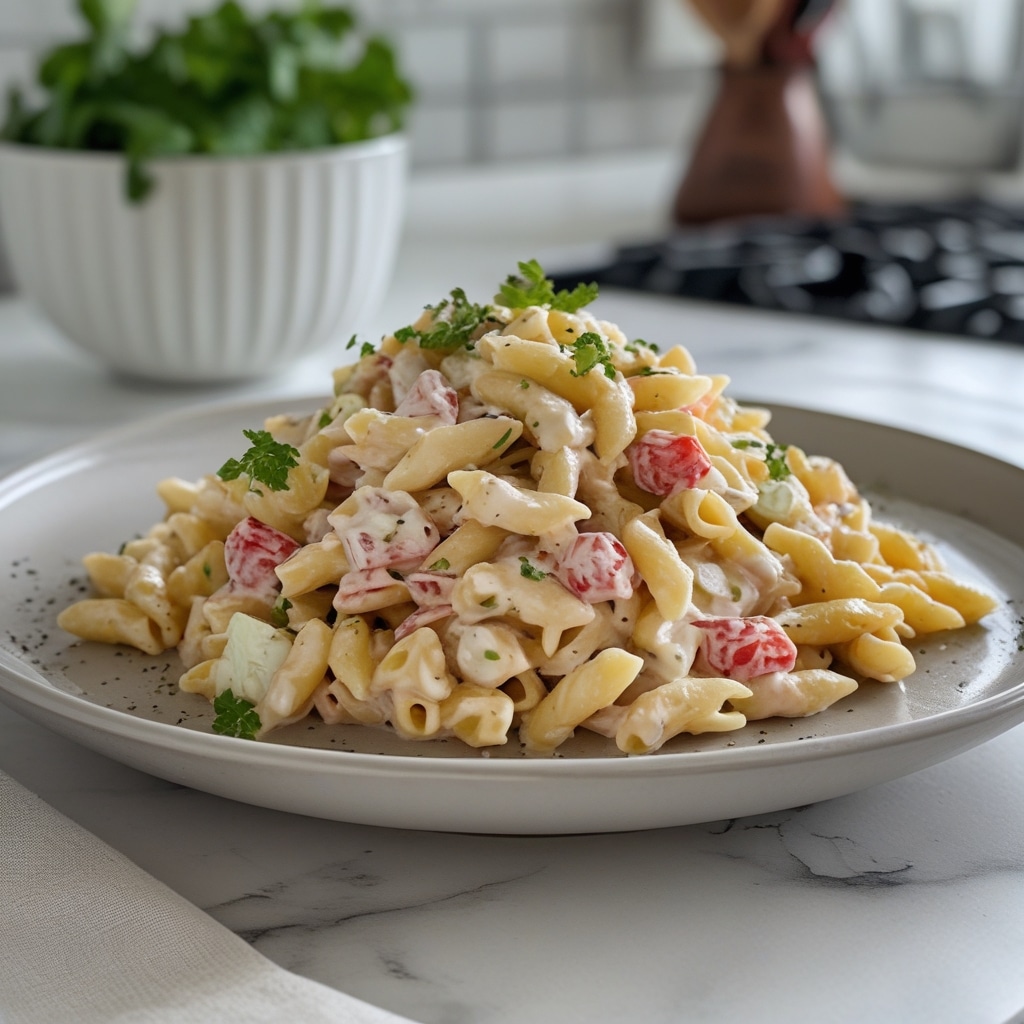
Pasta salads are a timeless favorite at picnics, potlucks, and weekday family dinners. Among the many variations, the Creamy Pasta Salad stands out for its luscious texture, vibrant colors, and delightful balance of flavors. This dish combines tender pasta, crisp vegetables, and a rich, tangy dressing that coats every bite with a smooth, satisfying finish. In today’s recipe breakdown, we’ll explore how to make the perfect version of this comforting classic—one that’s not only appetizing but also optimized for nutritional balance, flavor depth, and visual appeal.
Beyond being a staple summer side dish, this salad has become a go-to option for busy individuals seeking a make-ahead meal that maintains freshness for several days. With the right blend of textures and a well-emulsified dressing, this dish effortlessly straddles the line between wholesome and indulgent. Whether served alongside grilled meats or enjoyed as a hearty lunch, it’s a versatile recipe that adapts beautifully to different taste preferences and dietary needs.
Step-by-Step Instructions
Crafting a perfect Creamy Pasta Salad lies in the method. Each step below has been refined for both flavor optimization and presentation appeal. Follow this sequence to achieve a balanced, well-coated pasta salad with vibrant ingredients and creamy consistency that lasts.
Step 1: Choose and Cook the Pasta
Start by selecting pasta shapes that hold dressing effectively. Rotini, penne, or elbow macaroni are excellent choices because their ridges capture sauce beautifully. Cook the pasta in salted boiling water until it reaches al dente texture—firm yet tender. This balance allows it to retain structure after mixing with the creamy dressing. Once cooked, drain and immediately rinse under cold water to stop cooking and prevent excess starch clumping. Set aside to cool completely before dressing.
Step 2: Prep Fresh Ingredients
The vibrancy of a pasta salad lies in its support ingredients. Dice bell peppers, cherry tomatoes, red onions, celery, and cucumbers to add crunch and color diversity. You can also include shredded carrots or frozen peas for sweetness. Fresh herbs such as parsley, dill, or chives enhance brightness, while optional protein add-ins—like diced chicken, hard-boiled eggs, or ham—turn it into a substantial main dish.
Step 3: Make the Dressing
In a mixing bowl, whisk together mayonnaise, sour cream, or Greek yogurt as the creamy base. Add a touch of Dijon mustard for sharpness, apple cider vinegar or lemon juice for acidity, and a drizzle of olive oil for smoothness. Season with salt, freshly cracked black pepper, and a pinch of sugar to balance tang and richness. You can experiment with garlic powder, paprika, or a hint of honey to personalize the flavor.
Step 4: Combine and Chill
Pour the dressing over cooled pasta, add the chopped vegetables, and gently toss until everything is evenly coated. Taste and adjust seasonings as needed. For best results, chill the salad in the refrigerator for at least one hour before serving. This resting time allows flavors to meld and the pasta to absorb some of the dressing, enhancing creaminess and depth. Before serving, stir once more and sprinkle additional herbs or shredded cheese for presentation.
Step 5: Serve and Enjoy
Serve the salad as a refreshing side dish at barbecues or as a satisfying standalone meal. It pairs beautifully with grilled meats, roasted fish, or vegetarian entrées. Keep leftovers refrigerated in an airtight container for up to three days to maintain freshness.
Tips
Tip 1: Use Quality Ingredients
The flavor of your salad depends heavily on the freshness of your vegetables and quality of your dairy. Opt for full-fat mayonnaise or Greek yogurt to ensure a luxuriously smooth texture. Using freshly cooked pasta instead of pre-packaged leftovers also prevents gumminess.
Tip 2: Achieve the Perfect Ratio
A common mistake in creamy salads is adding too much dressing initially. Start by mixing a moderate amount, then gradually add more to reach a balanced consistency. The salad should be moist but not dripping. Remember, chilling tends to thicken the mixture slightly, so a lighter initial coating often yields the perfect texture later.
Tip 3: Season in Layers
Season your pasta water, your dressing, and your salad individually. This method builds dimensional flavor rather than relying on one heavily seasoned component. A squeeze of lemon juice just before serving also refreshes the overall taste profile.
Tip 4: Keep It Colorful
The visual appeal of pasta salad influences enjoyment. Include ingredients of varying colors—like green peas, red peppers, yellow corn, and purple onions—to create a dish that’s enticing as well as delicious.
Tip 5: Maintain Creaminess
If the salad feels dry after refrigeration, simply stir in a spoonful of dressing or yogurt before serving. This refreshes the creamy coating without overpowering existing flavors.
Alternative Methods
Vegan Version
For a plant-based version, replace mayonnaise with vegan mayo or cashew cream. Substitute Greek yogurt with coconut yogurt for a subtle sweetness. Use chickpea pasta or lentil pasta for added protein while maintaining a pleasant bite.
High-Protein Variation
Those seeking extra protein can incorporate grilled tofu, diced chicken breast, or cooked shrimp. Adding edamame or quinoa also boosts nutritional value without compromising texture.
Low-Carb Alternatives
If you’re watching your carb intake, swap traditional wheat pasta for zucchini noodles or cauliflower florets. These alternatives maintain the creamy-dressing experience while significantly reducing caloric load. Ensure you drain excess moisture before mixing to keep the dressing from thinning.
Gluten-Free Option
Opt for certified gluten-free pasta made from brown rice, corn, or quinoa. Cook carefully according to package directions, as gluten-free versions can become mushy if overcooked.
Conclusion
The art of preparing a flawless Creamy Pasta Salad lies in mastering the balance of textures, flavors, and freshness. With the right ingredients and techniques, you can transform a humble bowl of pasta into a visually stunning, flavor-packed meal that satisfies any palate. This versatile dish not only enhances your dining table but also provides a foundation for countless creative variations—from wholesome vegan adaptations to hearty, protein-rich versions.
Whether serving it at a summer barbecue, packing it for lunch, or preparing it as a last-minute dinner solution, this salad proves that simplicity can indeed deliver sophistication. By using these expert tips and data-driven methods, you’ll ensure consistent results every time—an irresistible creamy pasta experience that your family and guests will always remember.