
The Science of the Perfect Greek Yogurt Pancake
Achieving the ideal pancake texture requires a balance of moisture, fat, and leavening. These Greek yogurt lemon blueberry pancakes rely on the thick consistency and natural acidity of Greek yogurt to create a crumb that is significantly more substantial than traditional buttermilk versions. While many pancakes can turn out thin or rubbery, the addition of yogurt provides a structural integrity that allows the batter to hold its height on the griddle.
The acidity in the yogurt reacts with the baking soda to produce carbon dioxide bubbles immediately upon mixing. This reaction is what creates the airy pockets inside the pancake. Combined with the bright, aromatic oils from fresh lemon zest and the moisture from bursting blueberries, these pancakes offer a sophisticated flavor profile that isn’t overly sweet. They are designed for those who want a breakfast that feels indulgent but provides enough protein to sustain energy levels throughout the morning.
Why You’ll Love This Recipe
- High Protein Content: Using Greek yogurt instead of just milk or water adds a significant protein boost, making these more filling than standard flapjacks.
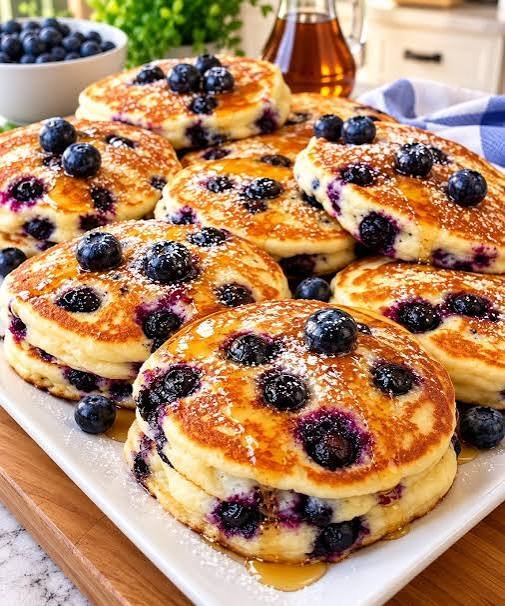
- Superior Texture: The thick batter results in a pancake that is nearly half an inch thick, with a soft, custard-like interior and a golden, crisp exterior.
- Bright Citrus Notes: Fresh lemon zest and juice provide a clean, acidic counterpoint to the sweetness of the maple syrup and berries.
- Pantry Staples: Aside from the fresh berries and yogurt, this recipe uses basic ingredients you likely already have in your kitchen.
Ingredients You’ll Need & Smart Substitutions
All-Purpose Flour: This provides the necessary structure. If you want a heartier version, you can swap up to 50% of the flour for whole wheat pastry flour. For a gluten-free option, a high-quality 1:1 gluten-free baking blend works well here due to the thickness of the yogurt.
Greek Yogurt: Use plain, unsweetened Greek yogurt. Full-fat (5% or 4%) yogurt produces the most tender results, but 2% or non-fat also works. Avoid regular thin yogurt, as it will make the batter too runny to achieve the desired fluffiness.
Fresh Blueberries: Fresh berries are ideal because they don’t bleed as much color into the batter. If using frozen blueberries, do not thaw them first; toss them in a teaspoon of flour before adding them to the batter to prevent them from sinking and turning the pancakes purple.
Lemon Zest and Juice: The zest contains the essential oils that provide the intense lemon aroma. Always zest the lemon before juicing it. If you don’t have fresh lemons, a half-teaspoon of lemon extract can work in a pinch, though you will lose the acidic lift provided by the juice.
Leavening Agents: This recipe uses both baking powder and baking soda. The soda is essential for neutralizing the acid in the yogurt, while the powder provides the secondary lift during the cooking process.
Essential Kitchen Equipment
- Large Mixing Bowl: For combining the dry ingredients.
- Medium Mixing Bowl: For whisking the wet ingredients.
- Microplane or Zester: Essential for getting fine lemon zest without the bitter white pith.
- Non-Stick Griddle or Large Skillet: A flat surface ensures even browning.
- Wide Spatula: Necessary for flipping the thick pancakes without breaking them.
How to Make Fluffy Greek Yogurt Lemon Blueberry Pancake (Step-by-Step)
Step 1: Prepare the Dry Base
In a large mixing bowl, whisk together the flour, granulated sugar, baking powder, baking soda, and salt. Whisking the dry ingredients first ensures that the leavening agents are evenly distributed, which prevents uneven rising or metallic-tasting pockets of soda in the finished pancakes.
Step 2: Emulsify the Wet Ingredients
In a separate bowl, combine the Greek yogurt, eggs, milk, lemon juice, lemon zest, and vanilla extract. Whisk vigorously until the mixture is smooth. It is important that the eggs are fully incorporated into the yogurt to ensure the batter is homogenous. If the yogurt is very thick, you may need to use a bit of elbow grease to get a smooth consistency.
Step 3: Combine and Rest the Batter
Pour the wet ingredients into the dry ingredients. Use a silicone spatula to gently fold the mixture together. Stop as soon as you no longer see streaks of dry flour. A few lumps are perfectly fine. Overmixing at this stage will develop the gluten, leading to a tough, chewy pancake rather than a tender one. Let the batter rest for 5 to 10 minutes; this allows the flour to hydrate and the leavening reaction to begin.
Step 4: The Folding of the Berries
Gently fold the blueberries into the rested batter. By adding them last, you minimize the risk of crushing the berries and discoloring the batter. If you prefer a cleaner look, you can also drop the berries onto the pancakes after you’ve scooped the batter onto the griddle.
Step 5: Griddle to Perfection
Heat your griddle over medium-low heat. Lightly coat with butter or a neutral oil. Use a 1/4 cup measuring cup to scoop the batter onto the hot surface. Because the batter is thick, you may need to lightly spread it into a circle with the back of the spoon. Cook for 3-4 minutes on the first side. Look for bubbles that form and pop on the surface, and edges that appear set and matte.
Step 6: The Flip and Finish
Slide a wide spatula under the pancake and flip in one swift motion. Cook for an additional 2-3 minutes until the second side is golden brown and the center of the pancake feels resilient to a light touch. Transfer to a warm plate and repeat with the remaining batter.
Pro Chef Tips for Perfect Results
Temperature Control: Greek yogurt pancakes brown faster than traditional ones because of the sugars and proteins in the yogurt. Keep your heat at medium-low to ensure the center cooks through before the outside burns.
Wipe the Pan: Between batches, wipe the griddle clean with a paper towel and add fresh butter. Burnt butter from the first batch can give the second batch a bitter flavor.
Room Temperature Ingredients: If your yogurt and eggs are room temperature, they will incorporate more easily, and the melted butter (if using) won’t seize up and create clumps.
Don’t Press Down: Never press down on the pancakes with your spatula after flipping. This collapses the air pockets you worked so hard to create, resulting in a dense pancake.
Common Mistakes to Avoid
Overmixing the Batter: This is the number one cause of flat, rubbery pancakes. Mix until the flour just disappears and then stop.
Using Old Leavening: Baking powder and soda lose their potency over time. If your pancakes aren’t rising, check the expiration dates on your boxes.
Flipping Too Early: If you flip before the edges are set, the batter will run, and you’ll lose the height of the pancake. Wait for those bubbles to pop and stay open.
Delicious Variations & Customizations
Lemon Poppy Seed: Add 1 tablespoon of poppy seeds to the dry ingredients for a classic flavor profile and a bit of crunch.
Almond Infusion: Swap the vanilla extract for 1/2 teaspoon of almond extract to complement the blueberries.
Gluten-Free: Use a 1:1 GF flour blend containing xanthan gum. Allow the batter to rest for 15 minutes instead of 5 to prevent a gritty texture.
What to Serve With Fluffy Greek Yogurt Lemon Blueberry Pancake
These pancakes are flavorful enough to stand alone with just a drizzle of pure maple syrup. However, for a full brunch spread, consider pairing them with crispy thick-cut bacon or savory breakfast sausage to balance the sweetness. A side of soft scrambled eggs provides extra protein. If you want to lean into the citrus theme, serve them with a dollop of lemon curd or a light dusting of powdered sugar.
Storage, Freezing & Reheating Guide
Refrigerator: Store leftover pancakes in an airtight container for up to 3 days. They remain remarkably moist thanks to the yogurt.
Freezer: These pancakes freeze beautifully. Place them in a single layer on a baking sheet to freeze solid, then transfer to a freezer-safe bag for up to 2 months. Use parchment paper between layers to prevent sticking.
Reheating: For the best texture, reheat in a toaster or a 350°F (175°C) oven until warmed through. This preserves the slightly crisp exterior. Avoid the microwave if possible, as it can make the pancakes soft and spongy.
Frequently Asked Questions
Can I use frozen blueberries instead of fresh?
Yes, you can use frozen blueberries. Do not thaw them before adding to the batter, as this will cause the juice to bleed and turn your pancakes grey. Toss them in a tiny bit of flour first to help them stay suspended in the thick batter.
Why are my pancakes raw in the middle?
This usually happens if the heat is too high. The outside browns quickly before the heat can penetrate the thick yogurt batter. Lower the heat and cook them more slowly to ensure the center is fully set.
Can I make the batter ahead of time?
It is best to make the batter fresh. The baking soda reacts immediately with the yogurt’s acid. If the batter sits overnight, it will lose its leavening power, and the pancakes will be much denser the next day.
What if I don’t have Greek yogurt?
You can substitute with sour cream for a similar fat content and acidity. If you only have regular yogurt, you will need to reduce the milk in the recipe to compensate for the thinner consistency.
Final Thoughts
These Greek yogurt lemon blueberry pancakes are a masterclass in breakfast textures. By understanding the interaction between the acidic yogurt and the leavening agents, you can produce a stack that is consistently light, airy, and flavorful. Whether it is a quiet weekday or a busy Sunday brunch, this recipe is a reliable staple that never fails to impress. Give them a try, and don’t forget to leave a rating and comment below with your results!
Fluffy Greek Yogurt Lemon Blueberry Pancakes
Thick, protein-packed pancakes made with Greek yogurt, fresh lemon zest, and juicy blueberries for a bright and satisfying breakfast.
Equipment
- Large non-stick griddle or skillet
- Microplane zester
- Whisk
- Silicone spatula
- 1/4 cup measuring scoop
Ingredients
Dry Ingredients
- 2 cups (250g) all-purpose flour
- 2 tablespoons granulated sugar
- 2 teaspoons baking powder
- 1/2 teaspoon baking soda
- 1/2 teaspoon fine sea salt
Wet Ingredients
- 1 cup (245g) plain Greek yogurt (2% or 5% preferred)
- 2 large eggs, room temperature
- 1/2 cup (120ml) whole milk
- 1 tablespoon fresh lemon juice
- 1 tablespoon lemon zest (about 1 large lemon)
- 1 teaspoon pure vanilla extract
- 2 tablespoons unsalted butter, melted and slightly cooled
Mix-ins & Cooking
- 1 1/2 cups (190g) fresh blueberries
- 1 tablespoon unsalted butter or neutral oil for the griddle
Instructions
-
Mix Dry Ingredients:
In a large bowl, whisk together the flour, sugar, baking powder, baking soda, and salt until well combined and aerated. -
Whisk Wet Ingredients:
In a medium bowl, whisk the Greek yogurt, eggs, milk, lemon juice, lemon zest, and vanilla extract until the mixture is smooth and the yogurt is fully incorporated. -
Combine Batter:
Make a well in the center of the dry ingredients. Pour in the wet mixture and the melted butter. Gently fold with a spatula until just combined; a few lumps are okay. Do not overmix. -
Rest and Fold:
Let the batter rest for 5-10 minutes at room temperature. Gently fold in the blueberries after the rest period. -
Heat the Griddle:
Preheat a non-stick griddle or skillet over medium-low heat. Lightly grease with butter or oil. The pan is ready when a drop of water sizzles and evaporates immediately. -
Cook the Pancakes:
Scoop 1/4 cup of batter onto the griddle for each pancake. Cook for 3-4 minutes until bubbles form on the surface and the edges look set. Flip carefully and cook for another 2-3 minutes until golden brown and cooked through. -
Serve Warm:
Transfer cooked pancakes to a warm plate. Serve immediately with maple syrup, extra berries, or a dollop of yogurt.
Chef’s Notes
- For the fluffiest results, ensure your baking powder is fresh and active.
- If the batter is too thick to pour, add milk one tablespoon at a time until it reaches a thick but scoopable consistency.
- To keep pancakes warm while cooking in batches, place them on a wire rack set over a baking sheet in a 200°F (95°C) oven.
Nutrition Facts (Estimated per serving)
320 kcal
14g
42g
11g
3g
9g
410mg