
Introduction
Few dishes capture the balance between comfort food and bold, modern flavor quite like korean meatloaf with gochujang glaze . This transformed classic takes the familiar heartiness of a traditional meatloaf and infuses it with the spicy-sweet depth of Korean cuisine — a masterpiece that’s perfect for weeknight dinners or special occasions alike. As the culinary world leans toward fusion cooking, understanding how to blend global flavors seamlessly is crucial, both in the kitchen and for readers searching for innovative recipes. In this guide, we’ll dive into how to make this dish step by step, explore the science behind its flavors, provide pro-level cooking tips, and even walk through a few creative variations that align perfectly with modern dietary preferences.
—
Step-by-Step Instructions
Step 1: Gather High-Quality Ingredients
A flavorful meatloaf starts with quality protein. Choose a mix of lean ground beef and pork for optimal texture and moisture retention. You’ll also need breadcrumbs, milk, eggs, garlic, scallions, soy sauce, sesame oil, and a generous spoonful of gochujang — the Korean fermented chili paste that defines this dish.
Step 2: Blend the Base Mixture
In a large bowl, combine your ground meats, minced garlic, finely chopped onions, eggs, and breadcrumbs. Add soy sauce for saltiness and umami, sesame oil for a toasty aroma, and a small amount of milk to ensure the loaf stays juicy even after baking. Mix gently with your hands; overmixing can lead to a dense texture.
Step 3: Shape and Bake
Form the mixture into a loaf shape and place it on a parchment-lined baking tray or loaf pan. Bake at 375°F (190°C) for about 40 minutes, allowing the top to crisp lightly. The goal here is to create a solid foundation for your glaze to cling to without drying out the interior.
Step 4: Prepare the Gochujang Glaze
While your meatloaf bakes, it’s time to make the signature glaze that gives korean meatloaf with gochujang glaze its unmistakable appeal. Whisk together gochujang, honey (or brown sugar), rice vinegar, soy sauce, and a hint of ginger for an aromatic punch. The glaze should strike a balance — sticky but not overly thick, spicy yet subtly sweet.
Step 5: Glaze and Finish Baking
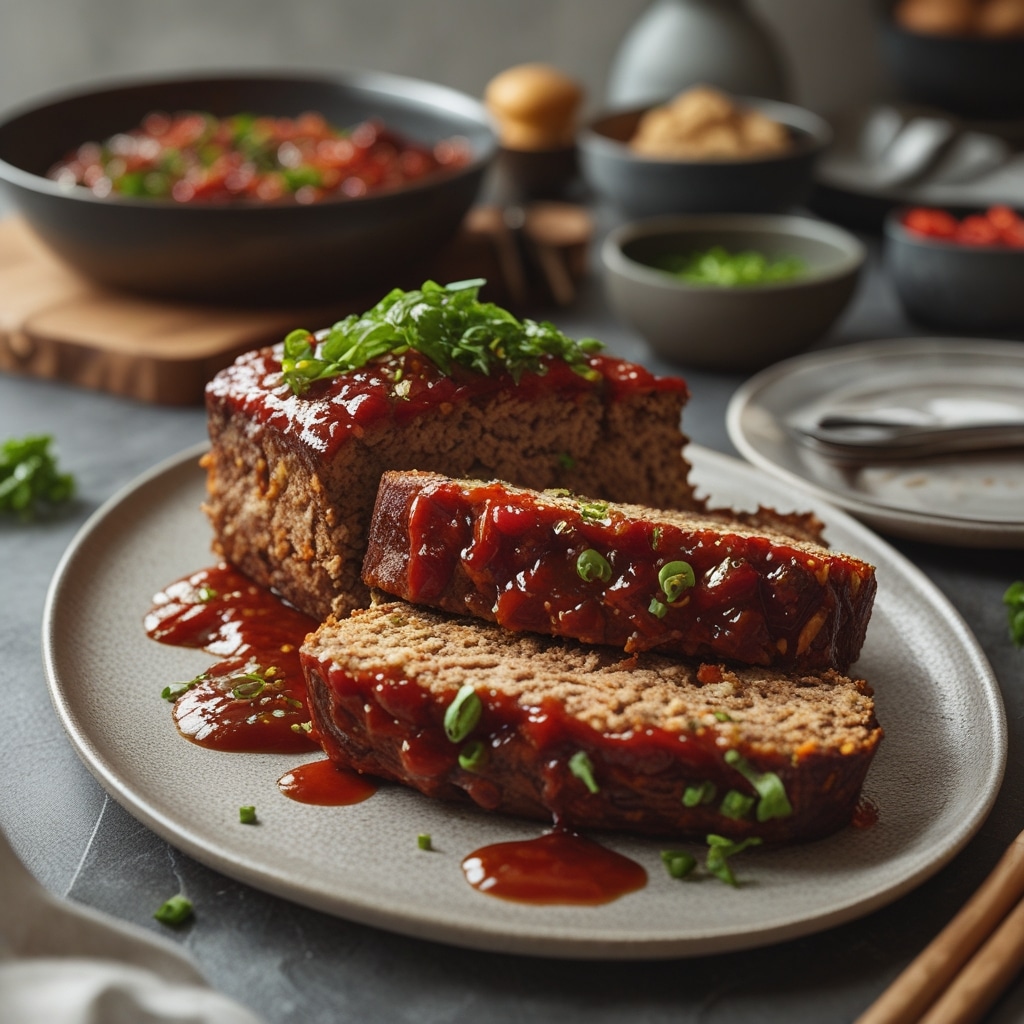
After the initial 40 minutes, brush a generous layer of the gochujang glaze over the meatloaf and return it to the oven for another 10–15 minutes. Watch for caramelization along the edges — that glossy, lacquered finish is what makes the dish shine visually.
Step 6: Rest, Slice, and Serve
Once out of the oven, let the meatloaf rest for 10 minutes before slicing. This rest period helps redistribute juices throughout the loaf, guaranteeing tender slices every time. Serve with steamed jasmine rice, roasted vegetables, or even kimchi for a complete Korean-inspired dining experience.
—
Tips
The Secret to Moisture Retention
A common issue with meatloaf is dryness. To avoid this, use a combination of proteins (beef and pork) and include a milk-soaked breadcrumb mixture. This technique ensures hydration and tender crumb structure.
Mastering the Glaze Ratio
Too much gochujang can overpower your dish. The ideal ratio for most palates is one tablespoon of gochujang per pound of meat. Adjust sweetness with honey or sugar depending on your heat tolerance level.
Use a Digital Thermometer
Precision is key. Cook until the internal temperature reaches 160°F (71°C). Going beyond this can lead to toughness, while undercooking poses safety risks.
Presentation Matters
For an Instagram-worthy look, drizzle extra glaze on top before serving. Garnish with chopped scallions, sesame seeds, or even a few thin slices of red chili pepper for a pop of color.
—
Alternative Methods
Air Fryer Adaptation
The air fryer can produce surprisingly tender results with a shorter cook time. Preheat to 360°F (182°C) and cook the meatloaf for about 25–30 minutes, applying the glaze halfway through. This method yields a crispier crust and uses less energy than traditional baking.
Slow Cooker Comfort
For home cooks who prefer set-and-forget convenience, the slow cooker version offers maximum juiciness. Form the loaf in a slow cooker insert, cook on LOW for 6 hours, and glaze during the final 30 minutes. The slow heat helps tenderize the meat while allowing flavors to meld beautifully.
Vegetarian or Vegan Twist
Substitute the ground meat with a plant-based protein blend made from lentils, mushrooms, and walnuts. Use vegan gochujang and flaxseed meal in place of eggs for binding. The result? A wholesome, meat-free version that doesn’t compromise on flavor or texture.
Gluten-Free Version
Swap regular breadcrumbs for gluten-free panko or crushed rice crackers. The glaze and seasoning elements remain identical, ensuring the same depth of flavor for those with dietary restrictions.
—
Conclusion
The beauty of korean meatloaf with gochujang glaze lies in its versatility — it’s equal parts familiar and adventurous. The blend of comforting, homestyle textures with the high-impact flavors of Korean cuisine creates an experience that resonates with a wide audience, making it a standout addition to your weekly rotation or food blog content strategy. Whether you’re optimizing a cooking website for organic search or simply mastering a new recipe to impress guests, this dish demonstrates how creativity and tradition intersect on the plate.
From an SEO perspective, focusing your content around fusion dishes and regional ingredients like gochujang drives engagement and keyword diversity. The rising popularity of Korean-inspired comfort foods reinforces the idea that culinary storytelling and smart optimization can elevate both your brand and your cuisine. So the next time you’re looking to merge global flavors and local tastes, start with this bold and comforting classic — a gleaming example of innovation served on a plate.