
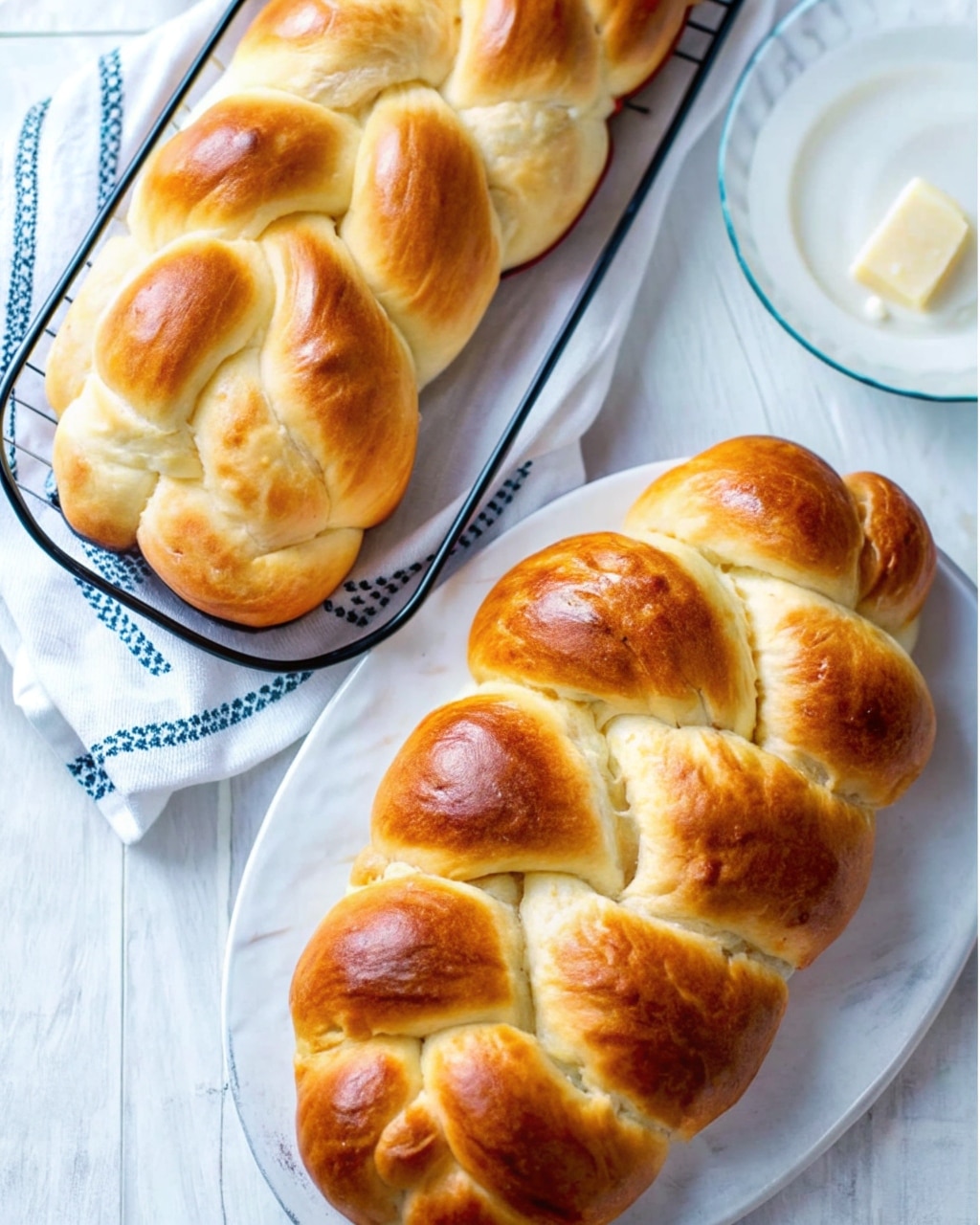
Every time I bake this braided bread recipe, I remember the warmth of my grandmother’s kitchen in Kyoto. The air always smelled faintly of rice flour and fresh yeast. I was a quiet girl then, curious about how her hands moved — rhythmic, patient, full of care. When I moved to California, I carried her lessons with me, tucked between the pages of her handwritten recipes. Braiding bread became my way of slowing down, breathing, and blending my Japanese roots with the soft, buttery comfort of Western baking.
There’s something almost meditative about the process. The smooth dough between your palms, the gentle pull of each strand — it feels like weaving love itself. This braided bread recipe doesn’t just make a loaf; it makes a moment of peace in your day. It’s the kind of bread that looks impressive but feels humble, soft inside with a golden crust that whispers when you slice it.
If you’re new to homemade bread, don’t worry. This method is simple, guided, and forgiving. Whether you’re baking on a rainy morning or filling your kitchen with the scent of fresh bread for Sunday brunch, this recipe is your companion in calm.
Ingredients for Soft and Fluffy Braided Bread
Creating the perfect braided loaf starts with simple, honest ingredients. Each plays a role — flour gives structure, milk brings tenderness, butter adds flavor, and yeast gives life.
Here’s what you’ll need:
| Ingredient | Measurement |
|---|---|
| All-purpose flour | 3 ½ cups (440 g) |
| Warm milk (about 100°F / 38°C) | 1 cup (240 ml) |
| Active dry yeast | 2 ¼ tsp (1 packet) |
| Granulated sugar | ¼ cup (50 g) |
| Salt | 1 tsp |
| Unsalted butter (softened) | 4 tbsp (55 g) |
| Large eggs | 2 |
| Optional: egg wash (1 egg + 1 tbsp milk) | For golden crust |
| Optional toppings | Sesame seeds, poppy seeds, or pearl sugar |
How to Make Braided Bread Dough Like an Artisan
When I first started braiding dough in my small California kitchen, it felt like learning a new language — one that spoke in softness, warmth, and patience. The beauty of this braided bread recipe is that it welcomes beginners. Each strand tells a story; every braid holds intention. Follow these steps, and you’ll create a loaf that’s both tender and show-stopping.
Step-by-Step Instructions
- Activate the yeast:
In a small bowl, combine warm milk (about 100°F) with sugar and yeast. Stir lightly and let it sit for 5–10 minutes until it becomes foamy. This step ensures your yeast is alive and ready to lift your dough to perfection. - Mix the dough:
In a large mixing bowl, whisk together flour and salt. Add the foamy yeast mixture, eggs, and softened butter. Using a wooden spoon or stand mixer with a dough hook, mix until the dough comes together. It should be slightly sticky but soft and elastic. - Knead with care:
Transfer the dough to a lightly floured surface. Knead for about 8–10 minutes until smooth and springy. Think of this as your moment of meditation — each fold brings you closer to a light, airy crumb. - First rise:
Place the dough in a greased bowl, cover it with a clean kitchen towel, and let it rise for about 1 to 1½ hours or until doubled in size. If your kitchen is cool, set it near a warm window or oven light. - Divide and shape:
Punch down the dough gently to release air. Divide it into three equal parts for a simple braid (or six for a more intricate one). Roll each portion into long ropes, about 12 inches (30 cm) in length. - Braid the dough:
Lay the ropes side by side. Pinch the top ends together and start braiding — left strand over middle, right strand over middle, repeating until the end. Pinch the bottom to seal. This part feels like weaving memories — patient and beautiful. - Second rise:
Transfer the braided loaf to a parchment-lined baking sheet. Cover loosely with a towel and let it rise again for 30–45 minutes, or until puffy and light to the touch. - Egg wash and bake:
Preheat the oven to 350°F (175°C). Brush the loaf gently with the egg wash for a golden sheen. Bake for 25–30 minutes until deep golden brown and fragrant. Tap the bottom — it should sound hollow. - Cool and admire:
Allow your bread to cool on a wire rack for at least 15 minutes before slicing. This ensures a soft, tender crumb. Every slice should reveal delicate layers that seem almost too beautiful to eat.
Serving Braided Bread: From Golden Crust to Your Table
The moment you pull your braided bread from the oven, your kitchen transforms. The air fills with a buttery sweetness that feels like a soft morning in Kyoto — quiet, warm, and full of promise. When I bake this bread on weekends, I place it on my wooden cooling rack and wait for that familiar sound — the faint crackle of the crust as it settles. It’s a tiny celebration every single time.
The best way to serve this braided bread recipe is slightly warm. Slice it gently, and watch the steam rise — it’s the scent of comfort itself. Spread it with creamy butter or homemade jam, or, if you’re like me, a drizzle of honey and a sprinkle of sea salt. Each bite feels rich but light, a perfect balance between tenderness and texture.
When I miss home, I pair this bread with matcha butter — a vibrant green blend of unsalted butter and a teaspoon of matcha powder. The earthy flavor complements the sweetness of the dough, bridging my Kyoto mornings with my California afternoons. You can find that simple spread in my Japanese Breakfast Ideas guide.
If you’re preparing a brunch table, this loaf shines beside soft scrambled eggs or fresh fruit. For storage, wrap your cooled loaf in a linen cloth to keep it tender for two days. To refresh it later, lightly toast a slice and brush it with melted butter — the flavor returns instantly.
You can explore more creamy, protein-packed inspirations in my Specialty Breads Collection and discover more cottage cheese-based dishes on Greaty Recipes’ .
Nutrition and the Heart of Homemade Bread
Every time I bake this braided bread recipe, I’m reminded that nourishment isn’t only about numbers. It’s about slowing down, touching the dough, and watching it rise with quiet satisfaction. Still, it’s nice to know that a slice of this bread offers balance — warmth, comfort, and gentle energy to start your day.
A typical slice (about 60 grams) of homemade braided bread contains roughly 190 calories, with 5 grams of fat, 30 grams of carbohydrates, and 6 grams of protein. The milk and eggs enrich the crumb, giving it that soft, tender bite while adding calcium and a touch of natural sweetness. Butter provides flavor and richness, but you can easily adjust the quantity for a lighter loaf without losing its delicate texture.
If you prefer a dairy-free version, substitute the milk with almond or oat milk and use olive oil instead of butter. The result is still golden, fragrant, and slightly nutty — a loaf that welcomes everyone at the table. For readers seeking lower-sugar variations or whole-grain options, I’ve shared alternatives in my Healthy Homemade Bread Tips.
One of the best things about baking your own bread is knowing exactly what goes into it — no preservatives, no unnecessary additives, just ingredients you trust. Each strand of the braid is a reminder that real food doesn’t have to be complicated; it just has to be made with intention.
FAQs About Braided Bread Recipe
1. How do you braid bread dough?
To braid bread dough, divide it into three equal strands and roll them evenly. Pinch the top ends together, then cross the right strand over the center, then the left over the new center. Continue this pattern until the end and tuck it under neatly. This creates that signature, even braided bread look.
2. Why is my braided bread coming out dry?
Dryness often comes from too much flour or overbaking. Always measure flour accurately and check dough texture — it should be soft and slightly tacky, not firm. Also, bake just until golden.
3. Can I make braided bread without eggs?
Yes. Replace each egg with 3 tablespoons of milk or non-dairy milk and add 1 teaspoon of oil for richness. The loaf remains tender, though slightly less glossy. Brush with milk instead of egg wash for a natural sheen. This makes your braided bread recipe accessible for everyone.
4. How long should braided bread rise?
Typically, braided bread needs two rises. The first rise is about 1 to 1½ hours until the dough doubles in size. The second rise, after shaping, takes 30–45 minutes. Warmer kitchens may shorten the time slightly — your dough should feel airy and light before baking.
Conclusion: Baking Love into Every Braid
When I slice into a warm loaf of this braided bread recipe, I think of my grandmother’s voice, soft but steady, saying, “Cooking is love made visible.” Each twist of the braid reminds me that beauty often comes from patience. From Kyoto’s calm mornings to California’s golden sunsets, this bread ties my worlds together in a single loaf — one that’s simple, golden, and full of care.
So, preheat your oven, dust your counter, and braid something beautiful today. You don’t just bake bread — you bake memories.
Print
Braided Bread Recipe: A Soft, Golden Twist of Home and Heart
- Total Time: 2 hours
- Yield: 1 loaf
- Diet: Vegetarian
Description
Soft, golden, and tender — this braided bread recipe brings warmth and flavor to every table. Perfectly fluffy inside with a rich crust, it’s a loaf woven with love.
Ingredients
All-purpose flour – 3 ½ cups (440 g)
Warm milk – 1 cup (240 ml)
Active dry yeast – 2¼ tsp
Sugar – ¼ cup (50 g)
Salt – 1 tsp
Unsalted butter – 4 tbsp (55 g)
Large eggs – 2
Egg wash – 1 egg + 1 tbsp milk
Instructions
1. Activate yeast in warm milk and sugar for 10 minutes.
2. Mix with flour, salt, eggs, and butter until dough forms.
3. Knead 8–10 minutes until smooth.
4. Let rise 1–1½ hours until doubled.
5. Divide into 3 ropes, braid, and tuck ends.
6. Let rise again 30–45 minutes.
7. Brush with egg wash.
8. Bake at 350°F (175°C) for 25–30 minutes until golden.
Notes
Serve warm with butter or honey.
Substitute milk and butter with plant-based options for dairy-free.
Each slice is a reminder of patience and home.
- Prep Time: 20 minutes
- Cook Time: 30 minutes
- Category: Bread
- Method: Baking
- Cuisine: Japanese-American
Nutrition
- Serving Size: 1 slice
- Calories: 190
- Sugar: 4g
- Sodium: 190mg
- Fat: 5g
- Saturated Fat: 2g
- Unsaturated Fat: 3g
- Trans Fat: 0g
- Carbohydrates: 30g
- Fiber: 1g
- Protein: 6g
- Cholesterol: 35mg